Mejora Ciencia y Matemáticas con las herramientas avanzadas de GPT-5.2
OpenAI
ChatGPT
¿No sabes por dónde empezar con la IA?Evalúa preparación, riesgos y prioridades en menos de una hora.
➔ Descarga nuestro paquete gratuito de preparación para IA
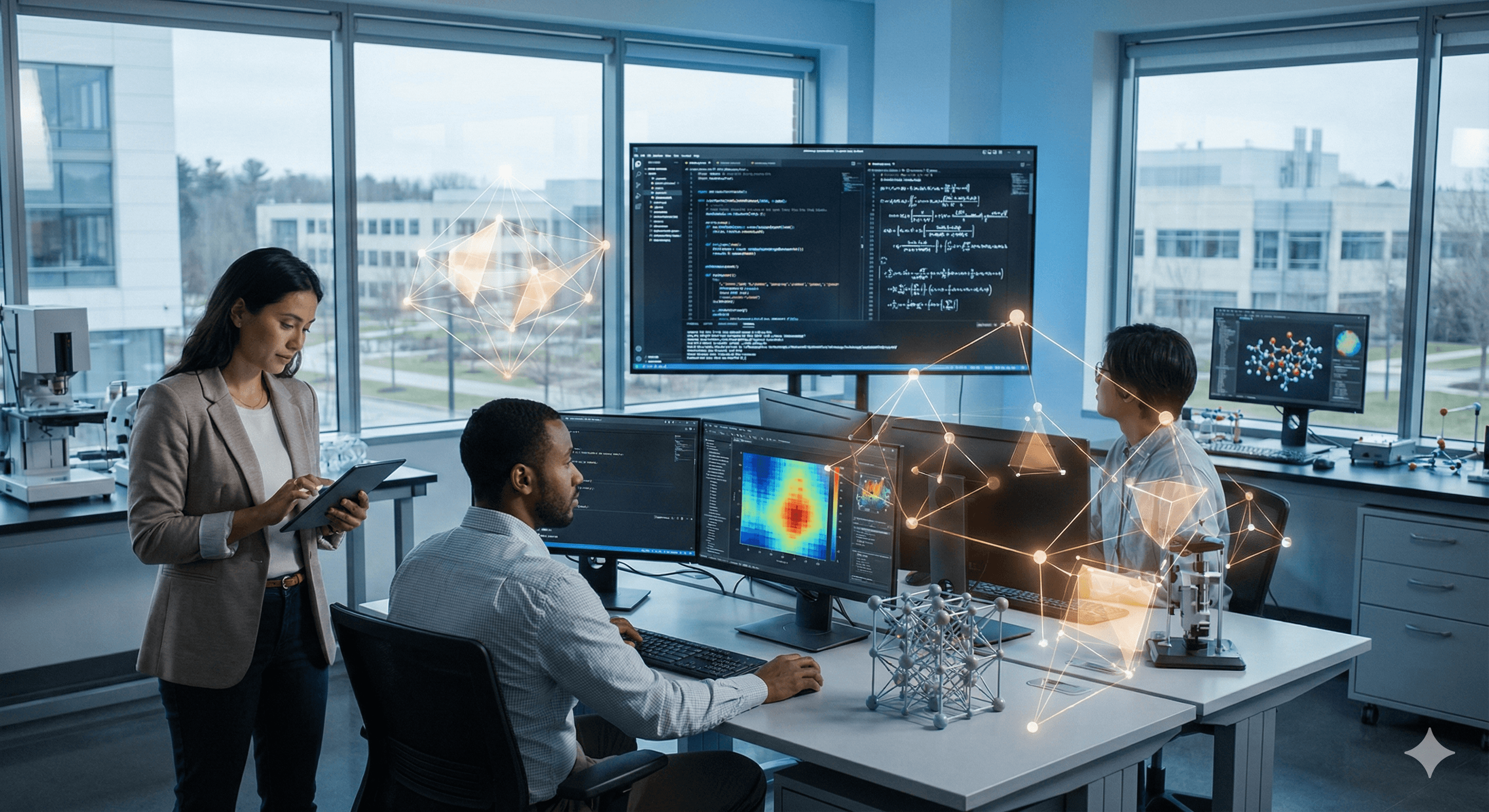
GPT-5.2 es la última familia de modelos de frontera de OpenAI diseñada para trabajos de precisión en ciencia y matemáticas. Fortalece el razonamiento formal, soporta soluciones paso a paso con Python/Análisis de Datos Avanzado (ADA) y maneja entradas más grandes, siendo ideal para flujos de trabajo de investigación, modelado y documentación técnica.
Por qué es importante para los investigadores actualmente
Los laboratorios modernos y los equipos de análisis gestionan largos PDF, conjuntos de datos y ecuaciones. GPT-5.2 mejora el razonamiento y las herramientas para esta realidad: puede recorrer matemáticas complejas, ejecutar código Python controlado a través de ADA y mantener la fidelidad a través de contextos extensos, reduciendo retrabajos y acelerando ciclos de iteración.
Lo nuevo para ciencia y matemáticas
Mejor rendimiento matemático: En FrontierMath (matemáticas a nivel experto), GPT-5.2 estableció un nuevo estándar (40.3% resuelto).
Flujos de trabajo verificados paso a paso: Las notas de lanzamiento destacan mejoras en "el recorrido de matemáticas y lógica complejas paso a paso", con una estructura más clara para pruebas y derivaciones.
Comprensión de gráficos y artículos: Informes iniciales evidencian una mejor interpretación de gráficos en artículos científicos, ayudando en la revisión de literatura y replicación.
Uso de herramientas (Python/ADA): Ejecutar código de manera segura para experimentos numéricos, limpieza de datos y graficación dentro del entorno ADA de ChatGPT.
Transparencia en la gobernanza: La Tarjeta del Sistema GPT-5.2 documenta áreas de evaluación y mitigaciones de seguridad útiles para juntas de revisión institucional y líderes de protección de datos.
Dónde ayuda más GPT-5.2
Soporte para modelado y simulación: Prototipar ecuaciones, generar modelos base y validar supuestos con razonamiento paso a paso, luego probar numéricamente a través de Python.
Análisis y visualización de datos: Limpiar conjuntos de datos, ejecutar estadísticas y producir gráficos listos para publicación más rápidamente dentro de ADA.
Síntesis de literatura: Resumir extensos artículos, extraer ecuaciones y comparar métodos a través de docenas de PDFs en una sola pasada (apoyo de largo contexto).
Asistencia en pruebas: Explorar ideas de pruebas en un entorno estrecho y bien especificado y luego verificar afirmaciones con herramientas independientes y revisión humana.
Comprensión de gráficos: Hacer preguntas específicas sobre figuras/tablas en artículos para acelerar la revisión.
Importante: Para resultados de alta importancia (por ejemplo, protocolos de laboratorio, presentaciones regulatorias), mantenga a un humano en el bucle y documente los pasos de verificación. La Tarjeta del Sistema proporciona contexto sobre limitaciones y postura de seguridad.
Pasos prácticos para implementar en su flujo de trabajo
Seleccione un caso de uso contenido (por ejemplo, "limpiar CSVs y producir gráficos de regresión" o "derivar y verificar una transformación"). Defina pruebas de aceptación.
Configure ADA (Python) y políticas de herramientas: habilite cargas de archivos, especifique bibliotecas/datasets permitidos y restrinja credenciales.
Cree una plantilla de instrucción reproducible con estructura: Objetivo → Entradas → Pasos → Restricciones → Esquema de salida. (La guía de instrucciones de OpenAI muestra patrones que mejoran la corrección y latencia.)
Evalúe con un pequeño marco: registre instrucciones, respuestas esperadas y verificaciones numéricas (por ejemplo, pruebas unitarias para cálculos). Rastree modos de error.
Agregue recuperación de contexto (por ejemplo, Glean para documentos internos; Notion para notas de laboratorio) para fundamentar resúmenes de largo contexto y reducir alucinaciones.
Gobernanza y revisión: mapear su proceso a los temas de la Tarjeta del Sistema GPT-5.2; registre la aprobación para resultados compartidos externamente. Ejemplos que puede ejecutar esta semana
Prototipo de barrido de parámetros: Suba un conjunto de datos, pida a GPT-5.2 que escriba una corta función en Python para búsqueda en cuadrícula, produzca un gráfico con óptimos etiquetados y exporte un CSV de resultados.
Replicación de artículo a gráfico: Pegue una sección de método y una figura; haga que GPT-5.2 describa pasos, implemente el código y luego explique desviaciones del resultado reportado.
Boceto de prueba (con precaución): En un entorno estrecho y bien especificado, solicite una estrategia de prueba y haga que el modelo genere una prueba candidata, luego verifique con herramientas/espacialistas independientes.
Compatibilidad e integraciones
GPT-5.2 se está desplegando en los planes pagos de ChatGPT y la API, con variantes Instant/Thinking. La mayoría de los equipos lo combinan con ADA (Python) y, opcionalmente, computación externa como Wolfram para matemáticas simbólicas y hechos curados.
Preguntas Frecuentes
¿Cómo mejora GPT-5.2 la investigación científica?
Ofrece un razonamiento matemático más sólido, mejor comprensión de gráficos y artículos, y Python/ADA incorporado para realizar verificaciones numéricas: acelera el análisis y la replicación manteniendo a los humanos en el bucle. OpenAI+2SiliconANGLE+2
¿Qué hace que GPT-5.2 sea adecuado para matemáticas?
Resultados de vanguardia en pruebas de nivel experto (por ejemplo, FrontierMath), soluciones estructuradas paso a paso e integraciones de herramientas para verificación. OpenAI+1
¿Puede GPT-5.2 automatizar tareas de investigación?
Sí, para tareas delimitadas como limpieza de datos, graficado, barridos de parámetros y triage de literatura. Mantenga puertas de revisión para todo lo crítico en seguridad. MIT Sloan Teaching Technologies
¿Soporta documentos largos y conjuntos de datos?
Sí, las notas de lanzamiento destacan un mejor manejo de documentos largos y preguntas y respuestas sobre archivos cargados, lo cual ayuda con revisiones de varios documentos y CSVs más grandes. OpenAI Help Center
¿Cómo funciona la gobernanza?
Utilice la Tarjeta del Sistema GPT-5.2 como referencia para mitigaciones y evaluaciones; combínelo con las políticas de datos y ética de su institución. OpenAI
Recibe noticias y consejos sobre IA cada semana en tu bandeja de entrada
Al suscribirte, das tu consentimiento para que Generation Digital almacene y procese tus datos de acuerdo con nuestra política de privacidad. Puedes leer la política completa en gend.co/privacy.



Generación
Digital

Oficina en Reino Unido
Generation Digital Ltd
33 Queen St,
Londres
EC4R 1AP
Reino Unido
Oficina en Canadá
Generation Digital Americas Inc
181 Bay St., Suite 1800
Toronto, ON, M5J 2T9
Canadá
Oficina en EE. UU.
Generation Digital Américas Inc
77 Sands St,
Brooklyn, NY 11201,
Estados Unidos
Oficina de la UE
Software Generación Digital
Edificio Elgee
Dundalk
A91 X2R3
Irlanda
Oficina en Medio Oriente
6994 Alsharq 3890,
An Narjis,
Riad 13343,
Arabia Saudita







Número de la empresa: 256 9431 77 | Derechos de autor 2026 | Términos y Condiciones | Política de Privacidad