OpenAI's Investment in Merge Labs Enhances Human Potential
OpenAI
¿No sabes por dónde empezar con la IA?Evalúa preparación, riesgos y prioridades en menos de una hora.
➔ Descarga nuestro paquete gratuito de preparación para IA
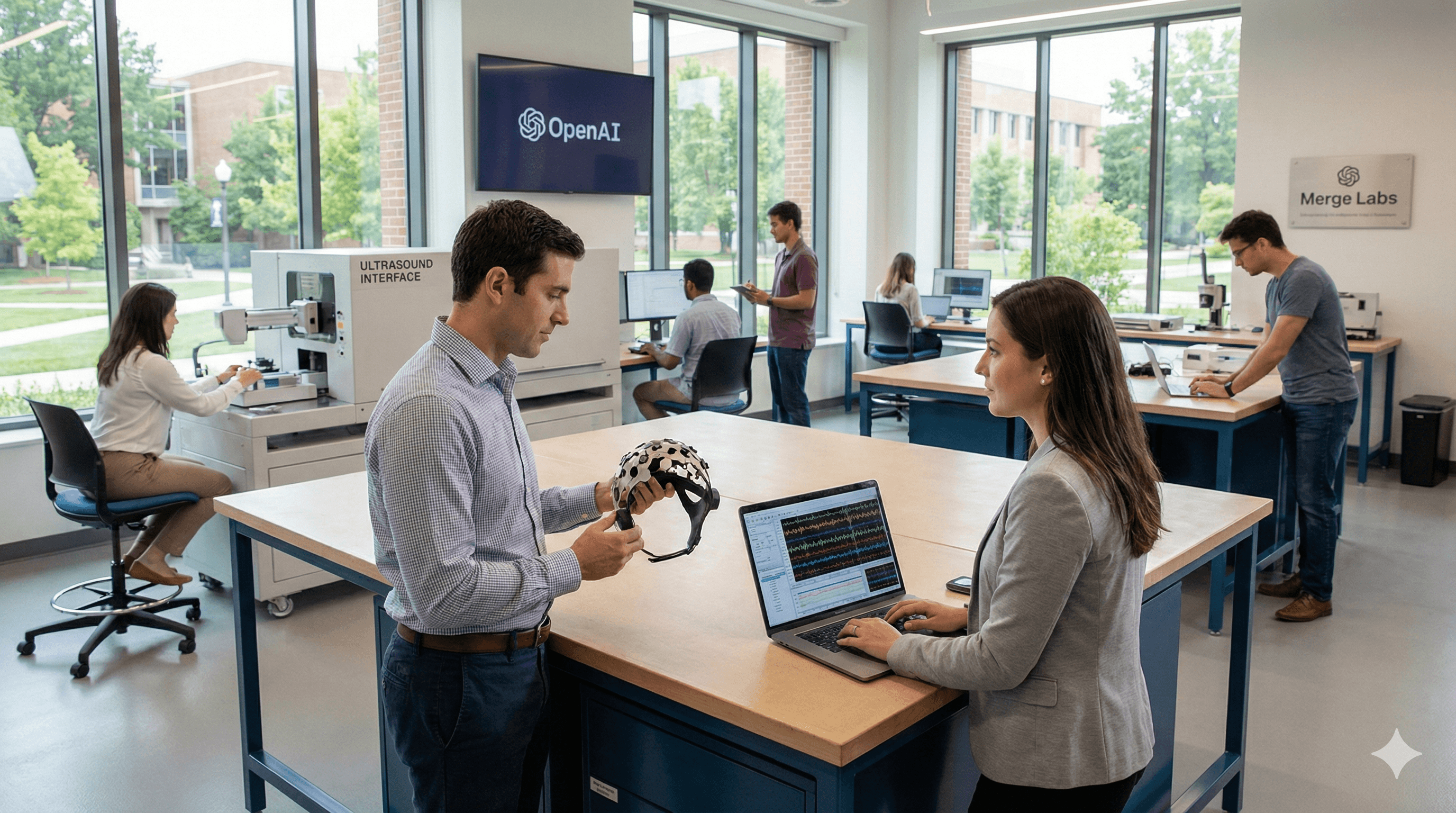
OpenAI is participating in Merge Labs’ seed round to support research into new brain–computer interfaces (BCIs) that bridge biological and artificial intelligence. Merge says it’s pursuing higher-bandwidth, less invasive approaches — including ultrasound-based techniques — while OpenAI plans to collaborate on scientific foundation models and related tools to accelerate the work. (openai.com)
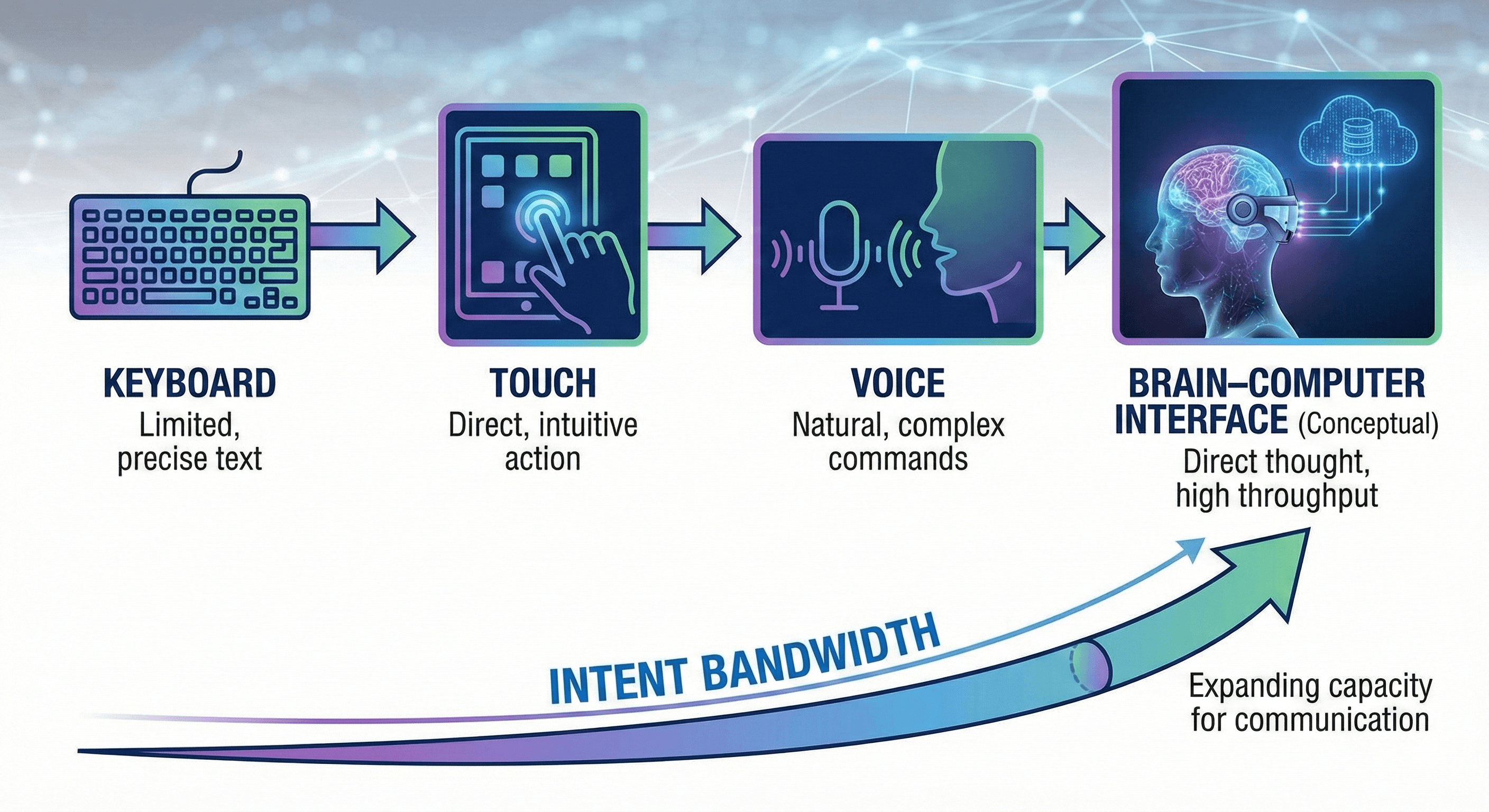
Every major leap in computing has followed a leap in interfaces — from keyboards and mice to touchscreens and voice. OpenAI’s latest bet follows that same logic, but in a far more ambitious direction: brain–computer interfaces.
On 15 January 2026, OpenAI announced it is participating in Merge Labs’ seed round, backing a new research effort focused on BCIs that could eventually enable more direct, human-centred interaction with AI.
What is Merge Labs?
Merge Labs describes itself as a research lab with a long-term mission to “bridge biological and artificial intelligence to maximise human ability, agency, and experience.”
The company says it is developing “fundamentally new approaches” to BCIs that:
increase bandwidth and brain coverage by orders of magnitude,
are much less invasive than implanted electrode systems,
and are designed to be safe and broadly accessible.
Merge Labs is also structured as a Public Benefit Corporation.
What OpenAI is funding (and what it says will happen next)
OpenAI’s announcement focuses on two core ideas:
BCIs as an interface frontier
OpenAI argues that BCIs could create new ways to communicate, learn and interact with technology — and ultimately enable “seamless” interaction with AI.AI as a research accelerator and operating layer
OpenAI says AI will be central to Merge’s approach, accelerating bioengineering, neuroscience and device engineering. It also highlights the need for “AI operating systems” that can interpret intent and adapt to noisy, limited signals — and states OpenAI will collaborate with Merge on scientific foundation models and other frontier tools.
How Merge Labs says it will approach BCIs
Merge Labs’ own launch post is unusually specific about direction of travel. It says it is exploring approaches that:
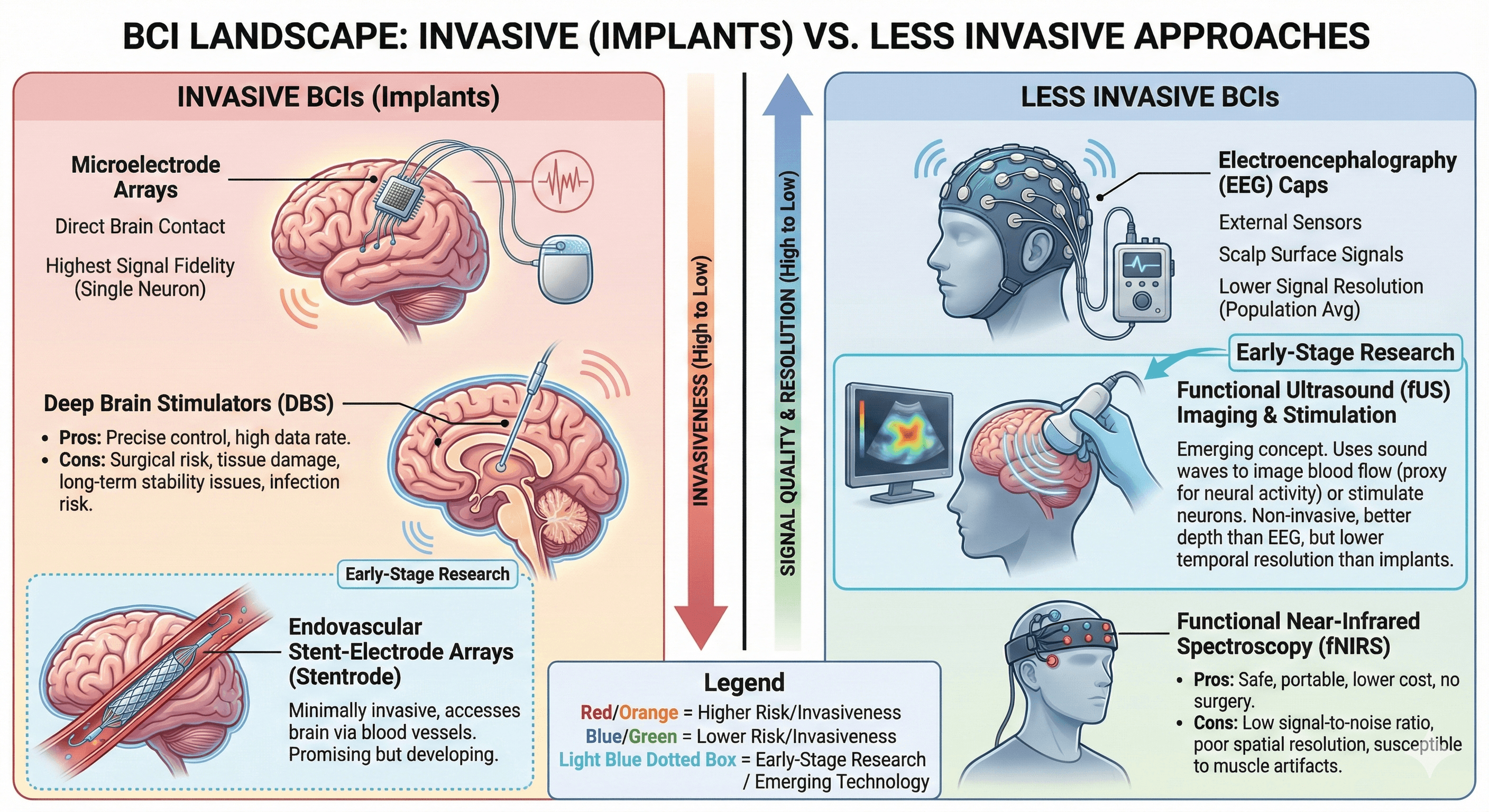
connect with neurons using molecules instead of electrodes,
transmit and receive information using deep-reaching modalities such as ultrasound,
and avoid implants into brain tissue.
Independent reporting has amplified the ultrasound angle, positioning the company as a potential “Neuralink rival” — while also noting the technology is at an early stage and scientific questions remain.
Why this matters (even before products exist)
It’s tempting to treat BCIs as a far-future story — but strategic implications start earlier:
Accessibility and assistive technology: higher-bandwidth, less invasive interfaces could expand what’s possible for people with injury or disease, which Merge says is an initial product focus.
New human–AI interaction models: if intent can be interpreted more directly, it changes how we design user experiences, personalisation, and control.
Privacy and governance will be non-negotiable: Merge explicitly frames privacy and safety as core requirements, and external scientific commentary underscores how early-stage the field still is.
Practical takeaways for organisations (what to do now)
Most businesses don’t need to “prepare for BCIs” operationally today — but leaders can take sensible steps:
Track interface shifts as seriously as model shifts (interfaces are where value becomes adoption).
Build capability in responsible AI and data governance, because neurotech will intensify the need for safety, privacy and auditability.
Separate hype from horizons: treat this as a long-term R&D bet with uncertain timelines, not a near-term deployment trend.
Summary
OpenAI’s investment in Merge Labs signals a serious interest in BCIs as the next interface frontier. OpenAI says it will collaborate on scientific foundation models and tools, while Merge Labs says it is pursuing higher-bandwidth, less invasive approaches including ultrasound-based techniques. The potential upside is profound — but the science is still early, and responsible governance will be essential as the field progresses.
Next steps: Generation Digital can help you translate emerging AI-and-interface developments into clear strategy: what’s real, what’s speculative, and how to communicate opportunity without over-claiming.
FAQs
Q1: What is the goal of OpenAI’s investment in Merge Labs?
OpenAI says it is participating in Merge Labs’ seed round to support BCI research that could enable more direct, human-centred interaction with AI and help bridge biological and artificial intelligence. (openai.com)
Q2: What are brain–computer interfaces (BCIs)?
BCIs are systems that measure brain activity and translate it into outputs for external devices (and in some cases can also stimulate or modulate activity), enabling new forms of communication and control. (nature.com)
Q3: What approach is Merge Labs taking?
Merge Labs says it is developing less invasive, higher-bandwidth approaches, including molecular interfaces and deep-reaching modalities such as ultrasound, with a focus on safety and accessibility. (merge.io)
Q4: Is this technology available now?
No. Merge Labs describes a long-term, decades-scale research programme, and external scientific reporting notes the field is still at an early stage. (merge.io)
Recibe noticias y consejos sobre IA cada semana en tu bandeja de entrada
Al suscribirte, das tu consentimiento para que Generation Digital almacene y procese tus datos de acuerdo con nuestra política de privacidad. Puedes leer la política completa en gend.co/privacy.



Generación
Digital

Oficina en Reino Unido
Generation Digital Ltd
33 Queen St,
Londres
EC4R 1AP
Reino Unido
Oficina en Canadá
Generation Digital Americas Inc
181 Bay St., Suite 1800
Toronto, ON, M5J 2T9
Canadá
Oficina en EE. UU.
Generation Digital Américas Inc
77 Sands St,
Brooklyn, NY 11201,
Estados Unidos
Oficina de la UE
Software Generación Digital
Edificio Elgee
Dundalk
A91 X2R3
Irlanda
Oficina en Medio Oriente
6994 Alsharq 3890,
An Narjis,
Riad 13343,
Arabia Saudita







Número de la empresa: 256 9431 77 | Derechos de autor 2026 | Términos y Condiciones | Política de Privacidad