VfL Wolfsburg + ChatGPT Enterprise: Adopción de IA en todo el club
ChatGPT
¿No sabes por dónde empezar con la IA?Evalúa preparación, riesgos y prioridades en menos de una hora.
➔ Descarga nuestro paquete gratuito de preparación para IA
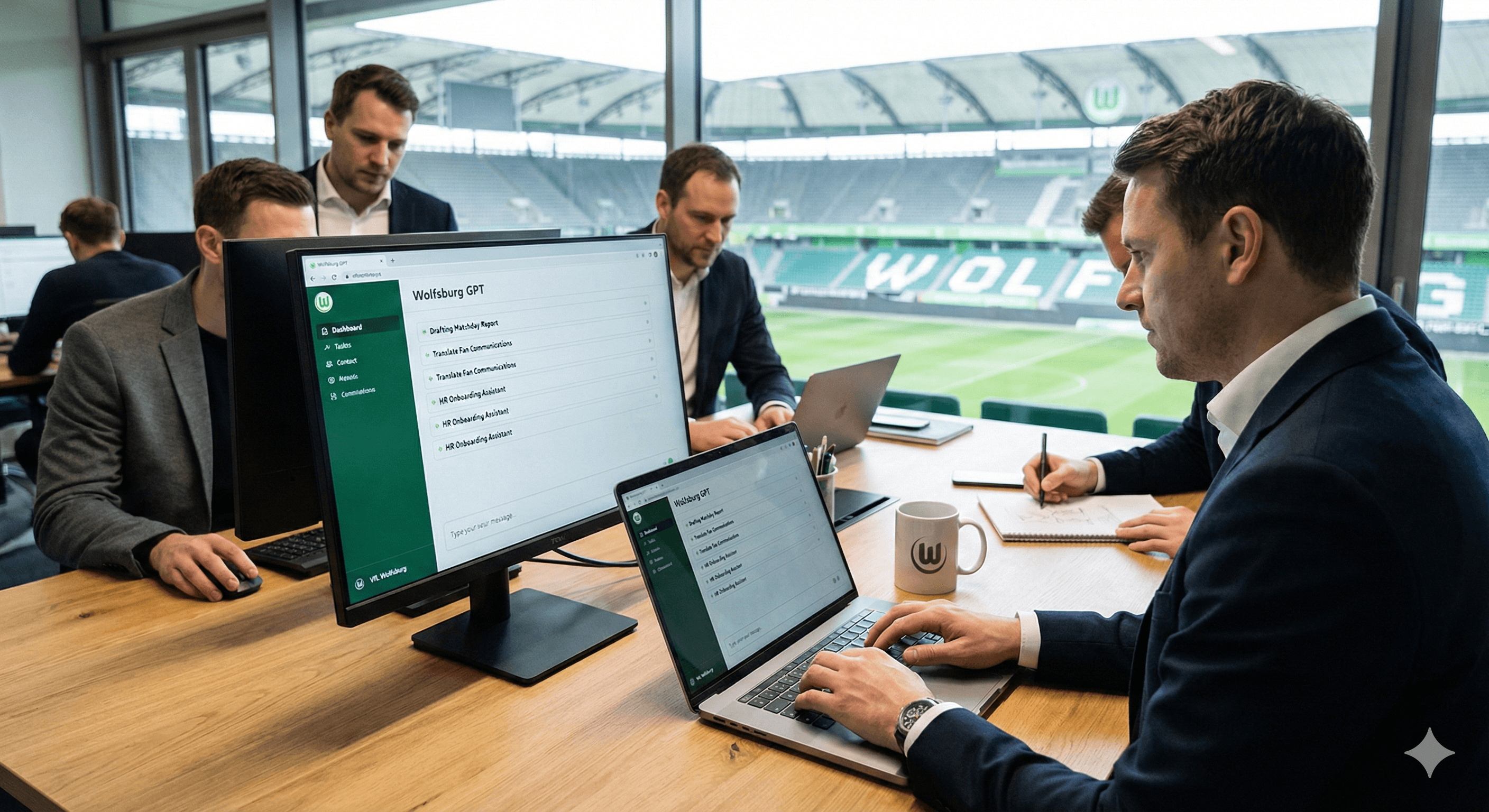
VfL Wolfsburg ha superado los pilotos de IA al implementar ChatGPT Enterprise como una capacidad a nivel del club para alrededor de 350 empleados. El club reporta más de 50 GPTs personalizados en uso diario, ahorros anuales de seis cifras por la reducción de la dependencia de agencias externas, y una más rápida elaboración, traducción y estandarización en los flujos de trabajo principales.
Los clubes de fútbol modernos ya no se definen solo por su desempeño en la cancha. Las expectativas de los fanáticos, socios y partes internas siguen aumentando, mientras que los presupuestos y el personal no pueden aumentar indefinidamente.
Esa es la tensión que VfL Wolfsburg se propuso resolver convirtiendo la IA generativa en una capacidad del club, no un experimento aislado. Con ChatGPT Enterprise, Wolfsburg está ampliando la eficiencia, creatividad y el intercambio de conocimientos, sin perder su identidad futbolística.
Por qué “personas, no pilotos” es importante
Muchas organizaciones abordan la IA como una serie de pequeños pilotos. Wolfsburg adoptó una postura diferente: si la IA va a crear una ventaja sostenible, tiene que ser entendible y utilizable para todos, no solo para especialistas.
En lugar de lanzar con presentaciones estratégicas, el club empezó con trabajo real:
talleres y experimentación práctica,
casos de uso liderados por departamentos,
y flujos de trabajo repetibles que los equipos ya comprendían.
El objetivo era pragmático: ahorrar tiempo, reducir costos externos y mejorar la calidad y consistencia.
Lo que realmente está cambiando dentro del club
Los desafíos iniciales de Wolfsburg parecen familiares para cualquier organización intensiva en conocimientos:
la elaboración repetitiva, traducción, informes y documentación ralentizando a los equipos,
el conocimiento concentrado en unos pocos especialistas creando cuellos de botella,
y agencias externas manejando trabajo rutinario a alto costo, sin construir capacidad interna.
ChatGPT se convirtió en la capa que ayuda a las personas a producir resultados más sólidos más rápidamente y compartir conocimientos más equitativamente entre los departamentos.
Por qué ChatGPT Enterprise (y por qué ahora)
Después de construir experiencia con licencias de ChatGPT Team/Business, Wolfsburg decidió que la siguiente limitación no era si la IA funcionaba, sino cómo escalarla adecuadamente y de manera responsable.
Moverse a ChatGPT Enterprise creó una base coherente que el club podría implementar ampliamente, ampliando el acceso a aproximadamente 350 empleados y fortaleciendo la gobernanza.
Haciendo la IA tangible: GPTs personalizados construidos alrededor de flujos de trabajo cotidianos
La adopción se aceleró cuando Wolfsburg dejó de hablar de “IA” y comenzó a construir asistentes para trabajos específicos.
Hoy en día, el club reporta:
Más de 50 GPTs personalizados activos en el uso diario en operaciones, comunicaciones, marketing, RRHH y administración
un ecosistema más amplio de casi 100 GPTs personalizados (algunos apoyados por el equipo central de innovación, muchos creados independientemente dentro de los departamentos)
Esto se convierte en un modelo operativo repetible:
Identificar un cuello de botella
Convertirlo en un GPT
Escalarlo a los equipos que lo necesitan
Para que la adopción se sienta accesible, muchos asistentes son nombrados internamente de manera humanizada, sin difuminar la responsabilidad por las decisiones.
Resultados: ahorros, velocidad y adopción autoimpulsada
Wolfsburg reporta resultados que van más allá de lo “bueno tener”:
Ahorros anuales de seis cifras al reducir la dependencia de agencias externas para trabajos repetibles
Elaboración, traducción y estandarización más rápidas en los flujos de trabajo principales
Adopción generalizada, incluyendo roles no técnicos y exjugadores, ayudando a que el uso se vuelva autoimpulsado
Cómo Wolfsburg está escalando habilidades: Campeones GPT (“GPTlers”)
Para apoyar una adopción sostenible, el club está construyendo una red de campeones internos capacitados. Estos colegas ayudan a sus departamentos a aplicar la IA de manera efectiva, a construir GPTs y a compartir patrones que funcionan.
Esto es importante porque la mayor limitación a escala rara vez es la tecnología. Es la gestión del cambio: capacitación consistente, estándares y uso seguro en una organización diversa.
Lo que otras organizaciones pueden aprender de VfL Wolfsburg
El enfoque de Wolfsburg es un claro modelo para ir más allá de los pilotos:
Comenzar con trabajo recurrente (plantillas, resultados repetibles, flujos de trabajo estándar)
Hacer la adopción sin fricciones (herramientas que la gente no teme usar)
Convertir casos de uso en activos compartidos (GPTs personalizados que otros pueden reutilizar)
Crear expertos locales (campeones en cada departamento)
Tratar la gobernanza como un habilitador (para que la experimentación pueda escalar responsablemente)
Resumen y próximos pasos
El despliegue de VfL Wolfsburg muestra cómo se ve la “IA como una capacidad”: flujos de trabajo prácticos, asistentes reutilizables, ahorros medibles y un modelo centrado en las personas que se difunde.
Próximo paso: Si quieres adoptar un enfoque similar, construyendo adopción, gobernanza y resultados medibles—Generation Digital puede ayudarte a diseñar tu plan de implementación.
Preguntas frecuentes
¿Cómo se usa ChatGPT en VfL Wolfsburg?
A través de operaciones, comunicaciones, marketing, RRHH y administración, principalmente para tareas repetibles como elaboración, traducción, informes y estandarización, entregadas a través de GPTs personalizados.
¿Por qué centrarse en las personas sobre los pilotos?
Porque el valor sostenible proviene de una amplia adopción y desarrollo de capacidades. Los pilotos demuestran posibilidad; el habilitamiento centrado en las personas construye impacto repetible.
¿Esto afectará la identidad futbolística del club?
No. La perspectiva de Wolfsburg es que la IA apoya a las personas que trabajan tras bambalinas, mientras que los valores futbolísticos centrales del club permanecen inalterados.
¿Qué resultados ha reportado Wolfsburg?
El club reporta más de 50 GPTs personalizados en uso diario, ahorros anuales de seis cifras por la reducción de la dependencia de agencias y flujos de trabajo más rápidos en elaboración y traducción.
Recibe noticias y consejos sobre IA cada semana en tu bandeja de entrada
Al suscribirte, das tu consentimiento para que Generation Digital almacene y procese tus datos de acuerdo con nuestra política de privacidad. Puedes leer la política completa en gend.co/privacy.



Generación
Digital

Oficina en Reino Unido
Generation Digital Ltd
33 Queen St,
Londres
EC4R 1AP
Reino Unido
Oficina en Canadá
Generation Digital Americas Inc
181 Bay St., Suite 1800
Toronto, ON, M5J 2T9
Canadá
Oficina en EE. UU.
Generation Digital Américas Inc
77 Sands St,
Brooklyn, NY 11201,
Estados Unidos
Oficina de la UE
Software Generación Digital
Edificio Elgee
Dundalk
A91 X2R3
Irlanda
Oficina en Medio Oriente
6994 Alsharq 3890,
An Narjis,
Riad 13343,
Arabia Saudita







Número de la empresa: 256 9431 77 | Derechos de autor 2026 | Términos y Condiciones | Política de Privacidad