Asana + Claude: Solucionando la falta de contexto en la inteligencia artificial empresarial
Asana
Claude
¿No sabes por dónde empezar con la IA?Evalúa preparación, riesgos y prioridades en menos de una hora.
➔ Descarga nuestro paquete gratuito de preparación para IA
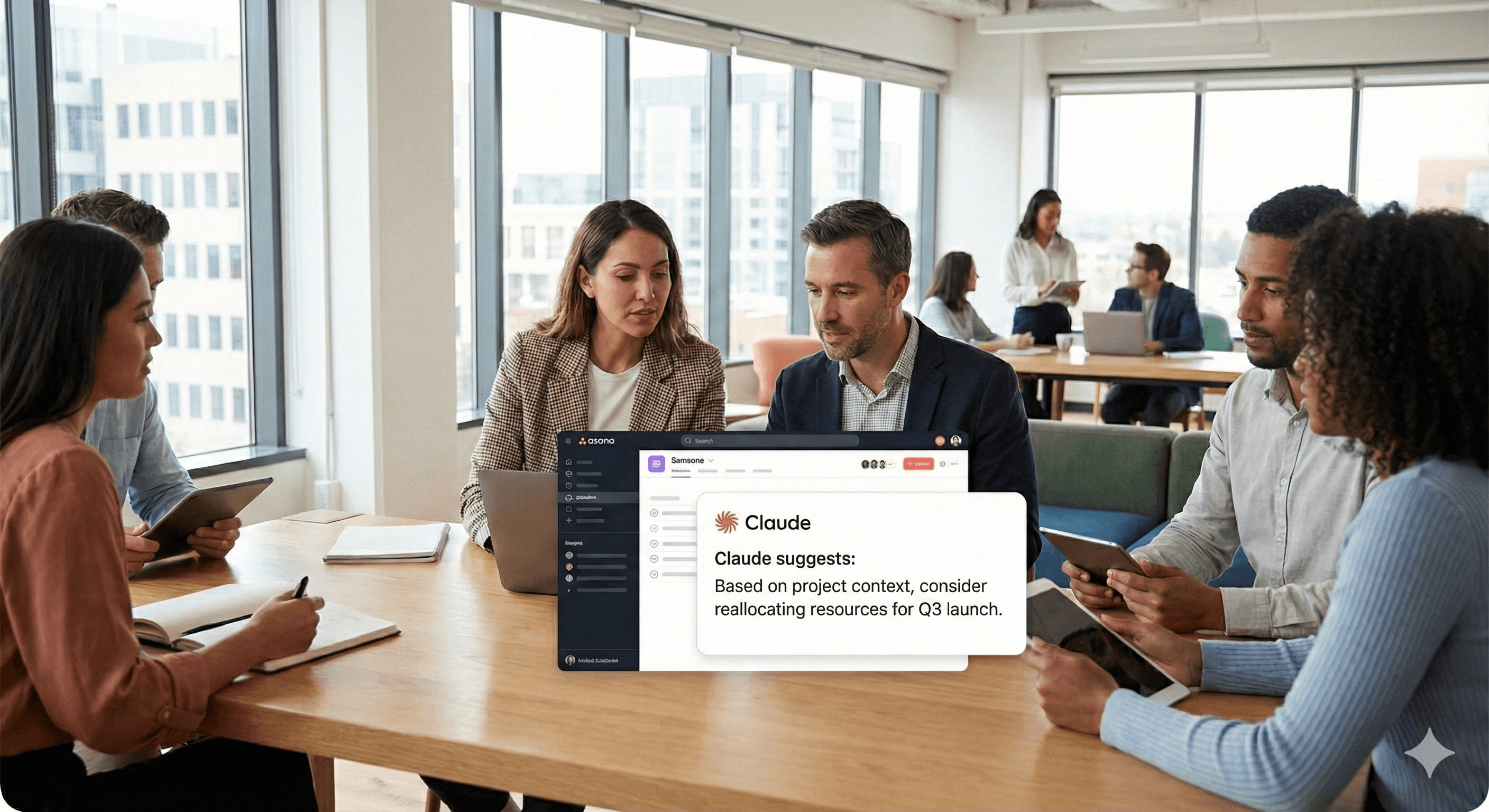
Asana acaba de lanzar una app interactiva de Claude y ha presentado un argumento claro: los modelos de lenguaje sin contexto empresarial están “faltos de contexto.” La apuesta de Asana es que el Work Graph—el mapa en vivo de quién está haciendo qué, para cuándo y por qué—proporciona ese contexto para que los modelos externos (Anthropic hoy; OpenAI/Google mañana) realmente realicen un trabajo útil.
En la entrevista con VentureBeat, el CPO de Asana lo plantea de manera directa: el poder bruto del modelo importa menos que el contexto empresarial, y Asana apunta a ser el front-end para los agentes de cualquier proveedor, no un proveedor de modelos por sí mismo.
Qué se lanzó (y por qué importa)
Claude dentro de tu flujo de Asana: Conéctate vía OAuth, luego crea proyectos, tareas y estructuras completas mediante conversaciones; haz preguntas sobre el estado y obtén respuestas fundamentadas en tus proyectos. Se requiere aprobación humana antes de que Claude haga cambios.
Disponible ahora: La guía de Asana confirma la configuración a través del directorio de aplicaciones de Claude; una vez conectado, menciona Asana en el chat para convertir ideas en acción.
Estrategia agnóstica de modelos: Asana también está profundizando los conectores de ChatGPT y Gemini y alineándose con los estándares de MCP y agente a agente, para protegerse contra el bloqueo del proveedor.
Panorama general: Las nuevas aplicaciones interactivas de Anthropic (Asana, Slack, Figma, etc.) hacen que Claude sea una verdadera superficie de trabajo en lugar de una pestaña separada.
Por qué importa: Este es el cambio de “hablar sobre el trabajo” a “cambiar el trabajo”—pero solo si la IA está fundamentada en las metas, aprobaciones y relaciones de tu organización (es decir, el Work Graph).
El modelo operativo: hacer la IA útil, segura y medible
Fundamentado en el Work Graph (o equivalente)
Garantiza que los agentes vean proyectos, propietarios, dependencias y objetivos—no solo texto. Reduce alucinaciones y fomenta acciones relevantes.Humano en el bucle por diseño
Mantén las aprobaciones obligatorias para ediciones/creaciones; sigue el patrón de Asana: revisa, confirma y luego ejecuta. (Reduce el riesgo organizativo mientras se construye confianza.)Pluralismo de modelos sobre bloqueo
Trata a Claude, ChatGPT y Gemini como motores de razonamiento intercambiables detrás de una sola capa de orquestación. La hoja de ruta de Asana apoya explícitamente esta postura.Roles de agente, no chat genérico
Usa Patrones de AI Teammates/agentes vinculados a metas y flujos de trabajo (registro de riesgos, verificación de dependencias, orquestación de seguimientos). Aquí es donde el contexto del Work Graph brilla.Gobernanza y auditoría
Acceso basado en OAuth, acciones respetuosas de permisos, visibilidad del administrador y registros de cambios. Publica “Qué puede y no puede hacer este agente.”
Un libro de jugadas para el despliegue (puedes comenzar ahora)
Fase 1 — Conectar y limitar (2–3 semanas)
Habilita la app de Asana en Claude; determina el acceso por espacio de trabajo/proyecto.
Define acciones aprobadas (crear tareas, planear borradores) vs. solo lectura.
Configura una puerta de aprobaciones para cualquier acción de escritura.
Fase 2 — Diseñar flujos de trabajo agénticos (3–6 semanas)
Crea comandos slash/propuestas conversacionales para:
“Borrador de plan de proyecto desde este PRD” → revisar → aprobar → publicar en Asana.
“¿Qué está retrasado en el lanzamiento X?” → estado, riesgos, responsables y mitigaciones sugeridas.
Pilota rutinas al estilo AI Teammate que supervisan dependencias y proponen seguimientos.
Fase 3 — Medir y expandir (en curso)
Rastrea tiempo de ciclo para la creación de proyectos, % de tareas creadas vía IA (con aprobación humana), tiempo de resolución de dependencias y satisfacción del usuario.
Agrega conectores a Slack (actualizaciones), Figma (enlaces de revisión), Miro (talleres) dentro de las aplicaciones interactivas de Claude para menos cambios de contexto.
Riesgos y mitigaciones
Ansiedad por demasiada automatización: Mantén la confirmación humana obligatoria; publica una matriz de capacidades de agentes.
Deriva del alcance de datos: Aplica privilegio mínimo con OAuth y acceso basado en roles; audita el uso a través de paneles de administración.
Volatilidad del proveedor: Usa la postura agnóstica de modelos de Asana y estándares como MCP para mantener la portabilidad.
Dónde encaja la Generación Digital (lo que hacemos vs. lo que no)
Nosotros hacemos: Software de orquestación, gobernanza de políticas/propuestas, puertas de aprobación, paneles de métricas, programas de habilitación e integraciones (Asana, Slack, Notion, Miro, Glean).
No hacemos: Construir modelos de base o reemplazar tu pila de PM—hacemos que tu configuración multi-modelo y con humanos en el bucle realmente funcione.
Preguntas frecuentes
¿Cómo funciona la integración de Claude en Asana?
Autentícate vía OAuth, luego usa Claude para crear/modificar proyectos y obtener estado—con aprobación humana explícita antes de que los cambios se realicen.
¿Por qué es un problema una IA “falta de contexto”?
Los modelos pueden escribir, pero no conocen tus metas, responsables o aprobaciones. El Work Graph suministra ese contexto organizacional para que las acciones sean relevantes.
¿Estamos atados a Anthropic?
No. Asana es agnóstico de modelos y está profundizando conectores para ChatGPT y Gemini, además de estándares de la industria como MCP.
¿Qué medidas de seguridad están en su lugar?
Se respetan los permisos de usuario; los administradores tienen visibilidad; y se requiere aprobación humana en el bucle antes de que Claude escriba en Asana.
¿Cuál es la forma más rápida de probarlo?
Elige un flujo de trabajo de alto impacto (por ejemplo, “nuevo proyecto desde PRD”), llévalo a cabo con aprobaciones activadas, rastrea el tiempo de entrega del proyecto y la satisfacción, luego expande.
Próximos pasos
¿Listo para alimentar tu IA con contexto?
Pondremos en marcha Asana + Claude con medidas de seguridad, aprobaciones y métricas—y te mantendremos portable entre modelos.
→ Reserva una sesión de descubrimiento con Generation Digital para implementar en semanas, no meses.
Recibe noticias y consejos sobre IA cada semana en tu bandeja de entrada
Al suscribirte, das tu consentimiento para que Generation Digital almacene y procese tus datos de acuerdo con nuestra política de privacidad. Puedes leer la política completa en gend.co/privacy.



Generación
Digital

Oficina en Reino Unido
Generation Digital Ltd
33 Queen St,
Londres
EC4R 1AP
Reino Unido
Oficina en Canadá
Generation Digital Americas Inc
181 Bay St., Suite 1800
Toronto, ON, M5J 2T9
Canadá
Oficina en EE. UU.
Generation Digital Américas Inc
77 Sands St,
Brooklyn, NY 11201,
Estados Unidos
Oficina de la UE
Software Generación Digital
Edificio Elgee
Dundalk
A91 X2R3
Irlanda
Oficina en Medio Oriente
6994 Alsharq 3890,
An Narjis,
Riad 13343,
Arabia Saudita







Número de la empresa: 256 9431 77 | Derechos de autor 2026 | Términos y Condiciones | Política de Privacidad