OpenAI lanza una RFP para fortalecer la cadena de suministro de IA en Estados Unidos mediante la fabricación nacional
OpenAI
Inteligencia Artificial
¿No sabes por dónde empezar con la IA?Evalúa preparación, riesgos y prioridades en menos de una hora.
➔ Descarga nuestro paquete gratuito de preparación para IA
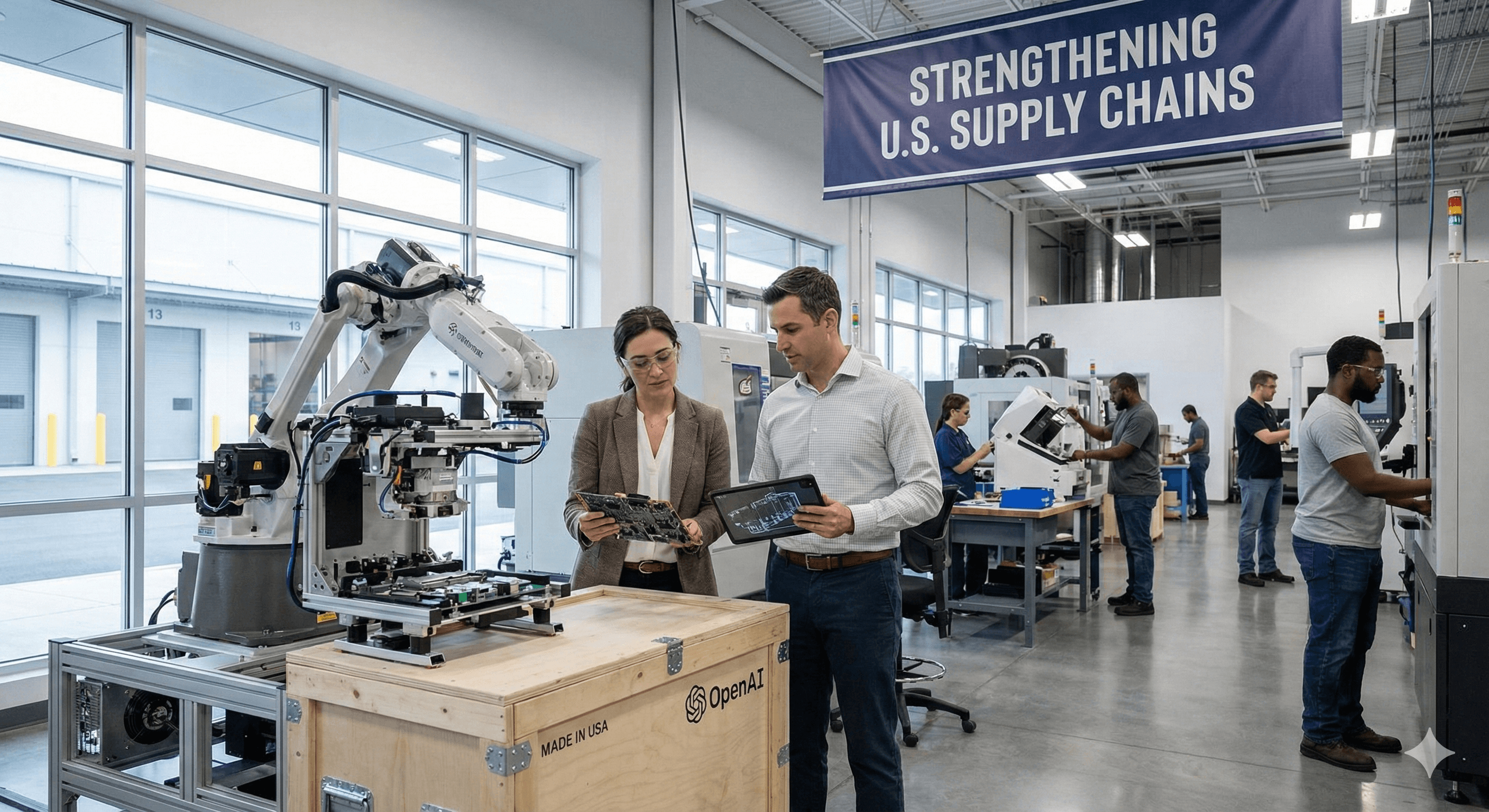
OpenAI ha hecho un llamado a fabricantes y socios de EE. UU. capaces de construir componentes críticos para AI a escala. El programa está dirigido a acortar los tiempos de construcción, fortalecer la resiliencia de la cadena de suministro y ampliar el liderazgo tecnológico a medida que la demanda de computación y AI incorporada aumenta.
La RFP agrupa las necesidades en tres áreas:
Insumos de centros de datos — computación, energía, enfriamiento, racks y redes.
Electrónicos de consumo — módulos, componentes y herramientas utilizadas en dispositivos habilitados para AI.
Robótica avanzada — incluyendo cajas de engranajes, motores y electrónica de potencia.
Por qué esto es significativo
Resiliencia: Trae pasos clave de producción a nivel local para reducir la exposición a cuellos de botella globales.
Velocidad: Cadenas logísticas más cortas e iteración más rápida para los sistemas de AI de próxima generación.
Empleos e inversión: Apoya roles de alto valor en fabricación, empaque avanzado, sistemas electromecánicos e infraestructura de centros de datos.
Contexto: la carrera de AI — por qué OpenAI necesita esto
Explosión de demanda de computación: El entrenamiento y el servicio de modelos avanzados requieren volúmenes crecientes de aceleradores, memoria (HBM) y empaques avanzados. Asegurar proveedores locales ayuda a garantizar un acceso predecible a estos insumos.
Cuellos de botella en la infraestructura: Desde sustratos avanzados y empaques tipo CoWoS hasta energía, enfriamiento, racks y óptica, los puntos de estrangulamiento retrasan los despliegues. Construir capacidad en EE. UU. a través de estos vínculos reduce los puntos únicos de falla.
Restricciones de potencia y térmicas: Los clústeres de AI densos intensifican las necesidades de suministro de energía y eliminación de calor. La fabricación local de PDUs, barras colectoras, enfriadores, placas frías y recintos de alta eficiencia acelera el despliegue.
Transición de laboratorios a productos: A medida que AI se mueve a dispositivos de consumo y robótica incorporada, OpenAI necesita fuentes locales confiables para mecánica de precisión (cajas de engranajes, motores), electrónica de control y módulos de CE.
Geopolítica y riesgo comercial: Los controles de exportación, aranceles y choques logísticos pueden prolongar los tiempos de entrega. La fabricación nacional mitiga el riesgo de suministro para programas críticos en el tiempo.
Velocidad para aprender: Ciclos de construcción más rápidos y localizados significan experimentación e iteración más rápidas en la infraestructura de entrenamiento e inferencia de modelos, una ventaja en una carrera de rápida evolución.
Señalización del ecosistema: Comprometerse con proveedores de EE. UU. fomenta la inversión en materiales primarios, herramientas y mano de obra, ampliando la capacidad con el tiempo.
Quiénes deben aplicar
Fabricantes y consorcios de EE. UU. con capacidad existente o a corto plazo en cualquiera de las tres áreas de enfoque.
Proveedores de tecnologías habilitadoras como empaque avanzado, gestión térmica, óptica, movimiento preciso y herramientas relacionadas.
Socios capaces de demostrar instalaciones escalables, sistemas de calidad y valor agregado local.
Qué incluir en su propuesta
Alineación del alcance: Indique el área de enfoque que abordan y los cuellos de botella que resuelven.
Capacidad y cronograma: Instalaciones, plan de equipamiento, objetivos de rendimiento, calendario de aumento.
Plan de resiliencia: Segundo abastecimiento, trazabilidad y localización de proveedores en EE. UU.
Fuerza laboral y cumplimiento: Contratación, capacitación, seguridad y controles relevantes.
Impacto: Cuantifique la reducción del tiempo de entrega, los objetivos de rendimiento y el valor agregado local.
Fechas clave
Fecha de publicación: 15 de enero de 2026
Revisiones: En curso, continuas
Fecha límite final: junio de 2026
Cómo puede ayudar Generation Digital
Preparación para licitación: Rápida exploración de elegibilidad, evidencia y hitos.
Soporte para propuestas: Estructura, narrativa y diseño de KPI.
Herramientas de entrega: Asana para control de programas, Miro para revisiones y diseño, Notion para documentación y pista de auditoría.
Contáctenos para evaluar la idoneidad y acelerar su presentación.
Preguntas frecuentes
¿Cuál es la fecha límite?
Junio de 2026; las propuestas se revisan de manera continua.
¿Quién es elegible?
Fabricantes y socios con sede en EE. UU. que puedan escalar la capacidad en insumos para centros de datos, electrónicos de consumo o robótica avanzada.
¿Cuál es el objetivo?
Acortar los tiempos, fortalecer la resiliencia y ampliar el liderazgo tecnológico de EE. UU. en la infraestructura de hardware de AI.
Recibe noticias y consejos sobre IA cada semana en tu bandeja de entrada
Al suscribirte, das tu consentimiento para que Generation Digital almacene y procese tus datos de acuerdo con nuestra política de privacidad. Puedes leer la política completa en gend.co/privacy.



Generación
Digital

Oficina en Reino Unido
Generation Digital Ltd
33 Queen St,
Londres
EC4R 1AP
Reino Unido
Oficina en Canadá
Generation Digital Americas Inc
181 Bay St., Suite 1800
Toronto, ON, M5J 2T9
Canadá
Oficina en EE. UU.
Generation Digital Américas Inc
77 Sands St,
Brooklyn, NY 11201,
Estados Unidos
Oficina de la UE
Software Generación Digital
Edificio Elgee
Dundalk
A91 X2R3
Irlanda
Oficina en Medio Oriente
6994 Alsharq 3890,
An Narjis,
Riad 13343,
Arabia Saudita







Número de la empresa: 256 9431 77 | Derechos de autor 2026 | Términos y Condiciones | Política de Privacidad