Comment les agents IA améliorent les tâches quotidiennes (Guide 2026)
Pérplexité
Pas sûr de quoi faire ensuite avec l'IA?Évaluez la préparation, les risques et les priorités en moins d'une heure.
➔ Téléchargez notre kit de préparation à l'IA gratuit
Les agents d'IA sont passés de la nouveauté à la nécessité. La dernière recherche de Perplexity avec des partenaires académiques montre comment les gens utilisent les agents au quotidien — de la synthèse des boîtes de réception au déclenchement de workflows à étapes multiples — et pourquoi la personnalisation et l'utilisation des outils comptent maintenant plus que la taille brute du modèle. Perplexity AI
Pourquoi cela est important en 2026
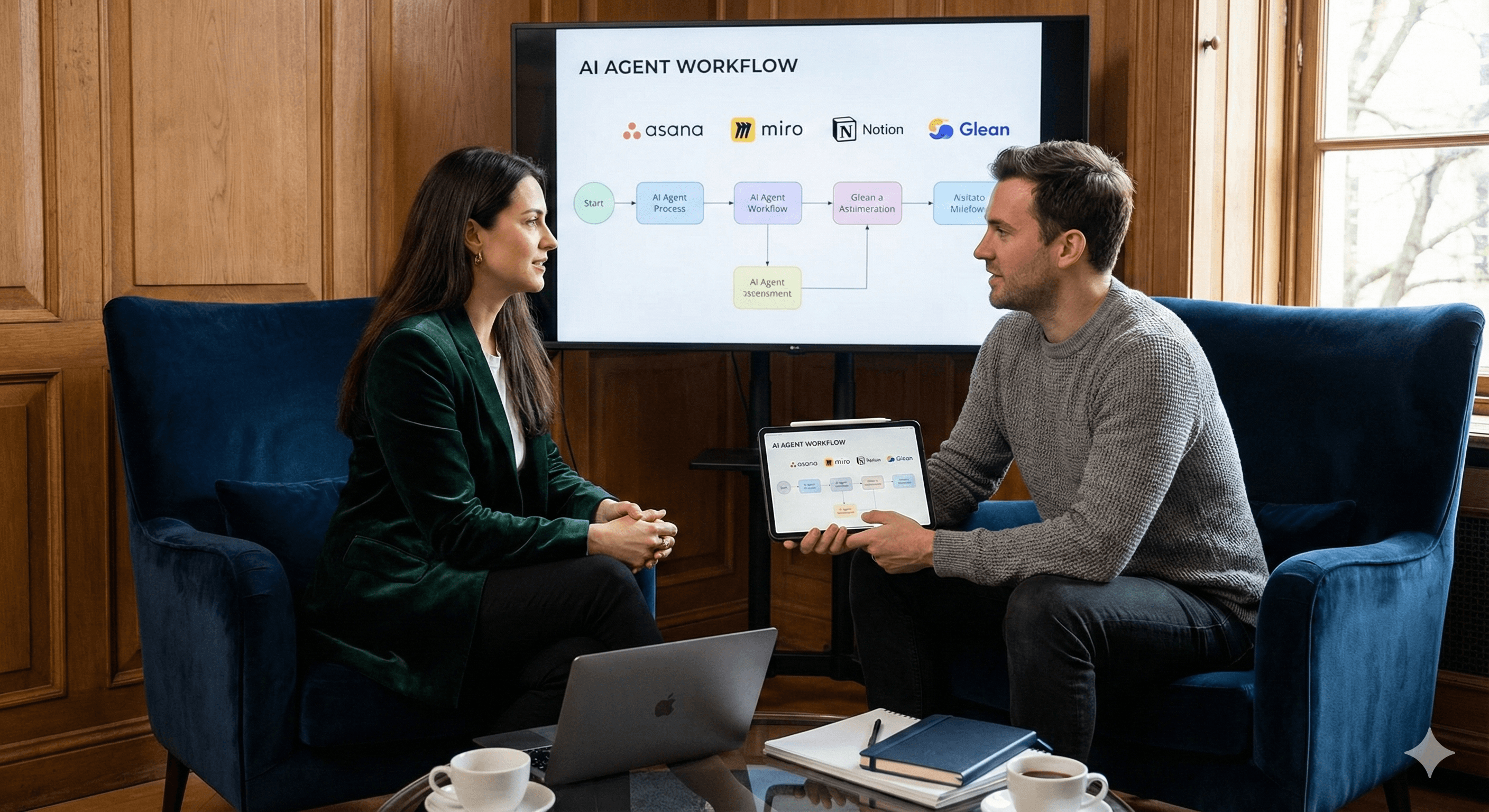
Les agents les plus précieux ne font pas que discuter — ils planifient, appellent des outils, et se souviennent des préférences pour réduire le cycle « trouver → comprendre → agir ». Avec les récentes mises à jour, les assistants de Perplexity peuvent conserver des préférences structurées au fil des sessions, rendant les réponses plus rapides et mieux adaptées à vous ou votre équipe. Associez des agents à votre système de travail — Asana pour l'orchestration, Miro pour les cartes système, Notion pour les manuels de procédures, et Glean pour la recherche d'entreprise — afin de transformer les conseils en actions. Perplexity AI
Quoi de neuf (et ce qui fonctionne réellement)
Perplexity souligne une adoption généralisée de la technologie des agents en 2025–2026, soutenue par le premier examen à grande échelle de l'utilisation des agents par les gens dans la pratique. Les fils conducteurs : les agents qui planifient des étapes, citent des sources, et s'intègrent à vos outils offrent les plus grandes économies de temps et de confiance. Perplexity AI
Moyens pratiques de déployer des agents aujourd'hui
Tri des courriels → flux de projet : Demandez à un agent de résumer les nouveaux courriels, de rédiger des réponses et d'ouvrir des tâches dans Asana avec des dates d'échéance et des responsables, liés au manuel de procédures Notion pertinent pour le workflow.
Recherche → mémo de décision : Demandez à un agent de rassembler des sources avec citations, de cartographier les parties prenantes sur un tableau Miro, et de produire un court document de décision dans Notion. L'approche d'agent de Perplexity met l'accent sur la récupération en direct et les réponses citées, ce qui renforce la confiance.
Récupération de connaissances au travail : Utilisez Glean pour indexer vos connaissances internes afin que l'agent puisse répondre avec le contexte de l'entreprise, pas seulement les pages web publiques — particulièrement utile pour les politiques, les tarifs et les SOP. (Modèle de conception : agentic RAG.)
Les agents d'IA automatisent les tâches quotidiennes en planifiant des étapes, en appelant des outils et en se souvenant des préférences. Les conclusions de Perplexity pour 2025–2026 montrent que les plus grands gains proviennent des agents qui citent des sources et s'intègrent à votre système (Asana, Miro, Notion, Glean), transformant la recherche et l'administration en workflows fiables et répétables qui libèrent du temps pour un travail de plus grande valeur.
Résumé
Les agents d'IA sont prêts pour le travail quotidien — surtout lorsqu'ils peuvent planifier, citer et agir au sein de vos outils existants. Si vous souhaitez un projet pilote qui associe les agents de style Perplexity avec Asana, Miro, Notion et Glean, Generation Digital peut concevoir un déploiement sûr et mesurable pour 2026.
FAQs
Qu'est-ce que les agents d'IA, en termes simples?
Logiciel qui peut raisonner sur un objectif, planifier des étapes, utiliser des outils (API/apps), et agir — souvent avec mémoire — pour accomplir des tâches en votre nom. La définition de Google met l'accent sur la planification et l'utilisation des outils, ce qui distingue les agents des simples chatbots. Google Cloud
Comment les agents améliorent-ils la productivité?
Ils compressent les cycles de routine (rassembler → résumer → agir), surtout lorsqu'ils sont combinés avec votre système de tâches (Asana), base de connaissances (Notion), diagrammes (Miro), et couche de recherche (Glean). La recherche de Perplexity montre un gain de temps lorsque les agents récupèrent des infos en direct et fournissent des citations.
Qu'est-ce qui a changé récemment?
Perplexity a introduit une mémoire et une personnalisation améliorées pour que les assistants se souviennent des préférences structurées au fil des conversations — pensez marques préférées, besoins alimentaires ou thèmes récurrents — rendant la prochaine réponse plus rapide et plus pertinente.
Y a-t-il des risques?
Oui : la fiabilité des sources et l'empoisonnement du contenu sont des préoccupations actives dans la recherche/le développement d'agents AI. Priorisez des outils qui citent, vérifient, et restreignent les actions aux systèmes approuvés, et gardez des humains dans la boucle pour les tâches sensibles. The Times
Références
Perplexity : Comment les gens utilisent les agents d'IA — analyse d'usage à grande échelle et dans le monde réel. Perplexity AI
Perplexity : Introduction aux assistants IA avec mémoire — mise à jour de la personnalisation. Perplexity AI
Google Cloud : Qu'est-ce que les agents d'IA ? — définition claire et distinctions. Google Cloud
Contexte de sécurité : reportage récent sur les risques d'empoisonnement de contenu dans la recherche AI. The Times
Recevez chaque semaine des nouvelles et des conseils sur l'IA directement dans votre boîte de réception
En vous abonnant, vous consentez à ce que Génération Numérique stocke et traite vos informations conformément à notre politique de confidentialité. Vous pouvez lire la politique complète sur gend.co/privacy.



Génération
Numérique

Bureau du Royaume-Uni
Génération Numérique Ltée
33 rue Queen,
Londres
EC4R 1AP
Royaume-Uni
Bureau au Canada
Génération Numérique Amériques Inc
181 rue Bay, Suite 1800
Toronto, ON, M5J 2T9
Canada
Bureau aux États-Unis
Generation Digital Americas Inc
77 Sands St,
Brooklyn, NY 11201,
États-Unis
Bureau de l'UE
Génération de logiciels numériques
Bâtiment Elgee
Dundalk
A91 X2R3
Irlande
Bureau du Moyen-Orient
6994 Alsharq 3890,
An Narjis,
Riyad 13343,
Arabie Saoudite







Numéro d'entreprise : 256 9431 77 | Droits d'auteur 2026 | Conditions générales | Politique de confidentialité