Miro pour la découverte et la livraison de produits
Miro
Pas sûr de quoi faire ensuite avec l'IA?Évaluez la préparation, les risques et les priorités en moins d'une heure.
➔ Téléchargez notre kit de préparation à l'IA gratuit
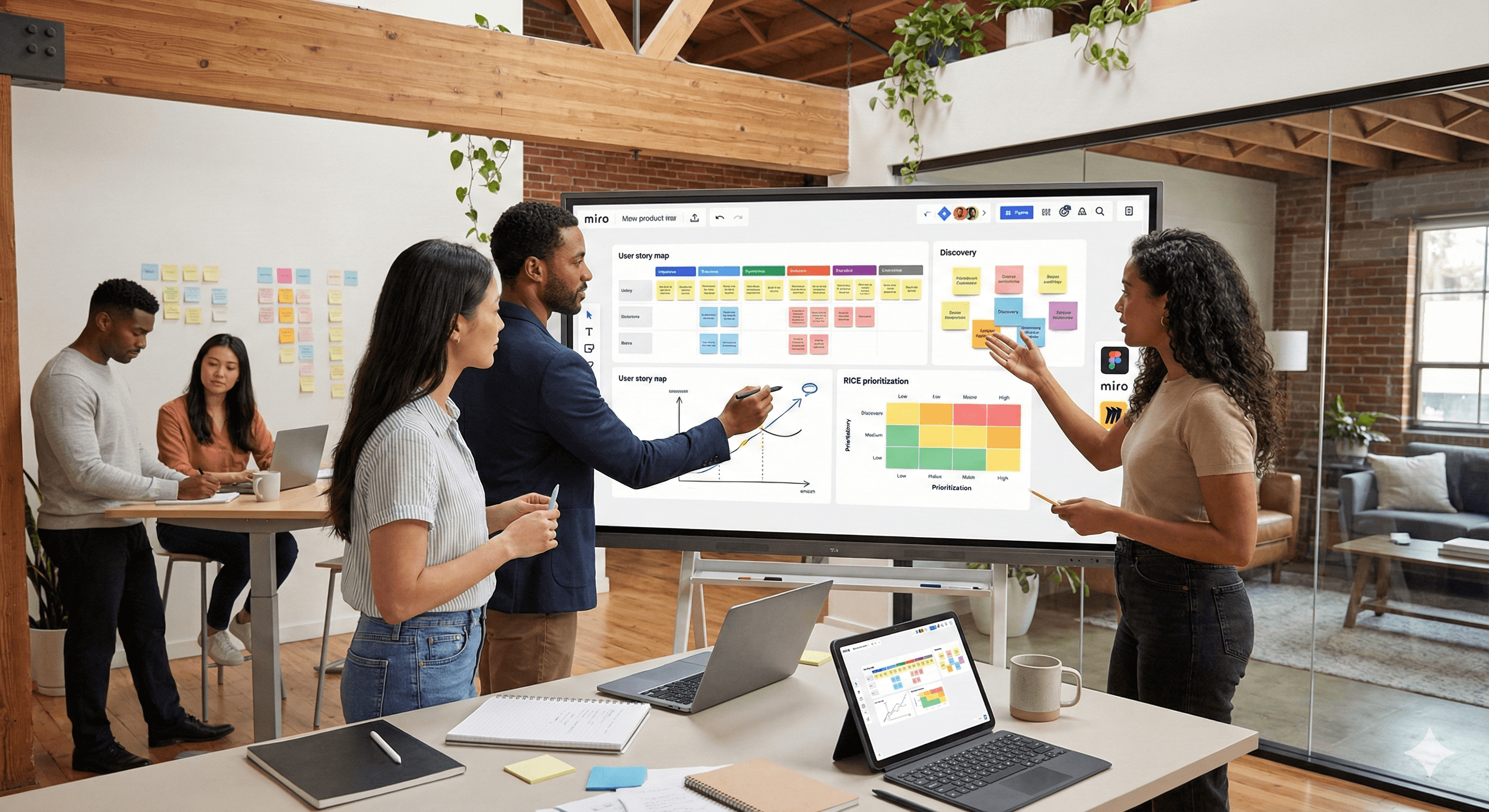
Miro aide les équipes produit à passer plus rapidement de l'insight à la valeur livrée. Utilisez-le pour valider les besoins réels des clients, prioriser en toute confiance et connecter la découverte à la livraison avec des tableaux, des modèles et plus de 250 intégrations couvrant Jira, Azure DevOps, GitHub, Figma et plus encore.
Pourquoi cela importe en 2026
Dans la plupart des équipes, la recherche se trouve dans des documents, la priorisation dans des feuilles de calcul, et la livraison dans des gestionnaires de tâches—créant des frictions et des dérives. Miro centralise la découverte produit et la connecte à l'ingénierie, avec une IA intégrée pour regrouper les notes et résumer les retours, ainsi que des modèles pour la cartographie des user stories et la priorisation, afin que vous puissiez livrer ce qui compte plus tôt.
Points clés
Simplifiez la validation du produit. Consolidez les entretiens, les notes adhésives et les enquêtes sur un tableau unique, puis utilisez Miro AI pour regrouper par mots-clés ou par sentiment et résumer les thèmes.
Accélérez le temps de mise sur le marché. Passez de la découverte à la cartographie des user stories à la priorisation (RICE, Impact/Effort), en gardant la recherche, le raisonnement et l'arriéré au même endroit.
Connectez la stratégie à la livraison. Synchronisez le travail avec votre chaîne d'outils—Jira, Azure DevOps, GitHub—pour que les décisions sur le tableau deviennent des tâches suivies.
Nouveau ou comment ça fonctionne
Les capacités de Product Acceleration de Miro rassemblent la stratégie, la découverte et les spécifications dans un flux unique—soutenant les portefeuilles, les insights, les prototypes, la conception technique et les spécifications—pour que le produit, la conception et l'ingénierie restent alignés de l'idée à la sortie. Associez-les à Miro AI et à la bibliothèque de modèles de gestion de produits pour un workflow de bout en bout facile à adopter.
Étapes pratiques
Créez un tableau de découverte
Commencez avec un modèle de Product Discovery ou Discovery Workbook. Cadrez les résultats, capturez les douleurs/gains, et réalisez des exercices à travers les étapes du Double Diamant—tout sur un même canevas.Synthèse avec Miro AI
Sélectionnez les notes collantes d'entrevue ➜ Miro AI → Cluster (par mots-clés ou sentiment) ➜ Résumé pour créer des thèmes. Étiquetez les clusters et liez les preuves à chaque thème pour auditabilité.Cartographiez le travail avec la cartographie des user stories
Disposez les activités, étapes et histoires ; connectez les cartes Jira pour que la planification passe directement à la livraison. Utilisez la carte pour identifier les tranches MVP et les jalons de sortie.Priorisez avec RICE dans le tableau
Ouvrez le modèle RICE (utilise Miro Tables) pour évaluer la portée, l'impact, la confiance, l'effort. Gardez la recherche à côté des scores pour que les décisions soient transparentes lors des revues.Intégrez et automatisez
Connectez les tableaux à Jira ou Azure DevOps pour des mises à jour bidirectionnelles ; apportez les éléments de conception de Figma ; gardez les spécifications et les décisions visibles au même endroit.Faites des revues, puis livrez
Utilisez des cadres pour les revues de sprint ou de sortie ; exportez des instantanés vers votre PRD ou liez des cadres dans des tâches. Gardez les rythmes de planification visibles dans /miro/ et l'exécution suivie dans Asana avec des documents dans Notion et la découverte indexée dans Glean.
Exemples que vous pouvez modéliser
Mur d'entrevues → thèmes → feuille de route. Importez des notes, regroupez-les avec Miro AI, résumez les thèmes, puis transformez les principales opportunités en scores RICE et épopées Jira.
Cartographie des user stories pour MVP. Utilisez le modèle de cartographie des user stories pour découper le MVP et planifier des sorties progressives ; connectez les cartes à l'arriéré.
Ateliers de priorisation. Organisez Impact/Effort ou RICE côte à côte pour que les parties prenantes voient les compromis avec des preuves sur le même tableau.
FAQs
Q1 : Comment Miro aide-t-il à la découverte de produits ?
R : Utilisez les modèles de découverte pour cadrer les objectifs, collecter des preuves, et exécuter des exercices structurés. Puis appliquez Miro AI pour regrouper les notes collantes par mots-clés ou sentiment et générer des résumés, accélérant ainsi la compréhension. Miro+1
Q2 : Qu'est-ce qui rend Miro adapté aux équipes agiles ?
R : Les modèles pour la cartographie des user stories et la priorisation, ainsi que plus de 250 intégrations—including Jira et Azure DevOps—permettent aux équipes agiles de planifier sur le tableau et de synchroniser avec leurs gestionnaires de tâches sans duplication de travail. Miro+1
Q3 : Miro peut-il réduire le temps de mise sur le marché pour de nouveaux produits ?
R : Oui, en gardant la recherche, la priorisation et la livraison connectées (par ex., Discovery → Story Map → RICE → Jira), les équipes réduisent les transferts et le retravail, accélérant ainsi les sorties. Miro+1
Résumé
Miro offre aux leaders de produit un chemin pratique et vérifiable de l'insight à la valeur livrée : réalisez des ateliers de découverte, synthétisez avec l’IA, cartographiez des histoires, priorisez avec RICE et synchronisez avec les outils de livraison. Vous voulez un déploiement guidé ? Contactez Generation Digital pour personnaliser les tableaux, les modèles et les intégrations—commencez à /miro/ et connectez-vous à Asana, Notion et Glean.
Recevez chaque semaine des nouvelles et des conseils sur l'IA directement dans votre boîte de réception
En vous abonnant, vous consentez à ce que Génération Numérique stocke et traite vos informations conformément à notre politique de confidentialité. Vous pouvez lire la politique complète sur gend.co/privacy.



Génération
Numérique

Bureau du Royaume-Uni
Génération Numérique Ltée
33 rue Queen,
Londres
EC4R 1AP
Royaume-Uni
Bureau au Canada
Génération Numérique Amériques Inc
181 rue Bay, Suite 1800
Toronto, ON, M5J 2T9
Canada
Bureau aux États-Unis
Generation Digital Americas Inc
77 Sands St,
Brooklyn, NY 11201,
États-Unis
Bureau de l'UE
Génération de logiciels numériques
Bâtiment Elgee
Dundalk
A91 X2R3
Irlande
Bureau du Moyen-Orient
6994 Alsharq 3890,
An Narjis,
Riyad 13343,
Arabie Saoudite







Numéro d'entreprise : 256 9431 77 | Droits d'auteur 2026 | Conditions générales | Politique de confidentialité