OpenAI met fin à ses anciens modèles GPT (février 2026)
OpenAI
Pas sûr de quoi faire ensuite avec l'IA?Évaluez la préparation, les risques et les priorités en moins d'une heure.
➔ Téléchargez notre kit de préparation à l'IA gratuit
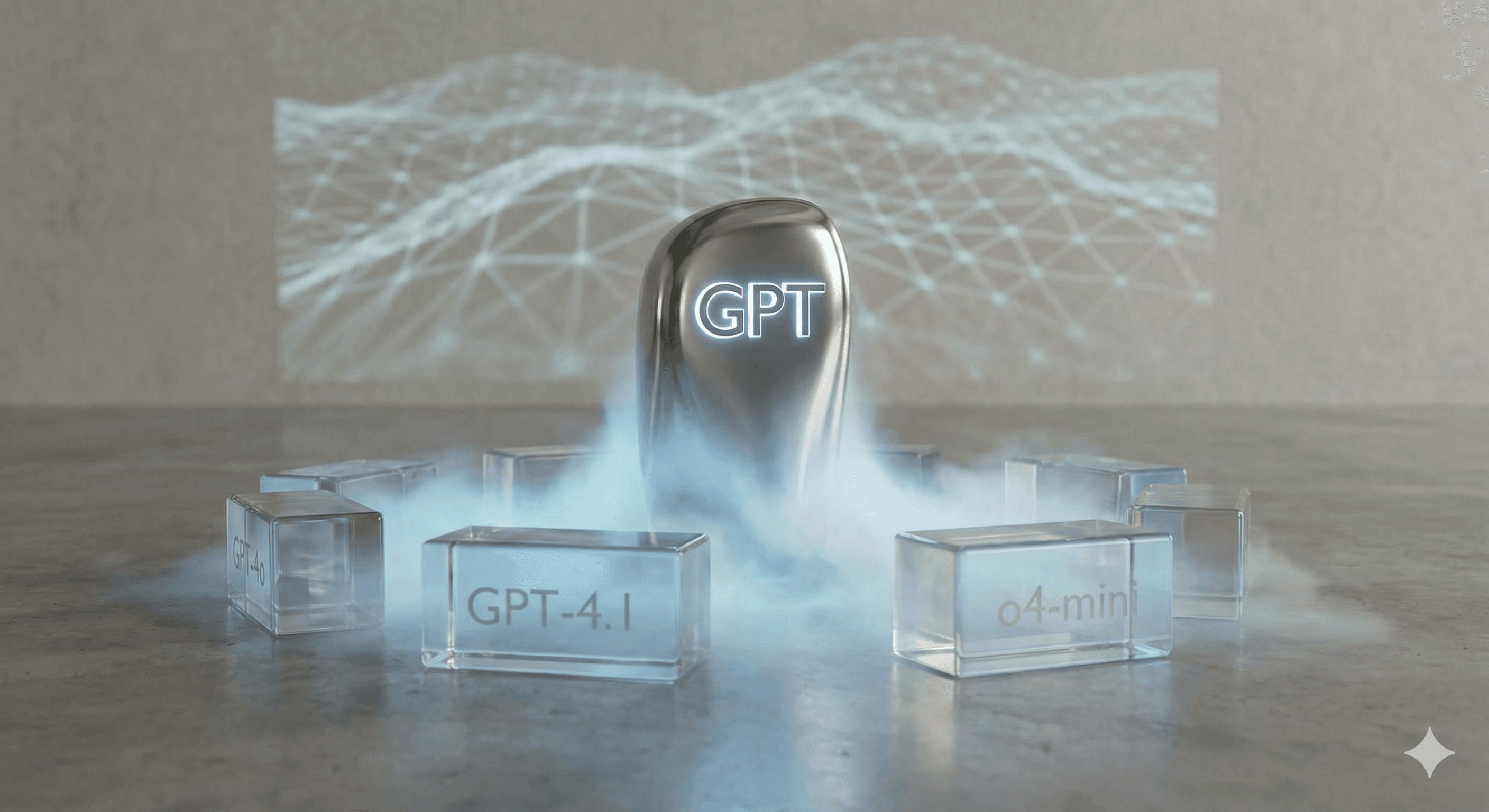
OpenAI retirera GPT‑4o, GPT‑4.1, GPT‑4.1 mini et OpenAI o4‑mini de ChatGPT le 13 février 2026, en parallèle avec la retraite précédemment annoncée de GPT‑5 (Instant et Thinking). L'objectif est d'offrir une expérience plus rapide et plus fiable tout en concentrant les ressources sur les modèles actuels. Aucun changement d'API pour le moment.
Ce qui change et pourquoi
Quels modèles partent? GPT‑4o, GPT‑4.1, GPT‑4.1 mini et OpenAI o4‑mini quitteront ChatGPT le 13 février 2026. La retraite de GPT‑5 (Instant & Thinking) a été annoncée plus tôt.
Pourquoi retirer les modèles? La consolidation améliore la fiabilité, la performance et le support, permettant d'investir dans les modèles et fonctionnalités les plus récents.
Statut de l'API : La retraite s'applique à ChatGPT; aucun changement d'API pour l'instant. Si vous dépendez des captures de modèles anciens dans l'API, surveillez la page des dépréciations et les avis Azure.
Conseils pratiques (Utilisateurs & Administrateurs)
Individus (ChatGPT) :
Vous n'avez aucune action requise. Vos conversations continueront à fonctionner; les nouveaux modèles par défaut seront utilisés.
Si vous avez aimé le ton d'un modèle ancien, mettez à jour les Instructions Personnalisées pour guider le style et le comportement.
Administrateurs d'espace de travail :
Communiquez le changement et proposez des modèles/sujestions mis à jour.
Examiner tout guide d'équipe qui fait référence à des noms de modèles anciens spécifiques.
Pour les équipes réglementées, mettez à jour les captures d'écran/documents de processus montrant le sélecteur de modèles.
Développeurs :
Pour les applications API, consultez régulièrement la page des Dépréciations. Si vous utilisez Azure OpenAI, notez les calendriers de retraite distincts et les plans de mise à niveau automatique.
Exemples de transitions
De GPT‑4o → GPT‑5.2 : Retestez les invites enregistrées; ajoutez des instructions de ton (par exemple, concis, chaleureux, anglais britannique).
De GPT‑4.1 mini → modèle léger actuel : Validez la latence/qualité; ajustez la température et le nombre maximal de jetons si nécessaire.
De o4‑mini → remplacement "o‑class" actuel : Confirmez les comportements d'utilisation d'outils et les formats de sortie.
Risques & Bonnes pratiques
Dérive des attentes : Les anciens modèles pouvaient avoir un « feeling » distinct. Capturez le style via des instructions/exemples.
Évaluation : Re-exécutez des tests d'acceptation rapides sur les invites clés (précision, format, latence).
Contrôle des changements : Documentez les paramètres de modèle; figez les versions où cela est pris en charge; gardez des notes de retour en arrière pour les invites.
FAQs
Quels modèles sont retirés ?
GPT‑4o, GPT‑4.1, GPT‑4.1 mini et OpenAI o4‑mini quitteront ChatGPT le 13 février 2026. La retraite de GPT‑5 (Instant/Thinking) a été annoncée précédemment.
Pourquoi OpenAI retire ces modèles ?
Pour rationaliser l'expérience, améliorer la performance et la fiabilité, et concentrer les ressources sur les modèles plus récents.
Y aura-t-il des changements à l'API ?
Aucun changement pour l'instant pour l'API; continuez de surveiller les avis officiels de dépréciation pour les captures d'écran et les calendriers Azure.
Comment cela affectera-t-il les utilisateurs ?
La plupart des utilisateurs n'auront pas besoin d'agir. La sélection du modèle par défaut passera aux versions actuelles, avec des performances et une stabilité améliorées.
Comment puis-je préserver le ton d'un modèle ancien ?
Utilisez les Instructions Personnalisées avec un court bloc de style (exemples de ton, phrasé, et règles à faire/ne pas faire) pour approximativement reproduire le comportement précédent.
Recevez chaque semaine des nouvelles et des conseils sur l'IA directement dans votre boîte de réception
En vous abonnant, vous consentez à ce que Génération Numérique stocke et traite vos informations conformément à notre politique de confidentialité. Vous pouvez lire la politique complète sur gend.co/privacy.



Génération
Numérique

Bureau du Royaume-Uni
Génération Numérique Ltée
33 rue Queen,
Londres
EC4R 1AP
Royaume-Uni
Bureau au Canada
Génération Numérique Amériques Inc
181 rue Bay, Suite 1800
Toronto, ON, M5J 2T9
Canada
Bureau aux États-Unis
Generation Digital Americas Inc
77 Sands St,
Brooklyn, NY 11201,
États-Unis
Bureau de l'UE
Génération de logiciels numériques
Bâtiment Elgee
Dundalk
A91 X2R3
Irlande
Bureau du Moyen-Orient
6994 Alsharq 3890,
An Narjis,
Riyad 13343,
Arabie Saoudite







Numéro d'entreprise : 256 9431 77 | Droits d'auteur 2026 | Conditions générales | Politique de confidentialité