GenAI en Operaciones Automotrices: Reducir Costos, Avanzar Más Rápido
Inteligencia Artificial
OpenAI
¿No sabes por dónde empezar con la IA?Evalúa preparación, riesgos y prioridades en menos de una hora.
➔ Descarga nuestro paquete gratuito de preparación para IA
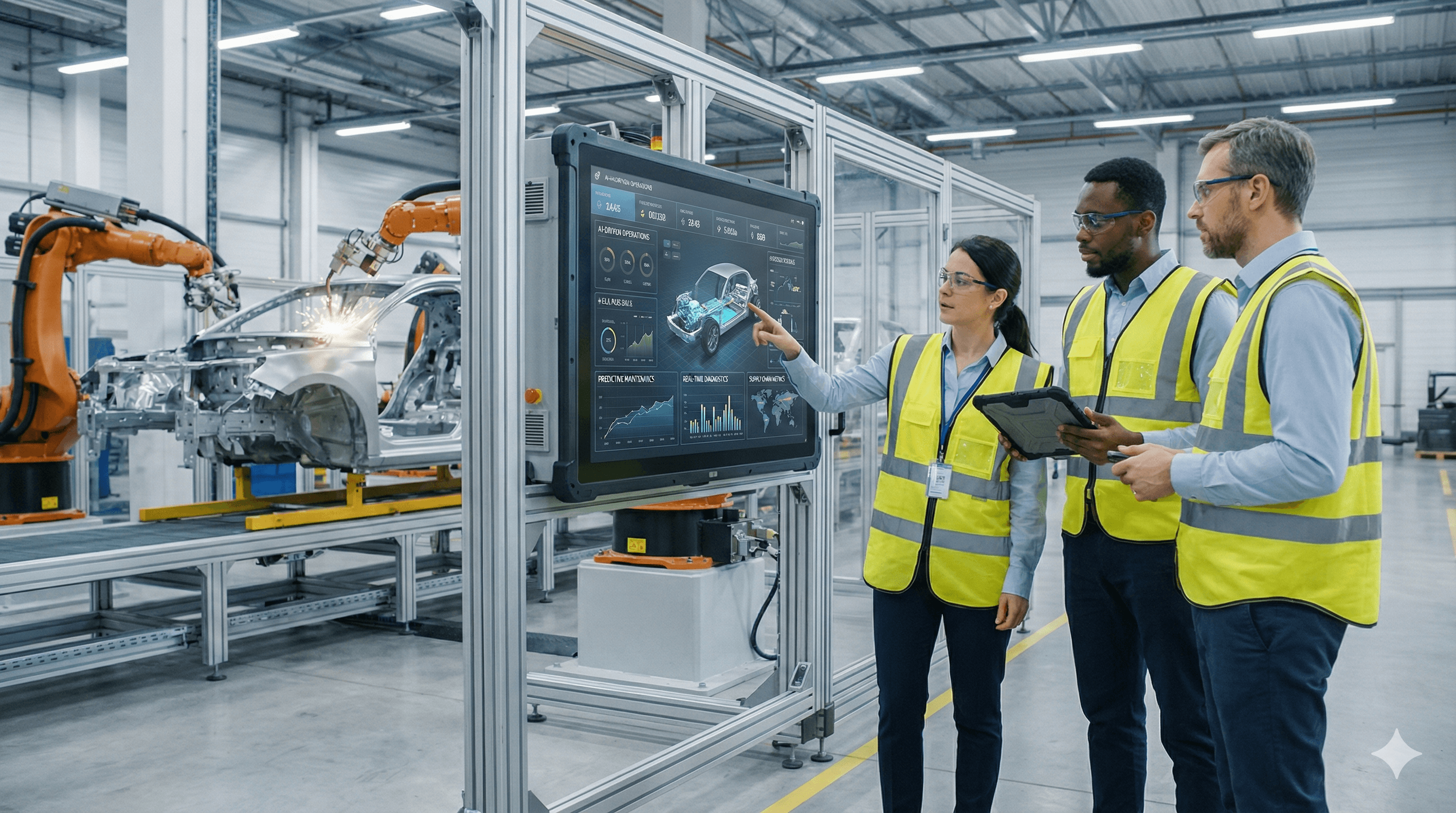
La IA generativa está transformando las operaciones automotrices al automatizar tareas rutinarias, acelerar decisiones con información en tiempo real y fortalecer las cadenas de suministro. Los fabricantes de automóviles reportan costos más bajos, ejecución más rápida y mayor resiliencia cuando GenAI se integra en flujos de trabajo centrales como adquisición, mantenimiento, calidad, ingeniería y logística—no como una herramienta aislada.
Los fabricantes de automóviles están pasando de proyectos piloto a integrar GenAI en las operaciones diarias. El objetivo es claro: reducir costos, acortar los tiempos de ciclo y aumentar la resiliencia en las cadenas de suministro volátiles. Los líderes integran GenAI en sistemas existentes—MES, PLM, ERP y portales de proveedores—para que complemente las decisiones humanas en lugar de sumar otro tablero de control.
Por qué es importante ahora
Costos y velocidad a escala. Las consultoras reportan ahorros de dos dígitos cuando GenAI optimiza la adquisición y tareas rutinarias de back-office—liberando a ingenieros y operadores para que se concentren en trabajos de mayor valor.
De piloto a producción. Los altos funcionarios estandarizan prácticas (humano en el ciclo, calidad de datos, modelo operativo) para superar los conceptos de prueba y capturar valor a gran escala.
Ejemplos de fábricas en vivo. El “Factory Genius” de BMW utiliza IA generativa para apoyar el mantenimiento y la eficiencia de los equipos—evidencia de que GenAI puede funcionar en líneas reales, no solo en presentaciones.
Cómo funciona
GenAI se conecta a los datos de la empresa y señales del piso de producción para resumir, predecir y automatizar. En la práctica,:
Automatiza tareas rutinarias (consultas a proveedores, redacción de documentos, triaje de garantías).
Proporciona información en tiempo real al traducir datos de sensores ruidosos y logística en acciones recomendadas.
Orquesta agentes que ejecutan pasos—por ejemplo, creando órdenes de trabajo, ajustando puntos de reorden o programando inspecciones—bajo supervisión humana.
Dónde GenAI tiene impacto
1) Adquisición y abastecimiento
GenAI redacta RFQs, compara ofertas con modelos de costo objetivo, señala riesgos en el lenguaje y reconcilia facturas. BCG encuentra que la IA puede optimizar pasos manuales hasta en un 30% y reducir costos generales aproximadamente entre un 15% y 45% en categorías específicas.
2) Manufactura y mantenimiento
Copilotos del piso de producción resumen alarmas, proponen causas raíces y programan trabajos basados en condición. Los OEMs reportan una mejor disponibilidad cuando los algoritmos predictivos guían el mantenimiento; el despliegue de BMW resalta ganancias tangibles de eficiencia.
3) Calidad y garantía
Los modelos detectan patrones de anomalías en imágenes, texto y datos de pruebas, acelerando el contención y reduciendo escapes. (Combina GenAI con pilas de visión por computadora establecidas para inspecciones; usa GenAI para resumir hallazgos y generar CAPAs.)
4) Ingeniería y software
En programas SDV, GenAI acelera el código, la generación de pruebas y la documentación, ayudando a I+D a coordinarse entre dominios y proveedores.
5) Cadena de suministro y logística
GenAI predice cambios en la demanda, revisa inventarios de seguridad, redacta planes de recuperación de envíos y negocia cambios de transportista—mejorando la resiliencia durante escaseces o disrupciones en puertos.
Pasos prácticos (comienza este trimestre)
Elige dos casos de uso con respaldo de valor. Uno en adquisición (ej., asistente de conciliación de órdenes de compra) y uno en operaciones de planta (ej., copiloto de mantenimiento). Define responsables, KPIs (tiempo de ciclo, quiebras de stock, MTBF) y límites.
Integra, no superpongas. Conecta GenAI a ERP/MES/PLM para que las acciones se escriban de vuelta—sin copiar giro de silla.
Diseña para humano en el ciclo. Establece cuándo necesitan validación los resultados; los altos funcionarios formalizan esto para escalar con seguridad.
Fortalece datos y controles. Enmascara datos sensibles, aísla solicitudes, registra decisiones e implementa acceso basado en roles para agentes.
Mide y repite. Rastrea ahorros realizados y productividad; retira casos de uso que no alcanzan la tasa de obstáculo dentro de un trimestre.
Puntos de prueba que puedes citar
BCG sobre resultados operacionales: reducción de costos, aceleración de ejecución y construcción de resiliencia—a escala.
BCG sobre adquisición: hasta un 30% de reducción de trabajo manual; reducción de costos del 15% al 45% en áreas seleccionadas.
BMW sobre despliegue en fábricas: asistente de IA generativa apoyando mantenimiento y eficiencia.
McKinsey sobre escalamiento de prácticas: gobernanza y validación humana distinguen a los altos ejecutores.
Riesgos y cómo gestionarlos
Alucinaciones → Requiere que las fuentes sean verificadas y aprobación humana para pasos críticos de seguridad.
Fugas de IP/datos → Aplica minimización de datos y compromisos de “no entrenar” de proveedores cuando sea necesario.
Purgatorio piloto → Financiar casos de uso contra métricas de PyG; publicar un informe trimestral de GenAI.
Preguntas frecuentes
P1: ¿Cómo reduce costos GenAI en las operaciones automotrices?
Automatizando pasos manuales (ej., abastecimiento, conciliación) y acelerando decisiones en mantenimiento y logística; BCG cita reducciones de costes del 15% al 45% en áreas de adquisición seleccionadas.
P2: ¿Qué papel juega GenAI en la resiliencia?
Detecta riesgos temprano (proveedor, logística, equipos), recomienda acciones y puede activar flujos de trabajo que ajusten inventario o mantenimiento para mantener la producción estable.
P3: ¿Puede GenAI mejorar la gestión de la cadena de suministro?
Sí—al prever demanda, racionalizar inventarios de seguridad y redactar planes de recuperación, escribiendo luego cambios de vuelta en ERP o herramientas de planificación para su ejecución.
Recibe noticias y consejos sobre IA cada semana en tu bandeja de entrada
Al suscribirte, das tu consentimiento para que Generation Digital almacene y procese tus datos de acuerdo con nuestra política de privacidad. Puedes leer la política completa en gend.co/privacy.



Generación
Digital

Oficina en Reino Unido
Generation Digital Ltd
33 Queen St,
Londres
EC4R 1AP
Reino Unido
Oficina en Canadá
Generation Digital Americas Inc
181 Bay St., Suite 1800
Toronto, ON, M5J 2T9
Canadá
Oficina en EE. UU.
Generation Digital Américas Inc
77 Sands St,
Brooklyn, NY 11201,
Estados Unidos
Oficina de la UE
Software Generación Digital
Edificio Elgee
Dundalk
A91 X2R3
Irlanda
Oficina en Medio Oriente
6994 Alsharq 3890,
An Narjis,
Riad 13343,
Arabia Saudita






Número de la empresa: 256 9431 77 | Derechos de autor 2026 | Términos y Condiciones | Política de Privacidad