OpenAI Names Arvind KC as Chief People Officer for Growth

OpenAI Names Arvind KC as Chief People Officer for Growth
OpenAI

12 feb 2026

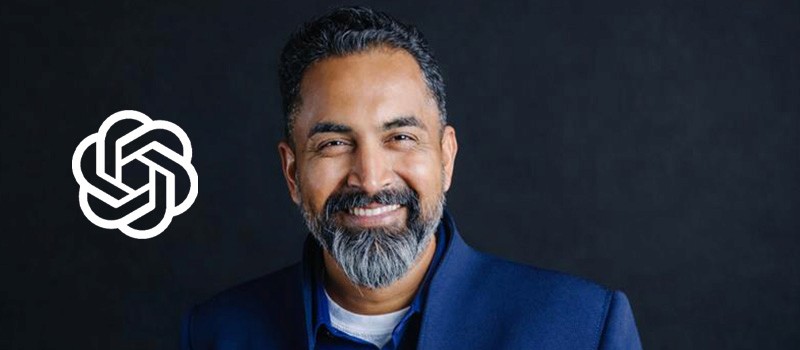
Arvind KC Cheif People Officer for Growth at Open AI

¿No sabes por dónde empezar con la IA?
Evalúa preparación, riesgos y prioridades en menos de una hora.

¿No sabes por dónde empezar con la IA?
Evalúa preparación, riesgos y prioridades en menos de una hora.

➔ Descarga nuestro paquete gratuito de preparación para IA

OpenAI has appointed Arvind KC as Chief People Officer to support the company’s next phase of growth. His remit covers scaling hiring and onboarding, strengthening culture, and building people systems that help teams operate effectively as AI reshapes how work gets done. It’s a signal that “people ops” is now central to AI-era competitiveness.

As AI organisations scale, “people” becomes a product problem.

OpenAI has appointed Arvind KC as its Chief People Officer, a strategic hire aimed at helping the company grow while evolving how teams work in an AI-native environment. The announcement lands at a time when AI companies are competing intensely for talent and when organisational design—how teams form, collaborate and learn—has become a competitive advantage.

What OpenAI announced

OpenAI confirmed that Arvind KC has joined as Chief People Officer. In the role, he will help OpenAI scale its workforce and people systems, strengthening hiring, onboarding, development, and the ways teams collaborate as tools and workflows change.

Who is Arvind KC?

Arvind KC is a technology leader with experience spanning engineering and people leadership. His background includes senior roles across major technology organisations, combining product and systems thinking with organisational development.

Rather than approaching HR as an administrative function, the appointment suggests OpenAI is treating the people organisation as a strategic system: designing structures, processes and capabilities that keep pace with rapid growth.

Why this appointment matters

For high-growth AI companies, hiring is only the beginning. The hardest part is scaling in a way that keeps:

  • execution speed high,

  • decision-making clear,

  • cross-functional collaboration smooth, and

  • culture healthy under pressure.

A Chief People Officer’s job becomes less about policy and more about enabling the organisation to work well—especially as AI changes what “good work” looks like.

What a modern CPO focuses on in the AI era

While OpenAI hasn’t shared detailed internal plans (and shouldn’t), the areas that typically move the needle in this phase are well understood:

1) Hiring and onboarding that scales without breaking

Hypergrowth requires repeatable hiring systems, strong role clarity, and onboarding that gets people productive quickly.

2) Learning and development for AI-native work

As AI tools reshape tasks and expectations, teams need practical training—how to use tools safely, verify outputs, and redesign workflows.

3) Organisational design and operating rhythm

Clear ownership, fast decision paths, and predictable operating rhythms (planning, reviews, execution) reduce friction as the organisation grows.

4) Culture, retention and performance systems

Culture is tested in growth phases. Strong performance and feedback systems help teams stay aligned, motivated and resilient.

What enterprises can learn from this

Even if you’re not building foundation models, OpenAI’s move highlights a broader trend: companies that win with AI invest in people systems and workflow design, not just technology.

If you want AI to deliver consistent value, you need:

  • role-based training,

  • governance teams can follow,

  • shared templates and playbooks,

  • and systems that make adoption easy rather than optional.

How Generation Digital can help

Turning AI into measurable value is a change programme as much as a technology rollout.

Generation Digital helps organisations design the adoption playbook: governance, training, workflow redesign and the collaboration stack that makes AI stick.

Use tools like:

  • Asana to manage adoption programmes with clear ownership and measurement,

  • Miro to align teams on workflows, risks and operating models,

  • Notion to publish playbooks, templates and “known-good” examples,

  • Glean to surface trusted internal knowledge so AI outputs stay grounded.

Summary

Arvind KC’s appointment as OpenAI’s Chief People Officer underlines a simple reality: in the AI era, scaling isn’t just hiring more people—it’s building the systems that help people do better work with new tools.

Next steps

  • Audit where AI is already used (and where it’s stuck).

  • Pick 3–5 workflows to standardise.

  • Build a lightweight enablement layer (training, governance, templates).

  • Measure outcomes and scale what works.

FAQ

Q1: Who is Arvind KC?
Arvind KC is OpenAI’s Chief People Officer. He brings experience across technology organisations, combining engineering and people leadership to help companies scale.

Q2: What will Arvind KC focus on at OpenAI?
He will help OpenAI scale hiring, onboarding and employee development, strengthen people systems, and support how work evolves as AI changes day-to-day workflows.

Q3: Why is Arvind KC’s appointment significant?
It signals that organisational design, talent strategy and culture are strategic priorities as OpenAI grows—and that “how work happens” is becoming a competitive advantage in the AI era.

Q4: What does a Chief People Officer do in a fast-scaling AI company?
They build the hiring, onboarding, learning, performance and operating systems that keep execution fast and culture healthy under rapid growth.

Q5: What can other organisations learn from this?
AI adoption succeeds when it’s supported by training, governance and workflow redesign—so AI becomes part of operations rather than isolated experimentation.

OpenAI has appointed Arvind KC as Chief People Officer to support the company’s next phase of growth. His remit covers scaling hiring and onboarding, strengthening culture, and building people systems that help teams operate effectively as AI reshapes how work gets done. It’s a signal that “people ops” is now central to AI-era competitiveness.

As AI organisations scale, “people” becomes a product problem.

OpenAI has appointed Arvind KC as its Chief People Officer, a strategic hire aimed at helping the company grow while evolving how teams work in an AI-native environment. The announcement lands at a time when AI companies are competing intensely for talent and when organisational design—how teams form, collaborate and learn—has become a competitive advantage.

What OpenAI announced

OpenAI confirmed that Arvind KC has joined as Chief People Officer. In the role, he will help OpenAI scale its workforce and people systems, strengthening hiring, onboarding, development, and the ways teams collaborate as tools and workflows change.

Who is Arvind KC?

Arvind KC is a technology leader with experience spanning engineering and people leadership. His background includes senior roles across major technology organisations, combining product and systems thinking with organisational development.

Rather than approaching HR as an administrative function, the appointment suggests OpenAI is treating the people organisation as a strategic system: designing structures, processes and capabilities that keep pace with rapid growth.

Why this appointment matters

For high-growth AI companies, hiring is only the beginning. The hardest part is scaling in a way that keeps:

  • execution speed high,

  • decision-making clear,

  • cross-functional collaboration smooth, and

  • culture healthy under pressure.

A Chief People Officer’s job becomes less about policy and more about enabling the organisation to work well—especially as AI changes what “good work” looks like.

What a modern CPO focuses on in the AI era

While OpenAI hasn’t shared detailed internal plans (and shouldn’t), the areas that typically move the needle in this phase are well understood:

1) Hiring and onboarding that scales without breaking

Hypergrowth requires repeatable hiring systems, strong role clarity, and onboarding that gets people productive quickly.

2) Learning and development for AI-native work

As AI tools reshape tasks and expectations, teams need practical training—how to use tools safely, verify outputs, and redesign workflows.

3) Organisational design and operating rhythm

Clear ownership, fast decision paths, and predictable operating rhythms (planning, reviews, execution) reduce friction as the organisation grows.

4) Culture, retention and performance systems

Culture is tested in growth phases. Strong performance and feedback systems help teams stay aligned, motivated and resilient.

What enterprises can learn from this

Even if you’re not building foundation models, OpenAI’s move highlights a broader trend: companies that win with AI invest in people systems and workflow design, not just technology.

If you want AI to deliver consistent value, you need:

  • role-based training,

  • governance teams can follow,

  • shared templates and playbooks,

  • and systems that make adoption easy rather than optional.

How Generation Digital can help

Turning AI into measurable value is a change programme as much as a technology rollout.

Generation Digital helps organisations design the adoption playbook: governance, training, workflow redesign and the collaboration stack that makes AI stick.

Use tools like:

  • Asana to manage adoption programmes with clear ownership and measurement,

  • Miro to align teams on workflows, risks and operating models,

  • Notion to publish playbooks, templates and “known-good” examples,

  • Glean to surface trusted internal knowledge so AI outputs stay grounded.

Summary

Arvind KC’s appointment as OpenAI’s Chief People Officer underlines a simple reality: in the AI era, scaling isn’t just hiring more people—it’s building the systems that help people do better work with new tools.

Next steps

  • Audit where AI is already used (and where it’s stuck).

  • Pick 3–5 workflows to standardise.

  • Build a lightweight enablement layer (training, governance, templates).

  • Measure outcomes and scale what works.

FAQ

Q1: Who is Arvind KC?
Arvind KC is OpenAI’s Chief People Officer. He brings experience across technology organisations, combining engineering and people leadership to help companies scale.

Q2: What will Arvind KC focus on at OpenAI?
He will help OpenAI scale hiring, onboarding and employee development, strengthen people systems, and support how work evolves as AI changes day-to-day workflows.

Q3: Why is Arvind KC’s appointment significant?
It signals that organisational design, talent strategy and culture are strategic priorities as OpenAI grows—and that “how work happens” is becoming a competitive advantage in the AI era.

Q4: What does a Chief People Officer do in a fast-scaling AI company?
They build the hiring, onboarding, learning, performance and operating systems that keep execution fast and culture healthy under rapid growth.

Q5: What can other organisations learn from this?
AI adoption succeeds when it’s supported by training, governance and workflow redesign—so AI becomes part of operations rather than isolated experimentation.

Recibe noticias y consejos sobre IA cada semana en tu bandeja de entrada

Al suscribirte, das tu consentimiento para que Generation Digital almacene y procese tus datos de acuerdo con nuestra política de privacidad. Puedes leer la política completa en gend.co/privacy.


Próximos talleres y seminarios web

A diverse group of professionals collaborating around a table in a bright, modern office setting.

Claridad Operacional a Gran Escala - Asana

Webinar Virtual
Miércoles 25 de febrero de 2026
En línea

A diverse group of professionals collaborating around a table in a bright, modern office setting.

Trabaja con compañeros de equipo de IA - Asana

Taller Presencial
Jueves 26 de febrero de 2026
Londres, Reino Unido

A diverse group of professionals collaborating around a table in a bright, modern office setting.

De Idea a Prototipo: IA en Miro

Seminario Web Virtual
Miércoles 18 de febrero de 2026
En línea

Generación
Digital

Oficina en Reino Unido

Generation Digital Ltd
33 Queen St,
Londres
EC4R 1AP
Reino Unido

Oficina en Canadá

Generation Digital Americas Inc
181 Bay St., Suite 1800
Toronto, ON, M5J 2T9
Canadá

Oficina en EE. UU.

Generation Digital Américas Inc
77 Sands St,
Brooklyn, NY 11201,
Estados Unidos

Oficina de la UE

Software Generación Digital
Edificio Elgee
Dundalk
A91 X2R3
Irlanda

Oficina en Medio Oriente

6994 Alsharq 3890,
An Narjis,
Riad 13343,
Arabia Saudita

UK Fast Growth Index UBS Logo
Financial Times FT 1000 Logo
Febe Growth 100 Logo (Background Removed)

Número de la empresa: 256 9431 77 | Derechos de autor 2026 | Términos y Condiciones | Política de Privacidad

Generación
Digital

Oficina en Reino Unido

Generation Digital Ltd
33 Queen St,
Londres
EC4R 1AP
Reino Unido

Oficina en Canadá

Generation Digital Americas Inc
181 Bay St., Suite 1800
Toronto, ON, M5J 2T9
Canadá

Oficina en EE. UU.

Generation Digital Américas Inc
77 Sands St,
Brooklyn, NY 11201,
Estados Unidos

Oficina de la UE

Software Generación Digital
Edificio Elgee
Dundalk
A91 X2R3
Irlanda

Oficina en Medio Oriente

6994 Alsharq 3890,
An Narjis,
Riad 13343,
Arabia Saudita
UK Fast Growth Index UBS Logo
Financial Times FT 1000 Logo
Febe Growth 100 Logo (Background Removed)


Número de Empresa: 256 9431 77
Términos y Condiciones
Política de Privacidad
Derechos de Autor 2026





