Explicación de codificación y ciberseguridad del agente GPT-5.2-Codex
OpenAI
¿No sabes por dónde empezar con la IA?Evalúa preparación, riesgos y prioridades en menos de una hora.
➔ Descarga nuestro paquete gratuito de preparación para IA
Descubre GPT-5.2-Codex: por qué es importante ahora
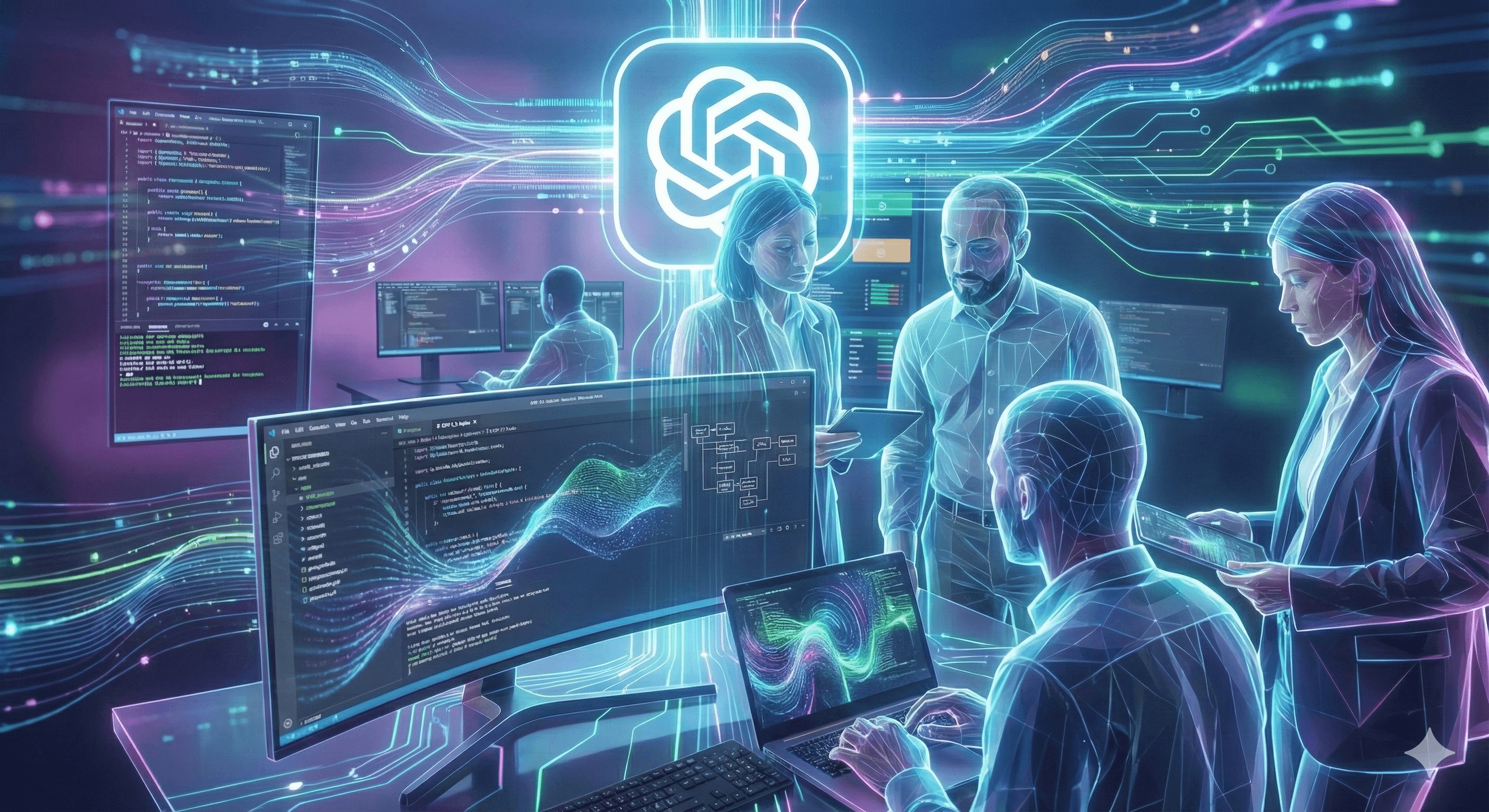
OpenAI ha lanzado GPT-5.2-Codex, su modelo de codificación agentica más avanzado hasta la fecha, diseñado para abordar la ingeniería de software del mundo real y fortalecer la ciberseguridad defensiva. Si lideras un equipo de ingeniería o seguridad, esta es la primera versión de Codex específicamente ajustada para trabajos de largo plazo en grandes bases de código—y llega con pautas más claras y directrices de implementación.
¿Qué hay de nuevo en GPT-5.2-Codex?
Fiabilidad a largo plazo con compactación de contexto. Codex puede mantener el estado durante sesiones extendidas, mejorando la continuidad en refactorizaciones grandes, migraciones de código y desarrollo de características.
Mejor en Windows. Espera una codificación agentica más efectiva y fiable en entornos nativos de Windows, mejorando GPT-5.1-Codex-Max.
Comportamiento consciente de la seguridad. OpenAI añadió formación especializada y salvaguardas a nivel de producto (por ejemplo, sandboxing, acceso a la red configurable) para reducir acciones riesgosas durante tareas agenticas.
Indicadores de referencia. La amplia familia GPT-5.2 publica resultados de SOTA en normas de codificación y razonamiento (por ejemplo, SWE-Bench Pro, GPQA), destacando mejoras en las que Codex se basa para flujos de trabajo de ingeniería.
Capacidad vs. responsabilidad
OpenAI evaluó GPT-5.2-Codex bajo su Marco de Preparación. Es “muy capaz” en ciberseguridad pero no alcanza la capacidad “Alta”; OpenAI está planificando implementaciones como si futuros modelos pudieran cruzar ese umbral, y ha añadido salvaguardas adicionales en consecuencia. Para las empresas, eso se traduce en límites más claros para el uso defensivo.
Cómo funciona GPT-5.2-Codex en la práctica
En su núcleo, GPT-5.2-Codex está ajustado para codificación agentica: utilizando herramientas, terminales y contexto para progresar iterativamente en una tarea. En la práctica, eso significa que puede:
Navegar por grandes repositorios, mantener el contexto y proponer cambios en varios archivos.
Borrador y validación de refactorizaciones/migraciones, incluyendo pruebas y actualizaciones de documentación.
Operar más confiablemente en entornos Windows, incluyendo flujos de trabajo de terminal.
Identificar debilidades de seguridad durante la revisión de código y recomendar mitigaciones como parte del ciclo de codificación.
Flujo de trabajo de ejemplo (de principio a fin)
Definir el objetivo: “Migrar el servicio de autenticación de la biblioteca A a B; preservar SSO; mejorar el registro; agregar pruebas.”
Conceder acceso limitado: Usar acceso agentico en sandbox con secretos restringidos y salida de red configurable.
Análisis del repositorio: Codex mapea dependencias, detecta zonas de impacto y propone un plan de migración.
Planificar y verificar: Detalla pasos, riesgos, y retrocesos; tú apruebas.
Aplicar cambios: Codex refactoriza módulos afectados, actualiza configuraciones/CI y genera pruebas.
Paso de seguridad: Señala posibles vulnerabilidades introducidas por el cambio y recomienda soluciones.
Revisar y fusionar: Aprobaciones humanas en el circuito; Codex prepara la descripción del PR y el registro de cambios.
Integración y despliegue
Dónde puedes usarlo hoy: OpenAI está lanzando GPT-5.2-Codex en superficies Codex en ChatGPT para usuarios de pago, con un acceso más amplio a la API próximamente. Si estás estandarizando en ChatGPT Enterprise o aprovechando las integraciones CLI/IDE de Codex, puedes lanzar un piloto de inmediato.
Ajuste de herramientas: GPT-5.2-Codex está diseñado para encajar en los flujos de trabajo de ingeniería existentes—terminales, IDEs, sistemas de revisión de código, CI/CD—y cooperar con controles de política en lugar de eludirlos. Para las organizaciones del Reino Unido con gestión de cambios estricta, el sandboxing y los controles de red son especialmente relevantes.
Postura de seguridad y límites
No es “Alto” en ciberseguridad bajo el marco de OpenAI, pero está en tendencia creciente—por lo que despliega con el principio de privilegio mínimo, audit trails y acceso controlado.
Enfoque defensivo: Codex apoya la identificación de vulnerabilidades y sugerencias de remediación; no es una licencia para ejecutar explotación en vivo. Mantén las credenciales sensibles fuera del tiempo de ejecución del agente a menos que sea estrictamente necesario.
Supervisión humana: Mantén las puertas de revisión de código y aprobaciones de seguridad. Trata las acciones agenticas como las de un contratista en tu repositorio: registradas, limitadas, reversibles.
¿Quién debería considerar GPT-5.2-Codex?
Empresas en crecimiento que necesiten acelerar elementos del roadmap (migraciones/refactorizaciones) sin sacrificar la calidad.
Empresas que están modernizando sus sistemas heredados en Windows con una gobernanza más estricta.
Equipos de seguridad que desean integrar controles de salud del código proactivos y cumplimiento de políticas en el ciclo de desarrollo.
Empezando (pasos rápidos)
Habilita ChatGPT de pago con superficies Codex para tu cohorte piloto.
Define barreras de seguridad: repositorios en alcance, políticas de sandbox, permisos de red, y planes de retroceso.
Comienza con refactorizaciones de bajo riesgo y creación de pruebas para validar el ciclo.
Rastrea tiempo de entrega, tasa de fallas en cambios y throughput de revisión como KPIs.
Expande a migraciones y mejoras inter-servicio una vez que los controles sean probados.
Resumen
GPT-5.2-Codex lleva la codificación agentica más cerca del trabajo de producción diario mientras aclara los límites de seguridad. Para los líderes de ingeniería, es un salto pragmático—más continuidad en tareas largas, mejor fiabilidad en Windows, y una base más segura para el uso defensivo. Si estás listo para un piloto, podemos ayudar a definir y desplegar.
Próximos pasos: Habla con Generation Digital sobre un piloto seguro de GPT-5.2-Codex, la alineación de políticas empresariales y la habilitación de desarrolladores.
Preguntas frecuentes
P1: ¿Cómo mejora GPT-5.2-Codex la eficiencia de codificación?
Mantiene el contexto durante sesiones más largas, propone cambios en varios archivos y opera más confiablemente en Windows, reduciendo el retrabajo en refactorizaciones y migraciones. OpenAI
P2: ¿Puede integrarse con los sistemas actuales?
Sí. Está diseñado para entornos de ingeniería del mundo real—terminales, IDEs, CI/CD—y se está implementando en superficies de Codex para usuarios de ChatGPT de pago, con acceso a la API en breve. OpenAI
P3: ¿Qué lo hace un activo de ciberseguridad?
OpenAI añadió formación de seguridad especializada además de sandboxing y controles de red. Soporta tareas defensivas como la identificación de vulnerabilidades, aunque no se califica como “Alto” en capacidad de ciberseguridad. OpenAI
Recibe noticias y consejos sobre IA cada semana en tu bandeja de entrada
Al suscribirte, das tu consentimiento para que Generation Digital almacene y procese tus datos de acuerdo con nuestra política de privacidad. Puedes leer la política completa en gend.co/privacy.



Generación
Digital

Oficina en Reino Unido
Generation Digital Ltd
33 Queen St,
Londres
EC4R 1AP
Reino Unido
Oficina en Canadá
Generation Digital Americas Inc
181 Bay St., Suite 1800
Toronto, ON, M5J 2T9
Canadá
Oficina en EE. UU.
Generation Digital Américas Inc
77 Sands St,
Brooklyn, NY 11201,
Estados Unidos
Oficina de la UE
Software Generación Digital
Edificio Elgee
Dundalk
A91 X2R3
Irlanda
Oficina en Medio Oriente
6994 Alsharq 3890,
An Narjis,
Riad 13343,
Arabia Saudita







Número de la empresa: 256 9431 77 | Derechos de autor 2026 | Términos y Condiciones | Política de Privacidad