
Expande a 2,000 Sin Aislamientos: La Guía de Remote × Notion
Notion
¿No sabes por dónde empezar con la IA?Evalúa preparación, riesgos y prioridades en menos de una hora.
➔ Descarga nuestro paquete gratuito de preparación para IA
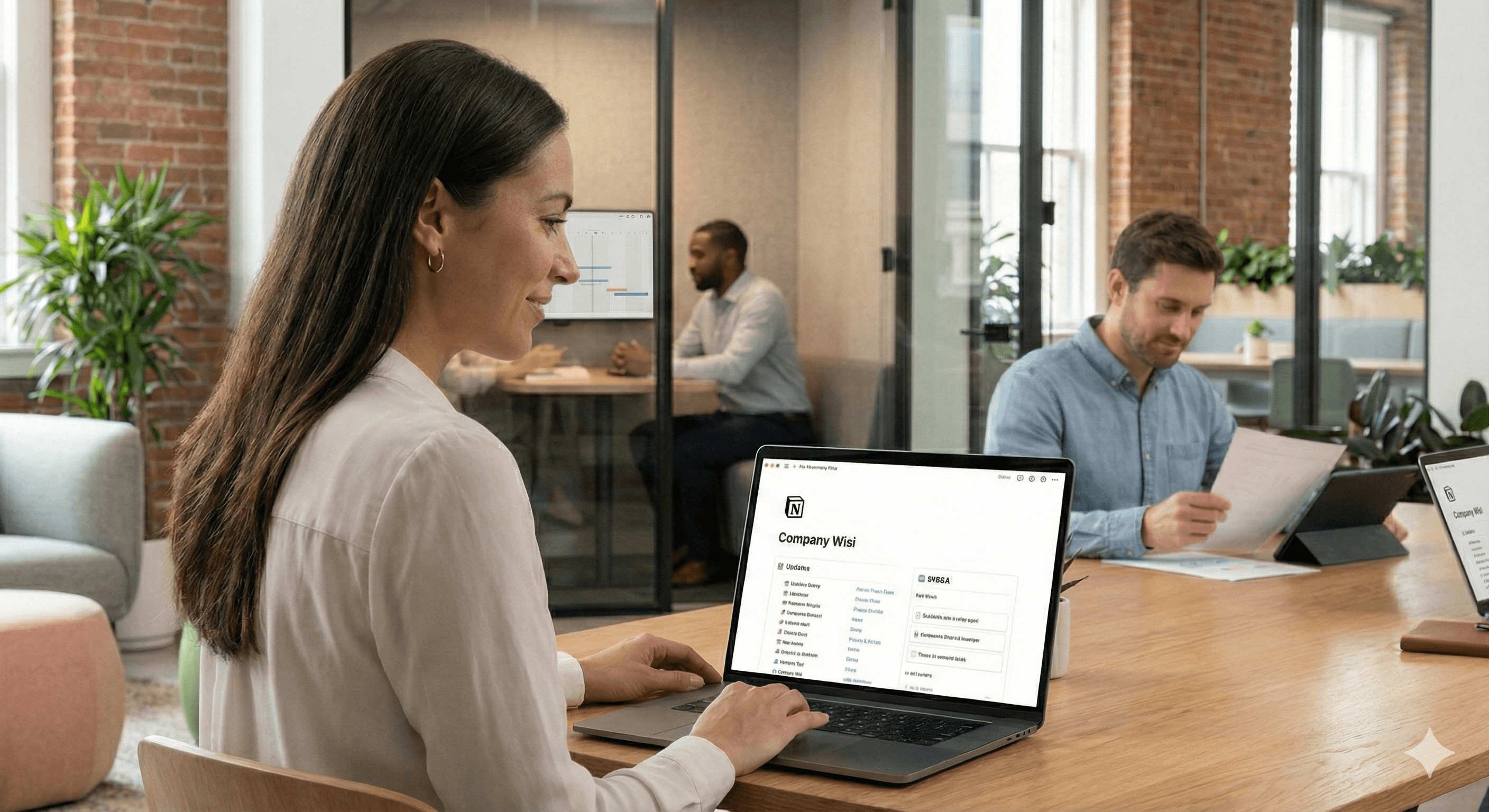
Remote creció a ~2,000 personas sin compartimentos estancos haciendo de la documentación la norma y ejecutando un modelo operativo asíncrono en Notion, que es la wiki de la empresa, proyectos y Q&A con IA para respuestas instantáneas. IDC reporta un ROI del 491%, $2.42m/año en beneficios, y un 90% de ahorro en costos de herramientas al consolidarse en Notion.
El desafío
El rápido crecimiento, la contratación global y las zonas horarias distribuidas hacen que la comunicación sincrónica sea frágil. Sin una sola fuente de verdad, los equipos caen en compartimentos estancos: trabajos duplicados, decisiones retrasadas y sobrecarga de reuniones. El liderazgo de Remote estableció dos puntos no negociables: documentar todo y optimizar para lo asíncrono.
La solución: Notion como el sistema operativo
Wiki y documentos de la empresa: “Notion es donde vive toda nuestra información”: el hogar para políticas, manuales de operaciones y decisiones.
Q&A potenciado por IA: Remote implementó Notion Q&A para que cualquier empleado pueda hacer una pregunta y obtener una respuesta al instante con permisos adecuados, reduciendo el tiempo de búsqueda y la cantidad de pings/reuniones.
Proyectos y emisión de tickets: Remote consolidó flujos de trabajo de proyectos y un sistema ligero de emisión de tickets en Notion, integrándose con Slack/Google Workspace.
Resultados
491% de ROI en cuatro años y $2.42m en beneficios/año (tiempo ahorrado, licencias reducidas).
90% de reducción en gasto en una plataforma de colaboración previa.
Más de 1 semana extra de productividad por usuario/año; más de 400 horas recuperadas en dos meses al evitar reuniones innecesarias.
“Usamos Notion muy intensamente desde el primer día.” — Marcelo Lebre, Cofundador y Presidente, Remote.
Cómo Remote evitó los compartimentos estancos (movimientos replicables)
Documentar por defecto: Cada decisión, proceso y plantilla vive en Notion; las reuniones pasan a ser la excepción.
Asíncrono primero: Actualizaciones de estado, paquetes QBR y traspasos como páginas de Notion; el Q&A reemplaza los hilos de “¿quién sabe?”.
Integraciones ajustadas: Notificaciones de Slack, permisos basados en identidad, emisión de tickets ligeros y vínculos a sistemas centrales.
Aplica el manual con Generation Digital
Dónde ayudamos
Arquitectura de espacio de trabajo: Arquitectura de la información, plantillas y modelos de permisos que escalan más allá de los 2,000.
Migración y consolidación: Mover wikis/documentos de herramientas dispersas; desduplicar y etiquetar; reducir derroche de licencias.
Activación de Q&A con IA: Basar el Q&A en tus páginas y políticas; establecer citas y gobernanza.
Cambio y habilitación: Manuales ejecutivos, capacitación basada en roles y paneles de KPI (reuniones reducidas, tiempo de búsqueda ahorrado).
Resultados típicos en 90 días
50–70% menos reuniones de estado (reemplazadas por páginas vivas).
Respuestas en menos de un minuto a preguntas de políticas/cómo-hacer a través de Q&A.
Una única fuente de verdad para la incorporación y manuales de operaciones.
CTA: Reserva un taller de preparación para Notion para mapear tu arquitectura de información y pilotear Q&A con IA con un departamento.
Pasos prácticos que puedes comenzar esta semana
Ejecuta un sprint de “documentos, no reuniones”: Convierte las llamadas de estado semanales en páginas de Notion con propietarios y fechas de vencimiento.
Establece una base de datos de decisiones: Una entrada por decisión con contexto, propietario, fecha y enlaces.
Piloto de Q&A: Indexa tus 200 principales páginas; mide el tiempo de respuesta y la reducción de reuniones.
Preguntas frecuentes
Q1. ¿Qué son los compartimentos estancos en un contexto empresarial?
Equipos que trabajan en aislamiento, acumulando información y duplicando trabajo, generalmente debido a la dispersión de herramientas y la mala documentación.
Q2. ¿Cómo ayuda la tecnología (Notion) a evitar compartimentos estancos?
Centralizando documentos, proyectos y Q&A con IA en un solo espacio de trabajo con permisos adecuados, para que las respuestas y actualizaciones vivan donde ocurre el trabajo.
Q3. ¿Por qué sigue siendo importante la estructura organizacional?
La propiedad clara y una wiki compartida evitan la superposición; los flujos de trabajo asíncronos reducen el impuesto de coordinación a medida que aumenta el personal.
Recibe noticias y consejos sobre IA cada semana en tu bandeja de entrada
Al suscribirte, das tu consentimiento para que Generation Digital almacene y procese tus datos de acuerdo con nuestra política de privacidad. Puedes leer la política completa en gend.co/privacy.



Generación
Digital

Oficina en Reino Unido
Generation Digital Ltd
33 Queen St,
Londres
EC4R 1AP
Reino Unido
Oficina en Canadá
Generation Digital Americas Inc
181 Bay St., Suite 1800
Toronto, ON, M5J 2T9
Canadá
Oficina en EE. UU.
Generation Digital Américas Inc
77 Sands St,
Brooklyn, NY 11201,
Estados Unidos
Oficina de la UE
Software Generación Digital
Edificio Elgee
Dundalk
A91 X2R3
Irlanda
Oficina en Medio Oriente
6994 Alsharq 3890,
An Narjis,
Riad 13343,
Arabia Saudita







Número de la empresa: 256 9431 77 | Derechos de autor 2026 | Términos y Condiciones | Política de Privacidad