Asana for Manufacturing: Develop a Smart Operational Backbone
Asana
Uncertain about how to get started with AI?Evaluate your readiness, potential risks, and key priorities in less than an hour.
➔ Download Our Free AI Preparedness Pack
The real collaboration challenge in manufacturing
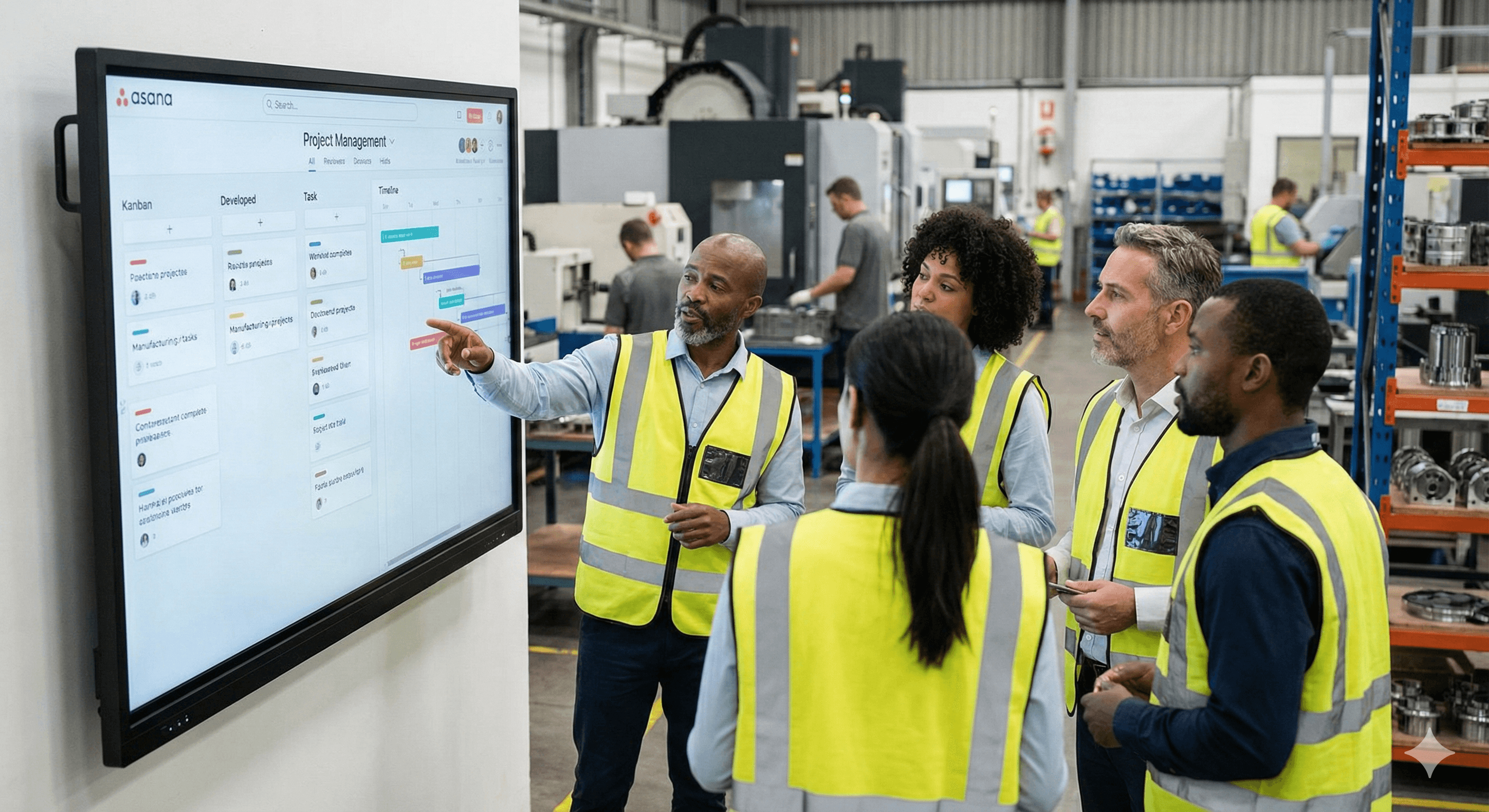
For leaders in manufacturing and operations, the term "cross-functional collaboration" often evokes thoughts of endless internal emails, siloed information, and complex workflows managed across unruly spreadsheets. This is truly chaotic, especially within a global organization. KW Automotive encountered this precise challenge, operating across 15 departments with 450 employees. They required a solution that could truly streamline global manufacturing, not just another tool.
Case study: KW Automotive's operational backbone
KW Automotive selected Asana to construct the operational backbone for their business. The result was the elimination of internal emails and the enabling of cross-functional collaboration. By transitioning their work from fragmented trackers and emails into a structured system, they brought clarity to their processes. This session demonstrated that Asana is not only for creative teams but also a robust tool for complex, large-scale operations, offering simpler systems and smoother processes.
What operations leaders really need (verifiable, scalable)
We recognize that you may be sceptical of promises. Verifiable solutions are what you really need. By employing a single system like Asana, we help operations teams map and redesign processes, establish SOPs, and leverage AI to remove repetitive tasks and identify bottlenecks. This focused, streamlined system ensures that all 450 employees and 15 departments have a clear, scalable way of working. You'll gain the control and visibility needed to reduce manual effort and drive critical business outcomes: improved operational efficiency and less friction.
Next step: replace spreadsheets with a real backbone
If you're ready to swap out spreadsheets and trackers for an intelligent operational backbone, contact Generation Digital. We provide expert workflow consulting and design to customize Asana for your intricate manufacturing and operations needs.
Asana for manufacturing offers a single operational backbone that replaces email threads and spreadsheet trackers. Teams map processes, standardize SOPs, automate routine tasks with AI, and gain real-time visibility across departments—reducing manual effort and friction while enhancing throughput and on-time delivery for complex, global operations.
FAQ
Q1. Why is Asana better than spreadsheets for manufacturing ops?
Because it standardizes workflows, centralizes SOPs, and provides live visibility across departments—minimizing rework and email handoffs.
Q2. Can Asana handle shop-floor to leadership workflows?
Yes. Use templates for SOPs, intake forms for requests, automations for routing/approvals, and dashboards for executive visibility.
Q3. How quickly can we see results?
Start with 2–3 processes (e.g., change requests, maintenance, NPI tasks). Pilot for 30 days, assess cycle time and email reduction, then scale.
Q4. Does Asana support AI for operations?
Yes. Use AI to summarize updates, suggest next steps, create checklists from SOPs, and flag blockers across projects.
Q5. What services do you provide?
Generation Digital designs workflows, templates, and SOP frameworks; configures automations and permissions; and trains teams for sustained adoption.
Receive weekly AI news and advice straight to your inbox
By subscribing, you agree to allow Generation Digital to store and process your information according to our privacy policy. You can review the full policy at gend.co/privacy.



Generation
Digital

Canadian Office
33 Queen St,
Toronto
M5H 2N2
Canada
Canadian Office
1 University Ave,
Toronto,
ON M5J 1T1,
Canada
NAMER Office
77 Sands St,
Brooklyn,
NY 11201,
USA
Head Office
Charlemont St, Saint Kevin's, Dublin,
D02 VN88,
Ireland
Middle East Office
6994 Alsharq 3890,
An Narjis,
Riyadh 13343,
Saudi Arabia






Business Number: 256 9431 77 | Copyright 2026 | Terms and Conditions | Privacy Policy