Stargate Community: AI Infrastructure, Built Locally
OpenAI
Uncertain about how to get started with AI?Evaluate your readiness, potential risks, and key priorities in less than an hour.
➔ Download Our Free AI Preparedness Pack
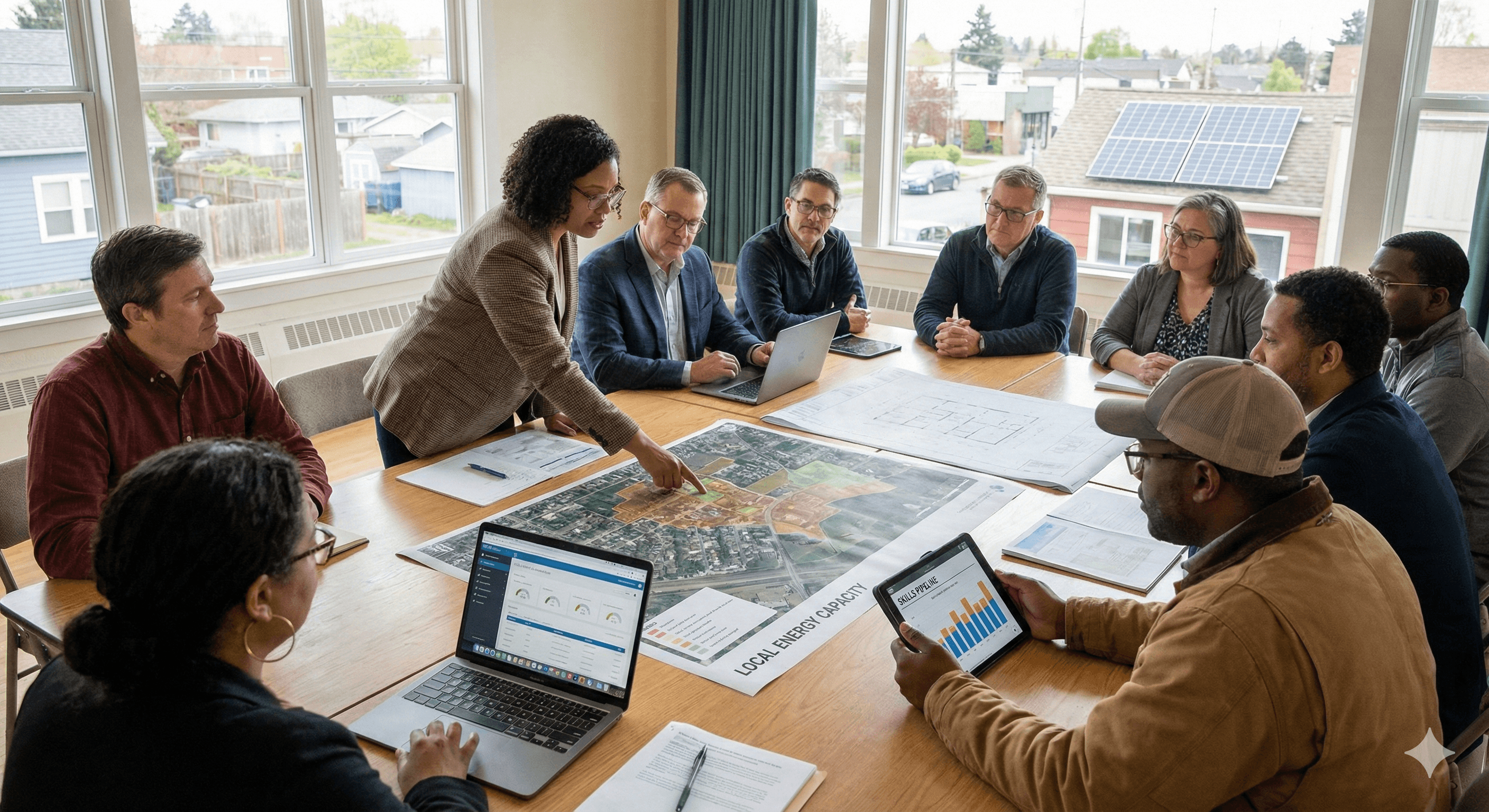
Stargate Community creates locally‑shaped AI infrastructure plans that align energy capacity, workforce skills and land use. Through stakeholder workshops and open data, communities co‑design deployments—speeding permits, improving grid fit, and ensuring training and jobs flow to residents while keeping environmental safeguards front and centre.
What’s New & How It Works
Community‑first planning. We begin with local listening: energy realities, skills pipelines, land constraints, and economic goals. Plans are co‑authored with councils, utilities, colleges and employers.
Holistic blueprint. We integrate power (grid, storage, renewables, waste‑heat recovery), places (sites, planning, cooling, biodiversity), people (training, apprenticeships, inclusive hiring), and platforms (compute, connectivity, cybersecurity).
Transparent trade‑offs. Open dashboards show impacts (jobs, energy use, water, traffic), alternatives considered, and safeguards before decisions are made.
Practical Rollout (Step‑by‑Step)
Discover (4–6 weeks)
Map current and planned loads with the DNO/utility; baseline skills and employers; assess land, fibre and water; capture community priorities via workshops and surveys.Co‑design (6–10 weeks)
Run scenario planning sessions (edge vs. data centre; renewable pairings; heat reuse). Set local benefit targets (jobs, apprenticeships, SME contracts). Draft siting and design principles.Assess & consent (6–12 weeks)
Publish an impact assessment (energy, water, ecology, traffic, noise) with mitigations. Develop a Section 106‑style community benefits package where applicable.Finance & delivery
Blend funding (private, public, utility programmes). Phase builds; include pilots (heat‑to‑housing, micro‑grids). Lock procurement standards for efficiency and circularity.Operate & report
Quarterly dashboards on energy mix, uptime, jobs and training. Independent audits; community review board; continuous improvement.
Example Community Benefits
Energy: On‑site solar + storage; demand‑response; recovered heat into district networks.
Workforce: Scholarships, bootcamps, apprenticeships; guaranteed interviews for local graduates.
Economy: Local supplier quotas; digital inclusion funds; research partnerships with colleges.
Environment: Biodiversity net gain; low‑water cooling; materials reuse.
KPIs & Governance
KPIs: community participation rate; time‑to‑consent; % renewable supply; PUE/WUE; MW of flexibility provided; local job placements; apprenticeships started; SME contract share; public satisfaction score.
Governance: independent oversight panel; published model cards and risk registers; incident reporting; annual public statement of benefits vs. plan.
FAQs
What is the main goal of Stargate Community?
To co‑create AI infrastructure that fits local energy and workforce realities—delivering measurable community benefits.
How do you gather input?
Through town‑hall sessions, focus groups and online surveys—plus 1:1 meetings with utilities, colleges and major employers.
What benefits should communities expect?
Better grid alignment, training and jobs for residents, local supplier opportunities, and environmental safeguards such as heat reuse and biodiversity gains.
Is this only for large cities?
No—rural and regional areas can adopt modular, edge‑first designs and shared training programmes.
Receive weekly AI news and advice straight to your inbox
By subscribing, you agree to allow Generation Digital to store and process your information according to our privacy policy. You can review the full policy at gend.co/privacy.



Generation
Digital

Canadian Office
33 Queen St,
Toronto
M5H 2N2
Canada
Canadian Office
1 University Ave,
Toronto,
ON M5J 1T1,
Canada
NAMER Office
77 Sands St,
Brooklyn,
NY 11201,
USA
Head Office
Charlemont St, Saint Kevin's, Dublin,
D02 VN88,
Ireland
Middle East Office
6994 Alsharq 3890,
An Narjis,
Riyadh 13343,
Saudi Arabia







Business Number: 256 9431 77 | Copyright 2026 | Terms and Conditions | Privacy Policy