L'IA dans le Codage : Aperçus du PDG de Sonar, Tariq Shaukat (2026)
IA
Pas sûr de quoi faire ensuite avec l'IA?Évaluez la préparation, les risques et les priorités en moins d'une heure.
➔ Téléchargez notre kit de préparation à l'IA gratuit
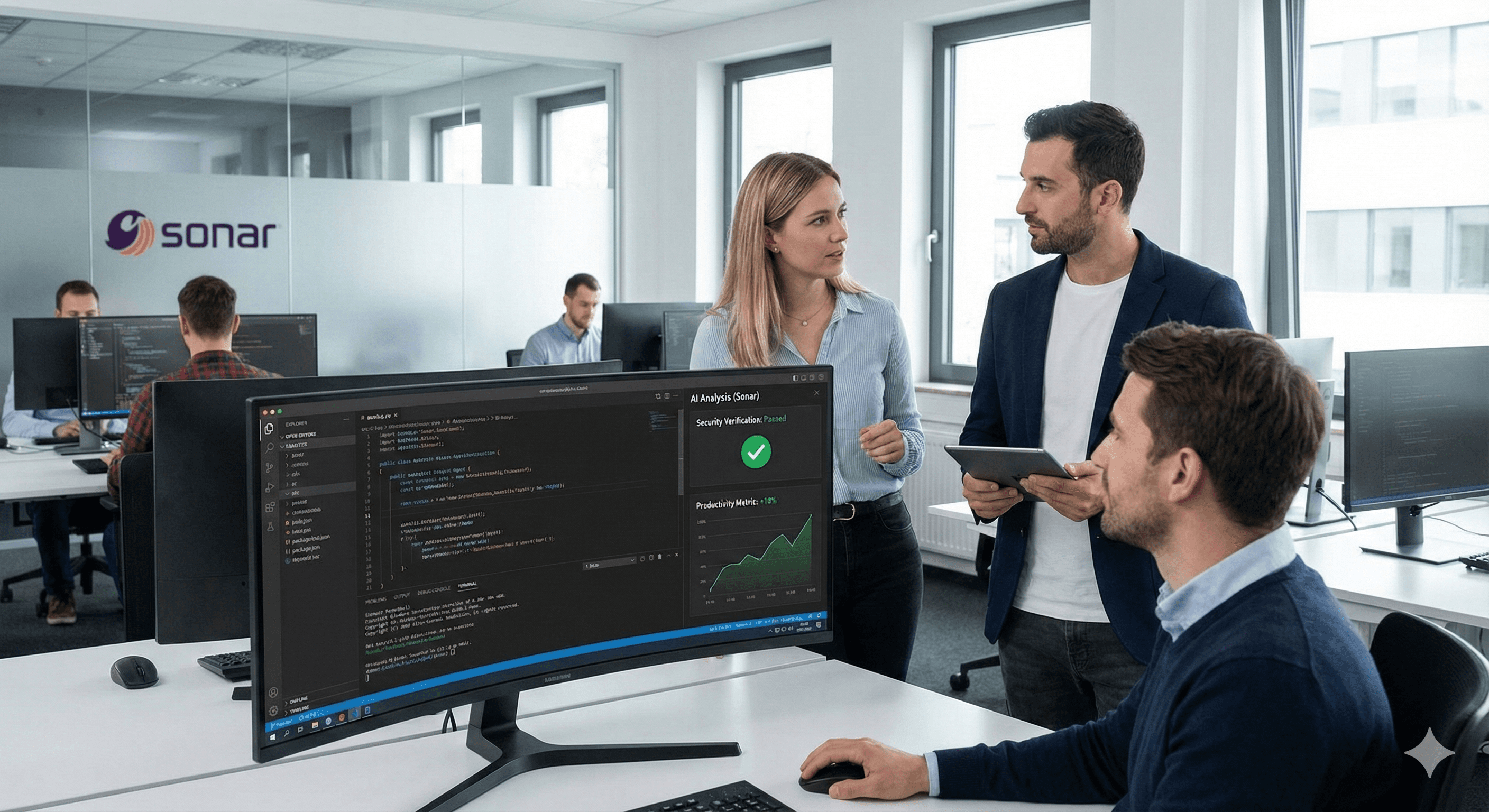
L'IA dans le codage améliore la qualité en automatisant la vérification, améliorant les métriques de productivité et renforçant la confiance dans les systèmes IA, déclare Tariq Shaukat, PDG de Sonar. Avec des analyses en temps réel et une détection proactive des problèmes, les développeurs peuvent se concentrer sur des tâches créatives, sachant que l'IA gère efficacement le travail répétitif. (Entrevue avec McKinsey, décembre 2025)
Pourquoi c'est important maintenant
Alors que l'IA transforme le développement logiciel en 2026, le codage ne consiste plus seulement à écrire des lignes—c'est à propos de vérifications plus intelligentes, un meilleur suivi de la productivité et des niveaux accrus de confiance dans les systèmes que nous construisons. Tariq Shaukat, PDG de Sonar, soutient que le rôle de l'IA dans le codage a évolué de l'automatisation à l'assurance qualité et la création de confiance. Le futur est ici : la vérification automatisée, les métriques en temps réel et la détection proactive des problèmes permettront aux développeurs de se concentrer sur la résolution créative de problèmes, plutôt que sur des tâches fastidieuses et répétitives.
Points Clés
Vérification de code améliorée : Les outils d'IA automatisent désormais les tâches complexes de vérification, identifient les problèmes potentiels tôt dans le processus et assurent un code de haute qualité.
Mesure de productivité : L'IA offre des métriques en temps réel qui aident les développeurs à suivre leur efficacité, à identifier les goulots d'étranglement et, en fin de compte, à se concentrer sur les aspects créatifs du codage.
Encourager la confiance dans les systèmes IA : Avec le rôle croissant de l'IA, la confiance est primordiale. La transparence et l'explicabilité des outils de codage pilotés par l'IA donnent confiance aux développeurs dans leur prise de décision.
Comment ça Marche
Les plateformes pilotées par l'IA comme Sonar révolutionnent le développement logiciel en automatisant la vérification du code et en améliorant la fiabilité. Avec des algorithmes avancés et des analyses en temps réel, l'IA aide maintenant les développeurs à identifier les problèmes potentiels en temps réel et à garantir un code de haute qualité. Ces outils utilisent des métriques pour aider à mesurer la productivité et l'efficacité des développeurs—libérant les développeurs des tâches répétitives afin qu'ils puissent se concentrer sur des défis plus complexes et créatifs.
Tariq Shaukat souligne que les systèmes IA doivent être transparents et explicables pour instaurer la confiance parmi les développeurs. Les outils avancés d'IA de Sonar offrent des informations claires sur les raisons pour lesquelles certaines suggestions sont faites, augmentant la confiance des développeurs dans l'adoption de systèmes alimentés par l'IA pour les revues de code.
Étapes Pratiques (Guide pour 2026)
Automatiser la Vérification du Code
Utilisez des outils pilotés par l'IA comme Sonar pour effectuer des revues de code en temps réel. Ces outils identifient automatiquement les problèmes, tels que les failles de sécurité ou les inefficacités de codage, avant qu'ils n'atteignent la production.
Mesurez les améliorations de vitesse et de précision dans le processus de révision et suivez la fréquence à laquelle les problèmes sont détectés tôt.Implémenter des Métriques Alimentées par l'IA
Mettez en place des métriques de productivité utilisant des outils IA qui suivent l'efficacité de votre processus de développement. Ces métriques peuvent mettre en lumière où se trouvent les goulots d'étranglement, combien de temps les tâches prennent et comment la performance globale de votre équipe s'améliore.
Exemple : Utilisez le tableau de bord de Sonar pour suivre des métriques comme les lignes de code, la qualité du code et les taux de réussite des tests en temps réel.Améliorer la Confiance avec l'IA Explicable
Assurez la transparence en utilisant des systèmes IA qui non seulement suggèrent des modifications de code mais expliquent également la logique derrière celles-ci. Les développeurs doivent faire confiance aux décisions de l'IA, surtout lorsque le système offre des explications détaillées sur la façon dont les problèmes sont détectés et pourquoi ils sont importants.
Évaluez régulièrement l'explicabilité des suggestions de l'IA et suivez comment l'équipe adopte ces outils avec confiance.Réduire la Charge de Travail des Développeurs avec l'Automatisation IA
Laissez l'IA gérer les tâches répétitives comme la détection de bugs ou le formatage du code, permettant aux développeurs de se concentrer sur des résolutions de problèmes plus critiques et créatives.
Suivez le temps économisé sur les tâches répétitives et mesurez le pourcentage des tâches automatisées par l'IA.
FAQs
Q1 : Comment l'IA améliore-t-elle la qualité du code ?
L'IA automatise la vérification, identifie les problèmes tôt et offre des informations sur la performance du code, aidant les développeurs à maintenir des normes de qualité supérieures tout au long du processus de développement.
Q2 : Quelles sont les métriques de productivité dans le codage IA ?
Les outils IA suivent l'efficacité et la production, offrant des métriques en temps réel pour mesurer la productivité des développeurs et se concentrer sur les domaines à améliorer.
Q3 : Comment l'IA encourage-t-elle la confiance dans le développement logiciel ?
En rendant le processus de prise de décision transparent et explicable, les outils IA aident les développeurs à comprendre pourquoi des suggestions sont faites, ce qui renforce la confiance et la confiance dans les systèmes IA.
Sources :
Entrevue de McKinsey avec Tariq Shaukat, PDG de Sonar (décembre 2025).
Livre blanc 2025 de Sonar sur le codage amélioré par l'IA (site officiel de Sonar).
Étapes Suivantes
Souhaitez-vous améliorer la productivité de votre équipe avec l'IA dans le codage et améliorer la qualité du code ? Contactez Generation Digital pour voir comment les outils de Sonar et d'autres plateformes pilotées par l'IA peuvent transformer votre processus de développement.
Recevez chaque semaine des nouvelles et des conseils sur l'IA directement dans votre boîte de réception
En vous abonnant, vous consentez à ce que Génération Numérique stocke et traite vos informations conformément à notre politique de confidentialité. Vous pouvez lire la politique complète sur gend.co/privacy.



Génération
Numérique

Bureau du Royaume-Uni
Génération Numérique Ltée
33 rue Queen,
Londres
EC4R 1AP
Royaume-Uni
Bureau au Canada
Génération Numérique Amériques Inc
181 rue Bay, Suite 1800
Toronto, ON, M5J 2T9
Canada
Bureau aux États-Unis
Generation Digital Americas Inc
77 Sands St,
Brooklyn, NY 11201,
États-Unis
Bureau de l'UE
Génération de logiciels numériques
Bâtiment Elgee
Dundalk
A91 X2R3
Irlande
Bureau du Moyen-Orient
6994 Alsharq 3890,
An Narjis,
Riyad 13343,
Arabie Saoudite







Numéro d'entreprise : 256 9431 77 | Droits d'auteur 2026 | Conditions générales | Politique de confidentialité