Meilleur logiciel de collaboration IA pour les entreprises (2026)
Exploiter
Notion
Asana
Miro
Pas sûr de quoi faire ensuite avec l'IA?Évaluez la préparation, les risques et les priorités en moins d'une heure.
➔ Téléchargez notre kit de préparation à l'IA gratuit
Pourquoi cela est important maintenant
L'adoption de l'IA en entreprise accélère jusqu'en 2026, mais les résultats dépendent d'outils sûrs, bien intégrés et simples à utiliser au quotidien. Les dirigeants passent des projets pilotes aux plateformes et ont besoin de confiance en matière de sécurité, de gouvernance, d'intégrations et de feuilles de route des agents.
Points clés / avantages
Améliorez la productivité avec des outils d'IA qui mettent en avant les connaissances, résument le contenu et automatisent les étapes routinières.
Évaluez la sécurité des logiciels et la profondeur de l'intégration pour protéger les données et réduire les frictions.
Augmentez l'adoption des utilisateurs avec des formations claires, une gouvernance et des formations basées sur les rôles.
Ce que signifie « logiciel de collaboration AI » en 2026
Les plateformes d'aujourd'hui vont au-delà du chat. Elles indexent les connaissances d'entreprise avec une sensibilisation aux permissions, fondent les réponses sur vos données avec des citations et, en 2026, coordonnent de plus en plus des tâches multi-étapes via des agents conscients des politiques. Validez toute revendication « agentique » par rapport à des cas d'utilisation réels et mesurables.
Critères d'évaluation que les DCI devraient utiliser
1) Sécurité, confidentialité et conformité (non négociable)
Choisissez des plateformes basées sur une confiance zéro et le moindre privilège. Exigez le chiffrement en transit et au repos, l'isolation des locataires, et les certifications reconnues (par exemple, SOC 2 Type II, ISO 27001). Confirmez la couverture GDPR/HIPAA le cas échéant. Assurez-vous des options RBAC, de récupération sensible aux permissions, de journalisation des audits et de résidence des données.
Liste de vérification
Attestations indépendantes (SOC 2 Type II, ISO 27001)
Contrôles d'accès basés sur les rôles avec historiques d'audit
Recherche et fondement sensibles aux permissions
Résidence des données et listes claires de DPA/sous-traitants
2) Ampleur et profondeur des intégrations
Votre couche IA doit s'intégrer là où le travail se fait déjà : Microsoft 365, Google Workspace, Slack/Teams, Jira, Confluence, GitHub, ServiceNow, Salesforce et plus encore. Des connecteurs riches avec respect des permissions débloquent des réponses précises et réduisent l'IT de l'ombre. Demandez un catalogue de connecteurs publié et des contrôles de gouvernance.
Liste de vérification
Connecteurs natifs aux suites principales, communications, développement, CRM/ITSM
Mappage des permissions au niveau de la source
Contrôles administratifs pour la gouvernance des connecteurs
3) Gouvernance et explicabilité
Exigez la transparence : citations des sources, raisonnement traçable et contrôles de politique centrale. Chaque réponse ou action devrait être fondée sur vos données, avec des liens vers les originaux. Les administrateurs doivent gérer les modèles, les incitations, la rétention et les flux d'approbation depuis une interface unique.
4) Prêt des agents sans le battage
Si vous explorez les agents, priorisez l'orchestration consciente des politiques, les approbations avec les humains dans la boucle et l'accès aux outils avec le moindre privilège. Commencez par des tâches étroites et vérifiables (triage des tickets, actions de réunion, planification) et développez-vous seulement lorsque les KPI prouvent leur valeur.
5) Adoption, gestion du changement et mesurabilité
L'adoption est le multiplicateur. Choisissez des fournisseurs avec des formations spécifiques aux rôles, des bibliothèques d'incitations et de playbooks et des analyses administratives pour l'utilisation et l'impact.
Liste de vérification
Chemins d'intégration et de formation basés sur les rôles
Analyses intégrées (requêtes répondues, temps épargné)
Réseau de champions ; bibliothèques d'incitations itératives
Un regard plus attentif sur Glean pour la collaboration AI en entreprise
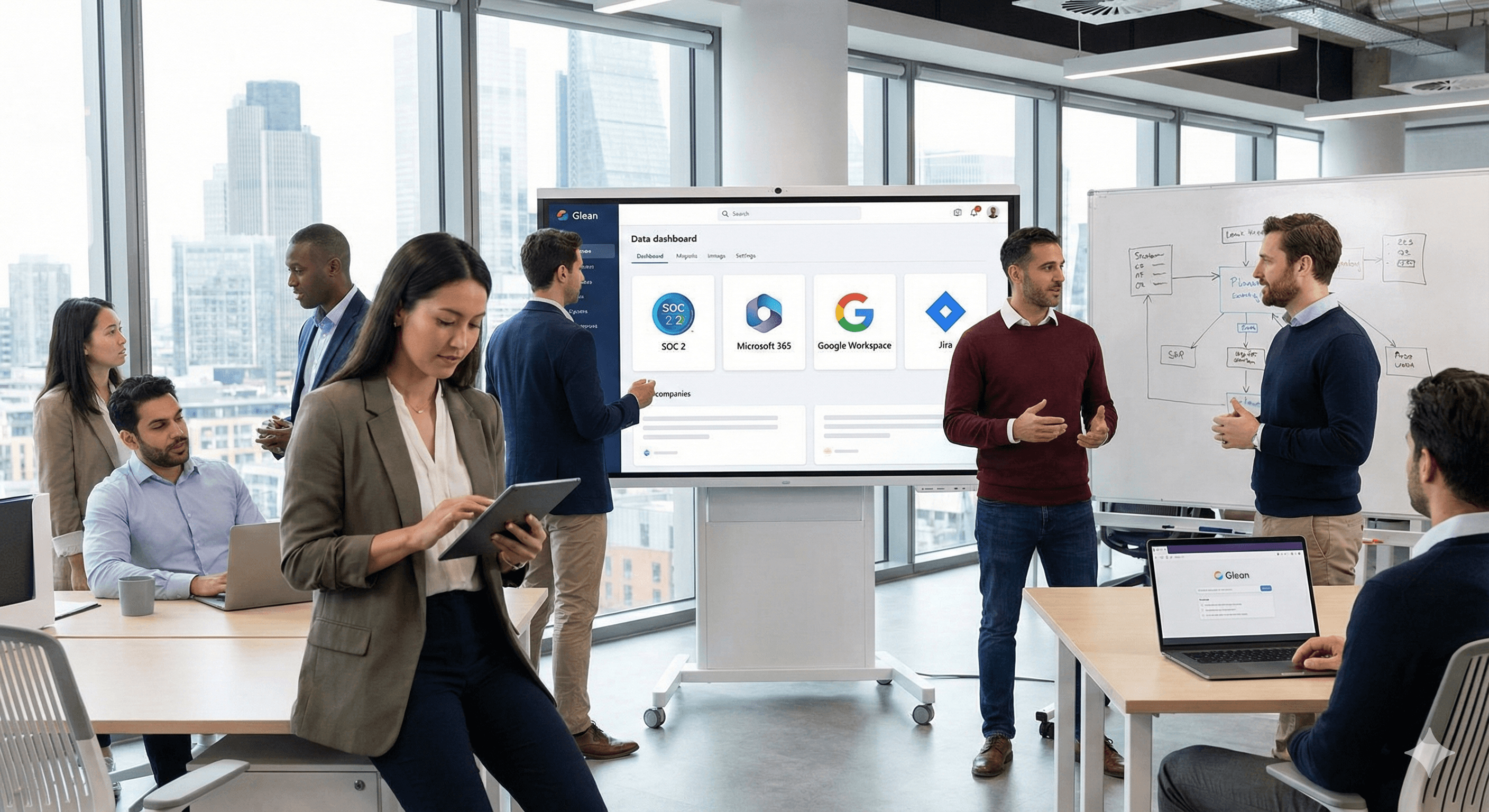
Glean se positionne comme une plateforme d'IA de travail qui se connecte aux données d'entreprise et fournit une recherche, un assistant, et un cadre pour l'orchestration sécurisée des agents. Elle met l'accent sur la sécurité de niveau entreprise (par exemple, SOC 2/ISO 27001), la récupération sensible aux permissions, et une bibliothèque en expansion de connecteurs et d'agents, s'alignant bien avec les critères d'évaluation des DCI pour 2026.
Où Glean peut aider
Accès sécurisé à la connaissance : Recherche et réponses sensibles aux permissions à travers Microsoft 365, Google Workspace, Slack/Teams, Jira, Salesforce et plus.
Assistant d'IA de travail : Résumez, rédigez et récupérez avec des citations claires des sources.
Agents et orchestration : Construisez des automatisations contraintes par la politique avec des approbations et une observabilité.
Étapes pratiques ou exemples
Évaluez l'intégration avec les systèmes existants
Cartographiez les scénarios à haute valeur ajoutée (résolution de support, planification de sprint, questions de politique, réponses RFP) et les applications où résident les données. Priorisez en fonction de l'impact et du risque.Examinez les fonctionnalités de sécurité et la conformité
Demandez de la documentation sur les certifications, l'architecture, la gestion des données, le RBAC, la journalisation des audits et la gouvernance des modèles. Faites intervenir la sécurité, le juridique et la protection des données tôt.Encouragez l'adoption par les utilisateurs grâce à la formation
Concevez un plan d'habilitation basé sur les rôles avec des incitations, des playbooks et des garde-fous clairs. Établissez un réseau de champions et mesurez le temps économisé, la rapidité des décisions et la déviation.
Résumé
La bonne plateforme de collaboration AI en 2026 devrait être sécurisée, sensible aux permissions, profondément intégrée et prête à être adoptée. Glean est un candidat de choix pour les entreprises priorisant la gouvernance et les résultats mesurables. Pour un processus de sélection structuré et un projet pilote pratique, parlez à Génération Numérique.
Prêt à comparer les plateformes et concevoir un projet pilote sécuritaire?
FAQ
Q1 : Que devraient envisager les entreprises lors du choix d'un logiciel de collaboration AI?
En 2026, priorisez la sécurité (SOC 2/ISO 27001), la récupération sensible aux permissions, le RBAC et les intégrations prouvées à votre pile principale. Évaluez la gouvernance des fournisseurs, l'auditabilité et la résidence des données.
Q2 : Comment les outils pilotés par l'IA peuvent-ils améliorer la productivité?
Ils mettent en avant les réponses plus rapidement, résument le contenu, automatisent les étapes routinières et, lorsqu'ils sont orchestrés en toute sécurité, coordonnent des tâches multi-apps via des agents. Mesurez le temps épargné et la rapidité des décisions pendant les pilotes.
Q3 : Pourquoi la sécurité est-elle importante dans les outils de collaboration AI?
La sécurité garantit que les données sensibles de l'entreprise sont protégées contre les violations et les accès non autorisés. Les certifications, le design de confiance zéro et le RBAC permettent la productivité sans sacrifier le contrôle.
Liens connexes
Recevez chaque semaine des nouvelles et des conseils sur l'IA directement dans votre boîte de réception
En vous abonnant, vous consentez à ce que Génération Numérique stocke et traite vos informations conformément à notre politique de confidentialité. Vous pouvez lire la politique complète sur gend.co/privacy.



Génération
Numérique

Bureau du Royaume-Uni
Génération Numérique Ltée
33 rue Queen,
Londres
EC4R 1AP
Royaume-Uni
Bureau au Canada
Génération Numérique Amériques Inc
181 rue Bay, Suite 1800
Toronto, ON, M5J 2T9
Canada
Bureau aux États-Unis
Generation Digital Americas Inc
77 Sands St,
Brooklyn, NY 11201,
États-Unis
Bureau de l'UE
Génération de logiciels numériques
Bâtiment Elgee
Dundalk
A91 X2R3
Irlande
Bureau du Moyen-Orient
6994 Alsharq 3890,
An Narjis,
Riyad 13343,
Arabie Saoudite







Numéro d'entreprise : 256 9431 77 | Droits d'auteur 2026 | Conditions générales | Politique de confidentialité