OpenAI Japan Teen Safety Blueprint: What’s New
OpenAI
Pas sûr de quoi faire ensuite avec l'IA?Évaluez la préparation, les risques et les priorités en moins d'une heure.
➔ Téléchargez notre kit de préparation à l'IA gratuit
OpenAI Japan’s Teen Safety Blueprint is a framework for making generative AI safer for under‑18s. It focuses on identifying teen users (with privacy-preserving age estimation), applying stricter under‑18 safety rules, giving parents tools such as account linking and break windows, and building research-led well-being safeguards to reduce mental health risk.
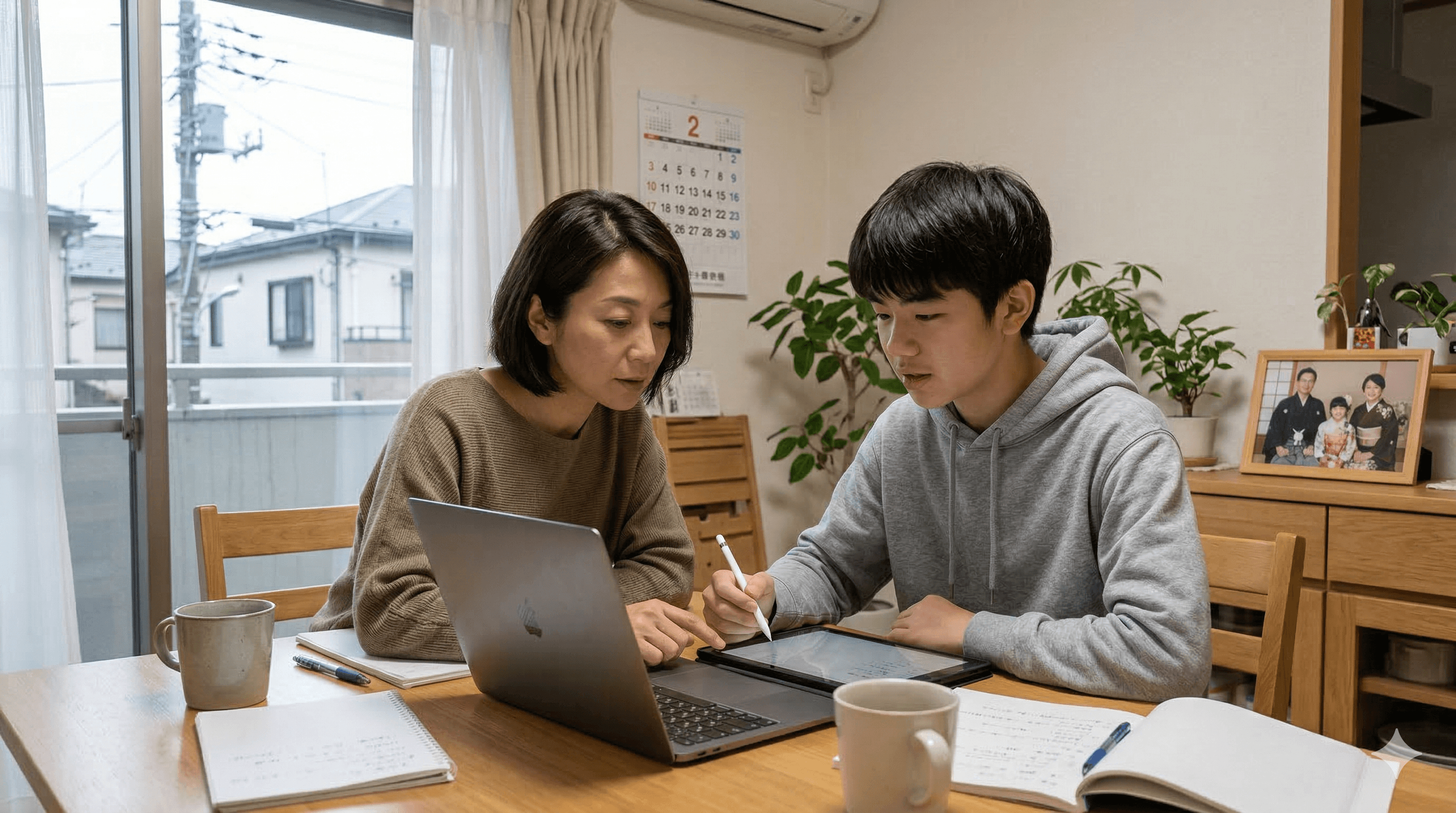
Generative AI is turning into a daily companion for teens — for homework, language learning, creativity, and problem-solving. That shift is happening quickly, and the risks are not theoretical. When a system can sound confident while being wrong, or can respond to vulnerable emotional states in real time, safety has to be designed in from day one.
That’s the context for OpenAI Japan’s Japan Teen Safety Blueprint. It sets out what “age-appropriate AI” should look like in practice: identifying teen users, applying under‑18 policies, giving parents meaningful oversight, and designing for well-being rather than engagement.
In this article, we’ll break down what the Blueprint changes, why it matters outside Japan, and what parents, schools, and AI product teams can do now.
What is the Japan Teen Safety Blueprint?
The Japan Teen Safety Blueprint is OpenAI Japan’s framework for strengthening protections for teenagers using generative AI. It argues for a clear principle: teens need a different experience to adults, with strong safeguards by default, and additional controls for parents and educators.
It builds on existing safety features and adds more explicit expectations around:
Age protections (so teens are treated as teens, and adults as adults)
Under‑18 safety policies (to reduce exposure to harmful content and behaviours)
Parental controls (to tailor usage and reduce risk)
Well-being safeguards (supporting healthier patterns of use and safer responses)
Why this matters now
Teen adoption has moved faster than most governance conversations. The Blueprint notes that a significant share of Japanese teens are already using generative AI, largely via smartphones — making the question less “should teens use AI?” and more “how do we make that use safer, clearer, and healthier?”
The bigger lesson is global: once a tool is normalised, retrofitting safety becomes expensive and politically messy. The Blueprint is essentially a call to avoid repeating the “social media pattern” — widespread adoption first, child-safety interventions later.
For organisations, this also matters because teen safety features are a close cousin of enterprise controls: identity, policy layers, monitoring, and clear escalation paths. If you can’t govern usage for minors, it’s usually a sign you can’t govern risk for anyone.
What’s new: the Blueprint’s safety layers
1) Identify teen users without over-collecting data
A central idea is privacy-preserving, risk-based age prediction. Instead of relying only on self-declared age, the Blueprint argues that services should be able to identify under‑18 users while minimising sensitive data collection.
A practical principle sits underneath: when a service can’t be confident about age, it should default to safer (under‑18) protections. That flips the usual approach on its head — moving from “prove you’re a minor” to “prove you’re an adult”, at least when risk is high.
2) Apply under‑18 safety policies that remove predictable harms
The Blueprint’s under‑18 policy expectations are intentionally concrete. For teen users, AI systems should avoid:
Depicting suicide or self-harm
Explicit or immersive sexual content (including role-play) and violent content
Instructions that enable dangerous behaviour or access to illegal substances
Outputs that reinforce harmful body image (e.g., appearance ratings and restrictive dietary guidance)
“Therapist replacement” dynamics, where the tool becomes a substitute for real support
Advice that helps minors hide risky behaviour from caregivers
This isn’t about making AI bland. It’s about removing the most foreseeable failure modes — the ones that create genuine harm at scale.
3) Give parents and educators controls that actually change outcomes
Parental controls only matter if they’re usable and tied to real risk reduction. The Blueprint points to layered controls, including:
Linking a parent/guardian to a teen account (for teens 13+), via a simple invitation flow
Managing privacy and data settings, such as turning off memory and chat history
Receiving alerts if activity suggests self-harm intent
Setting break times (periods when access is unavailable) to encourage offline time
This approach also respects an important reality: families differ. Some want strict limits; others want visibility and coaching. The point is to offer meaningful options, not a single “on/off” switch.
4) Design for well-being, not just safety compliance
A standout element is the explicit focus on well-being-centred design. That includes:
Break reminders during long sessions
Support resources when users express suicidal intent
Ongoing external research into mental health and teen development
Expert input (including an Expert Council focused on well-being and AI)
In other words: teen safety isn’t just content blocking. It’s product design that encourages healthier use and better escalation when risk is detected.
Practical steps: what to do if you’re a parent, school, or product team
If you’re a parent or guardian
Start with expectations, not settings. Agree what “good use” looks like (homework support, language practice, idea generation) and what isn’t acceptable (explicit content, secretive emotional dependence, late-night usage).
Turn on the controls that reduce risk first. Prioritise break windows and privacy settings (memory/chat history) before you worry about fine-grained content categories.
Treat AI like a tutor, not a friend. Encourage your teen to use it to organise thoughts, draft ideas, and test understanding — not for emotional dependency or high-stakes decisions.
Build a “verify habit”. If the AI produces facts, ask for sources, and check them together. This reduces misinformation risk and builds critical thinking.
If you’re a school or education leader
Create a teen-safe acceptable use policy. Keep it short, clear, and practical: when AI is allowed, what must be disclosed, and what’s prohibited.
Specify vendor requirements. Ask for under‑18 policy controls, age-appropriate defaults, and transparent safety escalation for self-harm signals.
Train staff on the new failure modes. Misinformation, persuasive tone, and emotional reliance are different from traditional internet risks.
Measure what matters. Track incident types (misinformation, inappropriate content, wellbeing flags), response times, and improvements after policy changes.
If you build or deploy AI products
Adopt a “safe by default” stance for unknown ages. If age signals are weak, apply under‑18 guardrails — especially for high-risk topics.
Make age estimation auditable and appealable. Users need a route to challenge incorrect classification.
Separate teen safety policy from general policy. Under‑18 rules should be research-based, transparent, and independently evaluated.
Treat parental controls as a product experience. If linking accounts or setting break times is painful, uptake will be low.
Invest in well-being evaluations, not just red teaming. You’re not only preventing policy violations; you’re shaping behavioural patterns.
What this signals for organisations outside Japan
Even if you don’t operate in Japan, the Blueprint is useful because it describes a direction of travel: age-aware AI experiences will become a baseline expectation.
For organisations adopting AI at work, the analogy is straightforward:
Age estimation maps to identity and role-based access
Under‑18 policies map to use-case restrictions and acceptable use rules
Parental controls map to manager and admin controls
Well-being design maps to healthy adoption patterns (breaks, escalation, and support)
If you’re trying to scale AI responsibly, the same building blocks apply: clear policies, guardrails, monitoring, and a human support path when risk is detected.
Summary
OpenAI Japan’s Teen Safety Blueprint is a practical framework: identify teen users, apply under‑18 safety rules, provide parental controls, and design for well-being using research and expert input.
If you want to apply the same “safety by design” approach to enterprise AI — including governance, guardrails, and rollout at scale — Generation Digital can help.
Next steps
If you’re tightening governance, start with AI Governance for Boards: https://www.gend.co/blog/ai-governance-evolving-board-strategies/
If Shadow AI is your biggest risk, use the Shadow AI security playbook: https://www.gend.co/blog/shadow-ai-security-playbook/
If you need a practical toolkit, download the AI Readiness & Execution Pack: https://www.gend.co/ai-readiness-execution-pack/
Ready to talk? Contact us: https://www.gend.co/contact
FAQs
What is the Japan Teen Safety Blueprint?
It’s OpenAI Japan’s framework for making generative AI safer for teens. It focuses on identifying teen users, applying stricter under‑18 policies, adding parental controls, and integrating well-being safeguards into product design.
What protections does the Blueprint prioritise?
The Blueprint prioritises privacy-preserving age estimation, under‑18 safety policies (especially around self-harm, sexual content, and dangerous behaviour), parental oversight tools, and research-led well-being features.
What parental controls are included (or recommended)?
The Blueprint recommends account linking (for teens 13+), the ability to manage privacy settings such as memory/chat history, alerts for potential self-harm intent, and break windows to encourage time offline.
Is this only relevant to Japan?
The Blueprint is Japan-focused, but it reflects a broader direction: age-aware safeguards and well-being-centred design are increasingly expected in AI products globally.
How should schools and organisations respond?
Define clear acceptable-use rules, ask vendors for age-appropriate safeguards and escalation processes, train staff on new AI risks (misinformation and emotional reliance), and track incidents and outcomes over time.
Recevez chaque semaine des nouvelles et des conseils sur l'IA directement dans votre boîte de réception
En vous abonnant, vous consentez à ce que Génération Numérique stocke et traite vos informations conformément à notre politique de confidentialité. Vous pouvez lire la politique complète sur gend.co/privacy.



Génération
Numérique

Bureau du Royaume-Uni
Génération Numérique Ltée
33 rue Queen,
Londres
EC4R 1AP
Royaume-Uni
Bureau au Canada
Génération Numérique Amériques Inc
181 rue Bay, Suite 1800
Toronto, ON, M5J 2T9
Canada
Bureau aux États-Unis
Generation Digital Americas Inc
77 Sands St,
Brooklyn, NY 11201,
États-Unis
Bureau de l'UE
Génération de logiciels numériques
Bâtiment Elgee
Dundalk
A91 X2R3
Irlande
Bureau du Moyen-Orient
6994 Alsharq 3890,
An Narjis,
Riyad 13343,
Arabie Saoudite







Numéro d'entreprise : 256 9431 77 | Droits d'auteur 2026 | Conditions générales | Politique de confidentialité