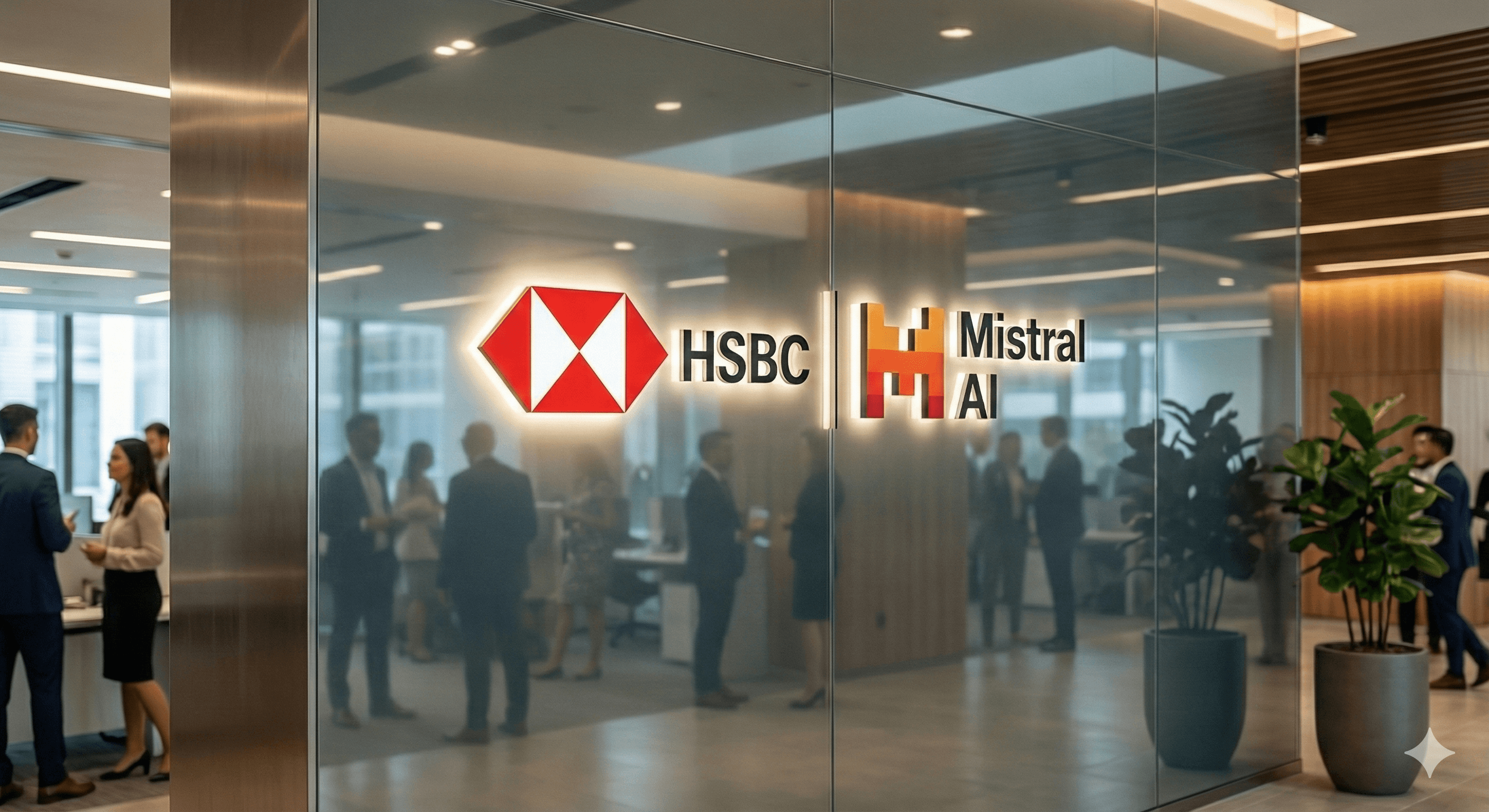
HSBC y Mistral AI - una iniciativa de varios años de GenAI en el sector bancario
Mistral
¿No sabes por dónde empezar con la IA?Evalúa preparación, riesgos y prioridades en menos de una hora.
➔ Descarga nuestro paquete gratuito de preparación para IA
La asociación plurianual de HSBC con Mistral AI le brinda al banco acceso a LLMs comerciales actuales y futuros, con ingeniería conjunta para acelerar la inteligencia artificial generativa en toda su operación. El enfoque está en la productividad y en el servicio al cliente a gran escala: resumir documentos, traducciones multilingües, integración, crédito y riesgos, bajo controles responsables de IA y privacidad de datos.
Por qué esto es importante ahora
Los bancos están pasando de proyectos piloto a la implementación de IA a gran escala. El acuerdo de HSBC con Mistral AI marca un cambio de la experimentación a la elección de plataformas: cuáles modelos, cuál patrón de hospedaje y cuáles controles de gobernanza sostendrán miles de flujos de trabajo diarios en un entorno regulado.
Lo que anunció HSBC
Una asociación estratégica plurianual con Mistral AI para acelerar la adopción de genAI en todo el banco.
Acceso a los modelos comerciales de Mistral, incluyendo futuras versiones y co-desarrollo entre los equipos de inteligencia artificial aplicada, ciencia e ingeniería de HSBC y Mistral.
Aceleración de casos de uso de IA en flujos de trabajo intensivos en documentos y multilingües, con el objetivo de liberar tiempo del personal y mejorar la experiencia del cliente.
Ampliar sobre los más de 600 casos de uso de IA existentes de HSBC en detección de fraude, ciberseguridad, monitoreo de transacciones, servicio al cliente y riesgos.
Los grupos de casos de uso prácticos
Inteligencia de documentos para crédito y mercados
Resúmenes rápidos de documentos de préstamo, estados financieros, paquetes de debida diligencia y hojas de términos.
Comparaciones entre contrapartes; extracción de convenios y alertas para los comités de crédito.
KYC/AML y operaciones de delitos financieros
Redacción de narrativas para alertas; clasificación de evidencia de fuentes estructuradas y no estructuradas; soporte de coincidencia de nombres/entidades multilingües.
La revisión con intervención humana sigue siendo obligatoria; la salida del AI es un producto de trabajo, no una verdad probatoria.
Integración y servicio
Resúmenes automáticos de datos de solicitud y documentos cargados; comunicaciones personalizadas para clientes; cumplimiento más rápido con pasos explicativos guardados en el expediente del caso.
Interacciones con clientes
Resúmenes de notas de llamadas y chats; respuestas fundamentadas en bases de conocimiento; traducción entre idiomas europeos y asiáticos para apoyar a los clientes transfronterizos.
Riesgos y cumplimiento
Búsqueda de políticas, análisis comparativos, explicaciones en inglés sencillo de cambios regulatorios y revisiones preliminares para divulgaciones.
¿Por qué Mistral? (Lo que los compradores infieren)
Elección y portabilidad de modelos: Mistral ofrece modelos de alto rendimiento con opciones de peso abierto en partes del portafolio, mejorando la portabilidad y la viabilidad de hospedaje propio donde sea necesario.
Enfoque en la eficiencia: Modelos más pequeños y eficientes pueden ser más adecuados para casos bancarios sensible a la latencia o con restricciones de costos.
Postura de co-ingeniería: La asociación enmarca un trabajo cercano entre ingenieros de HSBC y Mistral, útil para patrones de datos y límites específicos del banco.
Patrones de hospedaje y arquitectura para evaluar
Auto-hospedado / VPC: Para rutas de datos sensibles, los bancos a menudo ejecutan modelos en sus propias cuentas en la nube o de forma local. Esto respalda severos límites de datos, trails de auditoría y garantías de latencia.
Hospedado por el proveedor con controles empresariales: Más rápido para comenzar; asegurarse de que el contenido esté excluido del entrenamiento del modelo, con controles de retención y eliminación.
Híbrido: Ejecutar la inferencia base hospedada por el proveedor; mover los comandos más sensibles a puntos de hospedaje propio; usar generación aumentada por recuperación (RAG) contra bases de conocimiento controladas por el banco.
Pila de observabilidad: Registrar comandos/completaciones, uso de tokens y eventos de seguridad. Alinear con la gobernanza de riesgos del modelo.
Lista de verificación de gobernanza para despliegue regulado
Gestión de riesgo del modelo: Registrar modelos; definir uso previsto; evaluar la equidad, la robustez, la deriva del rendimiento; documentar pruebas (incluyendo comandos adversariales).
Privacidad de datos: DPIA donde aplique; minimización de datos; enmascaramiento/redacción de datos personales; controles de procesamiento y retención regional.
Supervisión humana: Revisión de dos personas en resultados de alto riesgo (decisiones crediticias, narrativas de SAR, divulgaciones a clientes).
Explicabilidad y procedencia: Almacenar citas de fuentes junto con resultados generados; mantener versiones de comandos y modelos para auditoría.
Control de cambios: Tratar las actualizaciones de modelos/versiones como lanzamientos de código con planes de reversión.
Riesgo de terceros: Exclusiones contractuales del entrenamiento del modelo; SLAs; pruebas de penetración; compromisos de respuesta a incidentes.
Métricas que importan
Tiempo para decisión (crédito, integración), rendimiento de casos (alertas por analista), resolución en primera llamada, NPS/CSAT, y tasas de errores/omisiones.
Métricas de costo: tokens por tarea, latencia, y % auto-hospedado vs hospedado por proveedor cargas de trabajo.
Métricas de riesgo: tasa de incidentes del modelo, frecuencia de anulaciones, banderas de deriva, e incidentes de privacidad.
Cómo ejecutar un piloto de 90 días (guía para bancos)
Semanas 1–2: Entorno y límites
Elegir de 2 a 3 casos de uso (resumen de documentos para crédito; comunicaciones multilingües para clientes; redacción de narrativas KYC).
Establecer hospedaje (auto-hospedado o hospedado por proveedor) con SSO, RBAC, registro de logs y exclusiones para entrenamiento de contenido.
Redactar política de uso aceptable y guía para revisores.
Semanas 3–6: Construir rebanadas finas
Conectar una tienda de conocimiento de solo lectura (políticas, plantillas).
Enviar bibliotecas de comandos y suites de evaluación; añadir RAG para tareas de alta precisión.
Instrumentar latencia, precisión, cobertura de citas.
Semanas 7–12: Escalar a pequeños grupos
50–150 usuarios en unidades de negocio; seguir los cambios de productividad y calidad.
Añadir traducción y resumen de notas de llamadas; realizar pruebas de equipo rojo; comenzar a rastrear la realización de beneficios.
Criterios de salida: ahorros de tiempo medibles (≥20%), métricas de gobernanza estable y aprobación de interesados para despliegue ampliado.
Contexto competitivo
Los bancos globales están mezclando estrategias: algunos construyen asistentes propios; otros seleccionan múltiples modelos comerciales para diferentes tareas. Mistral compite en eficiencia, procedencia europea y opciones de peso abierto en partes de la pila. Los compradores compararán con grandes proveedores estadounidenses y herramientas legales/financieras especializadas; la "adecuación a la tarea" de los modelos es el patrón ganador.
Conclusión
La asociación de HSBC con Mistral AI refleja una tendencia más amplia en la banca: consolidarse en un pequeño conjunto de modelos de alto rendimiento, con una fuerte gobernanza y hospedaje selectivo. Los bancos que adopten este patrón pueden desbloquear ganancias de productividad rápidas y seguras en flujos de trabajo intensivos en documentos y multilingües, sin comprometer las obligaciones regulatorias.
Próximos pasos: Generación Digital ayuda a los bancos a establecer ambientes seguros de LLM, conectar conocimiento de forma segura y medir impacto. Hablen con nuestro equipo de gobernanza y habilitación de IA.
Preguntas frecuentes
P1. ¿Qué cubre el acuerdo HSBC x Mistral AI?
R. Una asociación plurianual con acceso a los modelos comerciales de Mistral (incluyendo futuras versiones) y ingeniería conjunta para escalar la IA en todo el banco.
P2. ¿Hospedarán los bancos estos modelos?
R. Muchos lo hacen para rutas sensibles; los patrones híbridos son comunes. Decidir por caso de uso basado en la sensibilidad de datos, latencia y costo.
P3. ¿Cuáles casos de uso muestran el retorno más rápido sobre la inversión?
R. Resumen de documentos para crédito/mercados, narrativas KYC/AML, triage de integración, resúmenes de notas de llamadas, comunicaciones multilingües para clientes.
P4. ¿Cómo gestionamos el riesgo de IA?
R. Tratar a los modelos como activos gobernados: DPIA donde sea relevante, acceso basado en roles, registros de auditoría, exclusiones de entrenamiento y revisión humana en salidas de alto riesgo.
P5. ¿Cómo se compara esto con los LLMs estadounidenses?
R. Mistral compite en eficiencia, procedencia europea y opciones de peso abierto; muchos bancos usan múltiples modelos para ajustar las tareas.
Recibe noticias y consejos sobre IA cada semana en tu bandeja de entrada
Al suscribirte, das tu consentimiento para que Generation Digital almacene y procese tus datos de acuerdo con nuestra política de privacidad. Puedes leer la política completa en gend.co/privacy.



Generación
Digital

Oficina en Reino Unido
Generation Digital Ltd
33 Queen St,
Londres
EC4R 1AP
Reino Unido
Oficina en Canadá
Generation Digital Americas Inc
181 Bay St., Suite 1800
Toronto, ON, M5J 2T9
Canadá
Oficina en EE. UU.
Generation Digital Américas Inc
77 Sands St,
Brooklyn, NY 11201,
Estados Unidos
Oficina de la UE
Software Generación Digital
Edificio Elgee
Dundalk
A91 X2R3
Irlanda
Oficina en Medio Oriente
6994 Alsharq 3890,
An Narjis,
Riad 13343,
Arabia Saudita







Número de la empresa: 256 9431 77 | Derechos de autor 2026 | Términos y Condiciones | Política de Privacidad