Mistral AI gana el acuerdo marco de inteligencia artificial de defensa en Francia
Mistral
¿No sabes por dónde empezar con la IA?Evalúa preparación, riesgos y prioridades en menos de una hora.
➔ Descarga nuestro paquete gratuito de preparación para IA
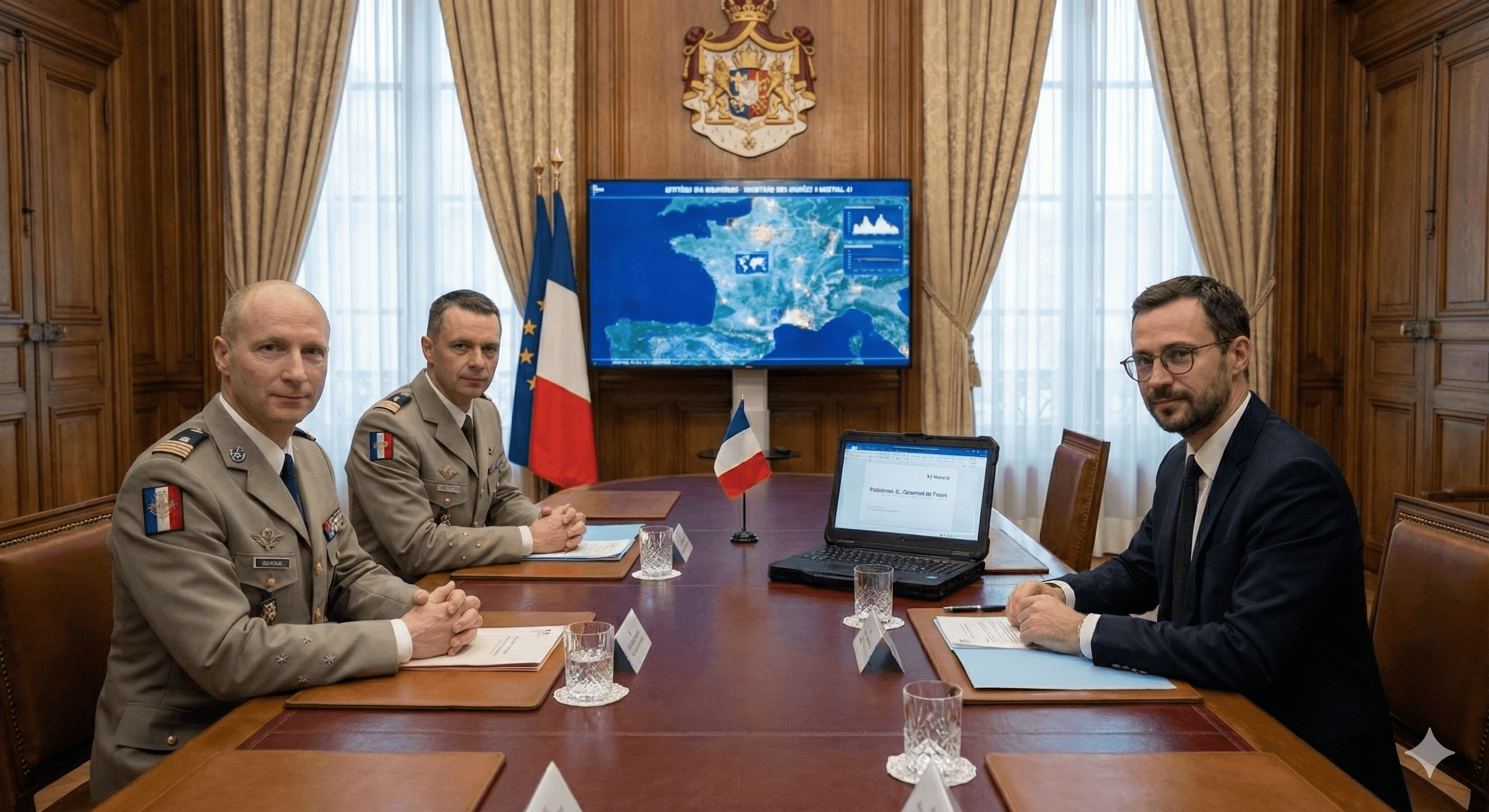
El Ministerio de las Fuerzas Armadas de Francia ha otorgado a Mistral AI un acuerdo marco que brinda a las ramas militares, direcciones y organismos afiliados (por ejemplo, CEA, ONERA, SHOM) acceso a sus modelos de IA, software y servicios. Supervisado por AMIAD, las soluciones funcionarán en la infraestructura francesa y se basarán en un acuerdo de cooperación 2025, reforzando el control de la IA soberana.
Lo sucedido y su importancia
El 8 de enero de 2026, Reuters informó que el Ministerio de las Fuerzas Armadas de Francia había otorgado a Mistral AI un acuerdo marco para suministrar modelos de IA generativa, software y servicios en todo el ecosistema de defensa. La medida formaliza el acceso para las fuerzas armadas del Ministerio y las direcciones, extendiéndose a instituciones públicas afiliadas clave, con AMIAD proporcionando supervisión. El hosting se compromete en infraestructura francesa para preservar el control nacional sobre datos y tecnología sensibles. Esto sigue a un acuerdo de cooperación de marzo de 2025, señalando una aceleración de proyecto piloto a adopción a gran escala.
Por qué un acuerdo marco es trascendental
En la contratación pública europea, un contrato marco establece términos comerciales y legales preacordados para que múltiples unidades puedan solicitar servicios rápidamente sin renegociar cada vez. Para la IA de defensa, eso se traduce en velocidad para el campo: probar, evaluar y desplegar herramientas con respaldo de modelos sin meses de trabajo contractual, mientras se mantienen dentro de los parámetros de gobernanza.
Alcance y beneficiarios
Quién puede utilizarlo: Las fuerzas armadas del Ministerio, direcciones, servicios y organismos públicos designados como CEA (Comisión de Energía Atómica), ONERA (estudios y investigación aeroespacial) y SHOM (hidrografía naval y oceanografía).
Qué incluye: Acceso a los modelos de IA de Mistral, software empresarial y servicios profesionales, incluyendo posible ajuste fino con datos de defensa para satisfacer necesidades operacionales.
Supervisión: La Agencia para la Inteligencia Artificial de Defensa (AMIAD) coordina estándares de despliegue, controles de riesgo e interoperabilidad.
IA soberana: hospedaje y control
Ubicación y control: Mistral indica que las soluciones se alojarán completamente en infraestructura francesa, apoyando la residencia de datos, asegurando la cadena de suministro y continuidad bajo política nacional.
Seguridad operacional: Se esperan controles estrictos de identidad y acceso (SSO, RBAC), registro de solicitudes/resultados, y separación de las tuberías de entrenamiento público, es decir, no se utilizarán indicaciones/datos de defensa para entrenar modelos públicos.
Probables casos de uso de defensa
Inteligencia y análisis – resumen de informes de múltiples fuentes, triaje multilingüe, generación de hipótesis con validación humana.
Planificación de operaciones – listas de verificación, consultas de procedimientos y red team de planes; informes con plantillas y citas de fuentes.
Ciberseguridad y operaciones (SecOps) – resumen de registros, borradores de narración de incidentes y guía de libro de jugadas; recuperación de alta precisión sobre cuerpos clasificados.
Logística y mantenimiento – búsqueda en manuales técnicos, ayudas para el razonamiento del árbol de fallas y planificación de partes con supervisión humana.
Educación y doctrina – generación de contenido de capacitación, preguntas y respuestas de política, y traducción alineada con la terminología de defensa.
Consideraciones de riesgo y gobernanza (contexto de defensa)
Gestión del riesgo del modelo: Registrar modelos, uso previsto y restricciones de seguridad; medir desviación del rendimiento y robustez ante adversidades.
Límites de seguridad: Aplicar inferencias aisladas o alojadas en VPC según sea necesario; verificar aislamiento del camino de datos.
Controles de exportación y clasificación: Asegurar controles para restricciones similares a ITAR donde corresponda y manejo de la clasificación (etiquetado de metadatos, reglas de degradación).
Auditabilidad y procedencia: Requerir resultados con fundamento en la fuente, registro completo de solicitudes/respuestas, y confirmación de modelo/versión para revisión posterior a la acción.
Supervisión humana: Humano en el bucle en cualquier decisión operativa o adyacente a objetivos; los resultados de IA siguen siendo consultivos.
Comparación y qué deben vigilar los compradores
Mecanismo de aceleración: Con un marco en su lugar, las unidades pueden probar y adoptar con menos fricción que con contratos personalizados.
Posicionamiento soberano: El alojamiento dentro de Francia apoya los objetivos de política de soberanía tecnológica y reduce el riesgo de dependencia.
Interacción del ecosistema: Francia tiene iniciativas paralelas (por ejemplo, programas respaldados por AMIAD y contratos separados para integración de IA) que indican una institucionalización más amplia de la IA en defensa. Espere una creciente demanda de interoperabilidad con sistemas C2/ISR existentes y cumplimiento con estándares de la OTAN donde sea relevante.
Plan de evaluación pragmático de 90 días para agencias de defensa/seguridad
Semanas 1–2: Ingreso & límites
Confirmar límites de clasificación; establecer entornos aislados; implementar SSO/RBAC/registro; definir procedimientos de red team.
Semanas 3–6: Pilotar cortes finos
Elegir dos flujos de trabajo (por ejemplo, resumen de inteligencia; recuperación de doctrina). Conectar un almacén de conocimiento de solo lectura; implementar RAG; establecer métricas de evaluación (latencia, cobertura de citas, satisfacción del operador).
Semanas 7–12: Escalar cautelosamente
Ampliar a unidades adicionales; realizar ejercicios de simulación; formalizar la reversión/control de cambios; redactar caso de beneficios y registro de riesgos.
Relevancia para compradores no franceses UK/UE
Conclusión: El patrón—marco + hospedaje soberano + supervisión al estilo AMIAD—influirá en otros ministerios y compradores de infraestructuras críticas-nacionales. Fuera de Francia, adaptar a la política nacional (por ejemplo, orientación del DSIT/MoD del Reino Unido) y acreditaciones de seguridad locales manteniendo una estrategia de salida (portabilidad del modelo, opciones de peso abierto donde sea apropiado).
Conclusión
El marco de Mistral AI ofrece al ecosistema de defensa de Francia un camino rápido y soberano para adoptar IA generativa mientras preserva el control nacional. Para el gobierno y compradores regulados en toda Europa, esto es una señal para priorizar adquisiciones basadas en marcos, soberanía de hospedaje y gobernanza medible al escalar la IA.
Próximos pasos: Contacte a Generation Digital para obtener apoyo en despliegues de LLM seguros en sectores gubernamentales y regulados, incluyendo gobernanza, arquitectura y seguimiento de beneficios.
Preguntas frecuentes
P1. ¿Qué cubre el acuerdo marco?
R. Acceso a los modelos, software y servicios de Mistral AI para las fuerzas armadas del Ministerio, direcciones, servicios y afiliados (CEA, ONERA, SHOM), supervisado por AMIAD, con hospedaje en infraestructura francesa.
P2. ¿Se utilizan datos de defensa para entrenar modelos públicos?
R. Los despliegues empresariales/soberanos excluyen típicamente los datos del cliente del entrenamiento de modelos públicos; confirme esto contractualmente y en controles técnicos.
P3. ¿Qué opciones de hospedaje se aplican?
R. Infraestructura francesa (alojada por el proveedor o autogestionada/VPC) con controles estrictos de identidad, registro y residencia de datos; opciones aisladas para clasificaciones superiores.
P4. ¿Qué tan rápido pueden las unidades adoptar herramientas?
R. Los marcos preacuerdan términos comerciales/legales, permitiendo llamadas y pilotos más rápidos en comparación con contratos personalizados.
P5. ¿Cuáles son los casos de uso a corto plazo?
R. Resumen de inteligencia, triaje multilingüe, búsqueda de doctrina, narración de incidentes, recuperación de conocimiento logístico y contenido de capacitación: siempre con humano en el bucle.
Recibe noticias y consejos sobre IA cada semana en tu bandeja de entrada
Al suscribirte, das tu consentimiento para que Generation Digital almacene y procese tus datos de acuerdo con nuestra política de privacidad. Puedes leer la política completa en gend.co/privacy.



Generación
Digital

Oficina en Reino Unido
Generation Digital Ltd
33 Queen St,
Londres
EC4R 1AP
Reino Unido
Oficina en Canadá
Generation Digital Americas Inc
181 Bay St., Suite 1800
Toronto, ON, M5J 2T9
Canadá
Oficina en EE. UU.
Generation Digital Américas Inc
77 Sands St,
Brooklyn, NY 11201,
Estados Unidos
Oficina de la UE
Software Generación Digital
Edificio Elgee
Dundalk
A91 X2R3
Irlanda
Oficina en Medio Oriente
6994 Alsharq 3890,
An Narjis,
Riad 13343,
Arabia Saudita






Número de la empresa: 256 9431 77 | Derechos de autor 2026 | Términos y Condiciones | Política de Privacidad