Accor Streamlines Campaigns, Reduces Workload by 50%
Asana
Featured List
Uncertain about how to get started with AI?Evaluate your readiness, potential risks, and key priorities in less than an hour.
➔ Download Our Free AI Preparedness Pack
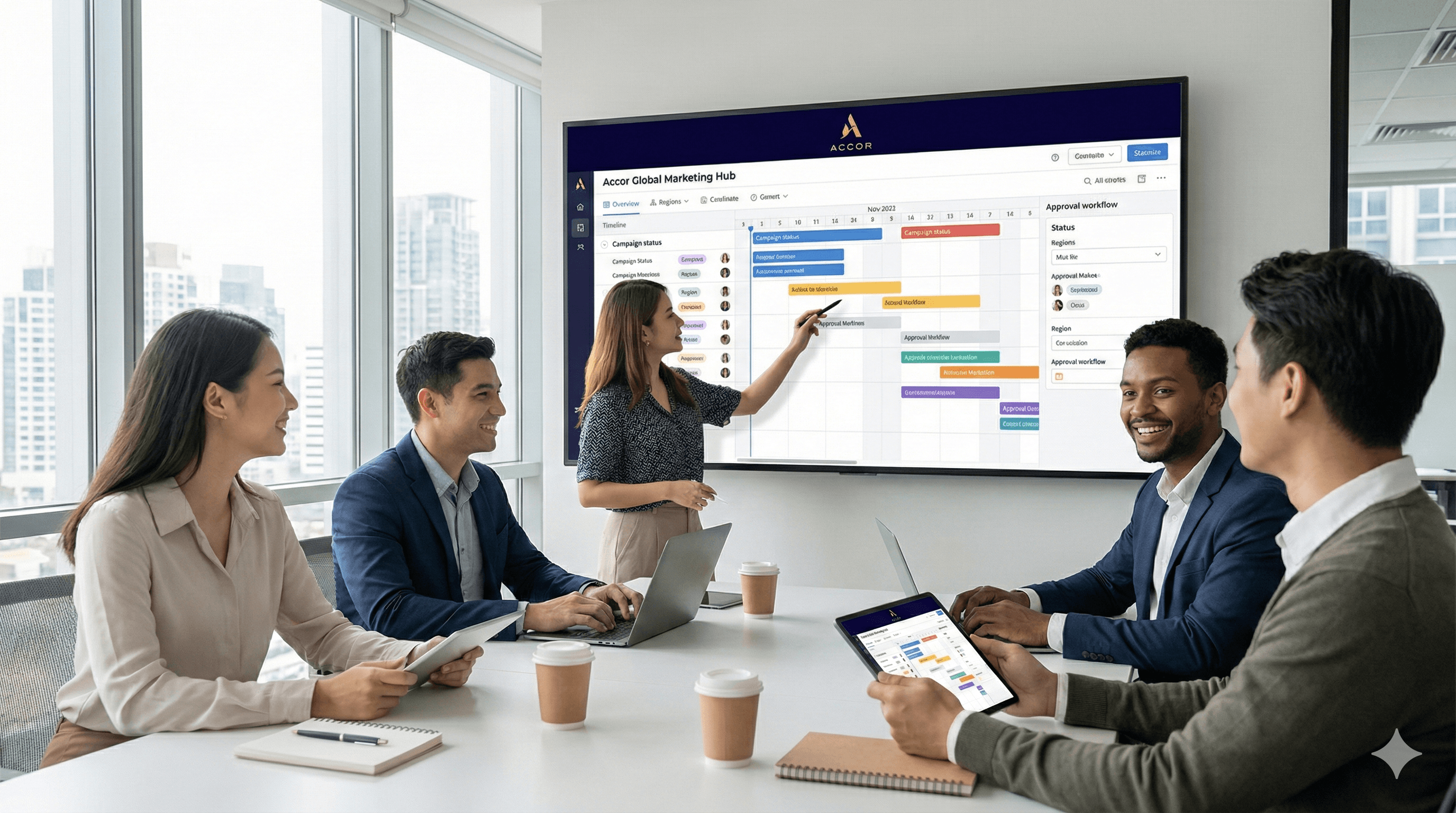
Accor transitioned from scattered spreadsheets and lengthy email threads to a centralized campaign hub. By unifying intake, planning, execution, and approvals, they streamlined collaboration across brands and regions, providing every marketer with the same real-time view of priorities. This shift led to approximately 96% efficiency improvements and halved emails and meetings—with partner documentation indicating a ~50% workload reduction post-implementation.
Why centralization works
Single source of truth. Campaign status, owners, and deadlines are all in one place—no more searching through decks or inboxes.
Standardized workflows. Shared templates and “multi-homed” tasks eliminate duplication and keep global and local teams aligned.
External partner access. Accor brought on board ~200 agencies/consultants into the same system, reducing hand-offs and rework.
What’s new / how it works
Accor centralized campaign management in Asana, implementing it with structured training and gradual adoption. Features like multi-homing, comments, and portfolio visibility synchronized collaboration across regions. Leaders report 96% efficiency improvement and –50% emails/meetings as quantifiable outcomes of this change.
Practical steps you can follow
Create a single intake. Route every brief through a standard form to automatically assign owners, due dates, and regions. (Accor moved from scattered files to one organized system.)
Template the work. Develop campaign templates (tasks, stages, approvals) and reuse them across brands and markets.
Use multi-homing for transparency. Track one task across multiple projects (e.g., global campaign + regional execution) to avoid duplicate work.
Onboard partners. Integrate agencies/consultants into the same workspace with specific permissions to expedite feedback and asset flow.
Measure what matters. Keep an eye on meeting count, email volume, cycle time, and campaign throughput; Accor reports ~50% fewer emails/meetings after centralizing.
Train and iterate. Accor’s structured enablement facilitated rapid adoption and ongoing efficiency; consider a phased rollout with role-based workshops.
Impact highlights
Efficiency: ~96% improvement in team efficiency.
Communication load: ~50% reduction in meetings and emails.
Workload: A partner case study reports a ~50% workload reduction after implementation and tailored training. (Indicative; not an official Accor press metric.)
What to watch out for
Change fatigue. Plan for an adjustment period; accompany templates with training and office hours.
Governance. Define naming, tagging, and permissions so global and regional teams can coexist without clutter.
Value tracking. Publish a monthly scorecard (meetings, emails, cycle time) to reinforce adoption with results.
FAQs
Q1: How does centralization improve efficiency?
It removes duplication, standardizes workflows, and provides everyone with the same live view of priorities—Accor reports ~96% efficiency improvement from this change.
Q2: What does a 50% workload reduction mean in practice?
Less manual tracking, fewer status meetings, and faster approvals. Accor’s partner case notes a ~50% workload reduction post-implementation and training.
Q3: What challenges should we expect?
Initial change management and aligning multiple regions/brands to one way of working. Accor used structured training and phased adoption to ease the transition.
Next Steps
Centralizing campaign work enabled Accor to move faster with fewer meetings and clearer accountability. Want the same? Generation Digital can establish your intake, templates, and governance in Asana—so your team can focus on creative impact, not coordination.
Receive weekly AI news and advice straight to your inbox
By subscribing, you agree to allow Generation Digital to store and process your information according to our privacy policy. You can review the full policy at gend.co/privacy.



Generation
Digital

Canadian Office
33 Queen St,
Toronto
M5H 2N2
Canada
Canadian Office
1 University Ave,
Toronto,
ON M5J 1T1,
Canada
NAMER Office
77 Sands St,
Brooklyn,
NY 11201,
USA
Head Office
Charlemont St, Saint Kevin's, Dublin,
D02 VN88,
Ireland
Middle East Office
6994 Alsharq 3890,
An Narjis,
Riyadh 13343,
Saudi Arabia







Business Number: 256 9431 77 | Copyright 2026 | Terms and Conditions | Privacy Policy