How AI Agents Improve Daily Tasks (2026 Guide)

How AI Agents Improve Daily Tasks (2026 Guide)

Confusion
Dec 9, 2025

The image shows a stylized diagram of a skill management interface titled "my-skill" on a computer screen, featuring an organized display with folder icons, surrounded by a network of connected icons representing "Claude app," "API / MCP," and various skill patterns like "KPI Definition Checker," "RFP / Security Assurance," and "Sales Enablement Answers," set against a modern office background.

Not sure what to do next with AI?
Assess readiness, risk, and priorities in under an hour.

Not sure what to do next with AI?
Assess readiness, risk, and priorities in under an hour.

➔ Schedule a Consultation

AI agents have transitioned from being novelties to becoming essential tools. Perplexity's latest research with academic partners shows how everyday people use agents in their daily routines — from summarizing email inboxes to initiating multi-step workflows — and why personalization and tool usage are now more crucial than just the size of the model. Perplexity AI

Why this matters in 2026

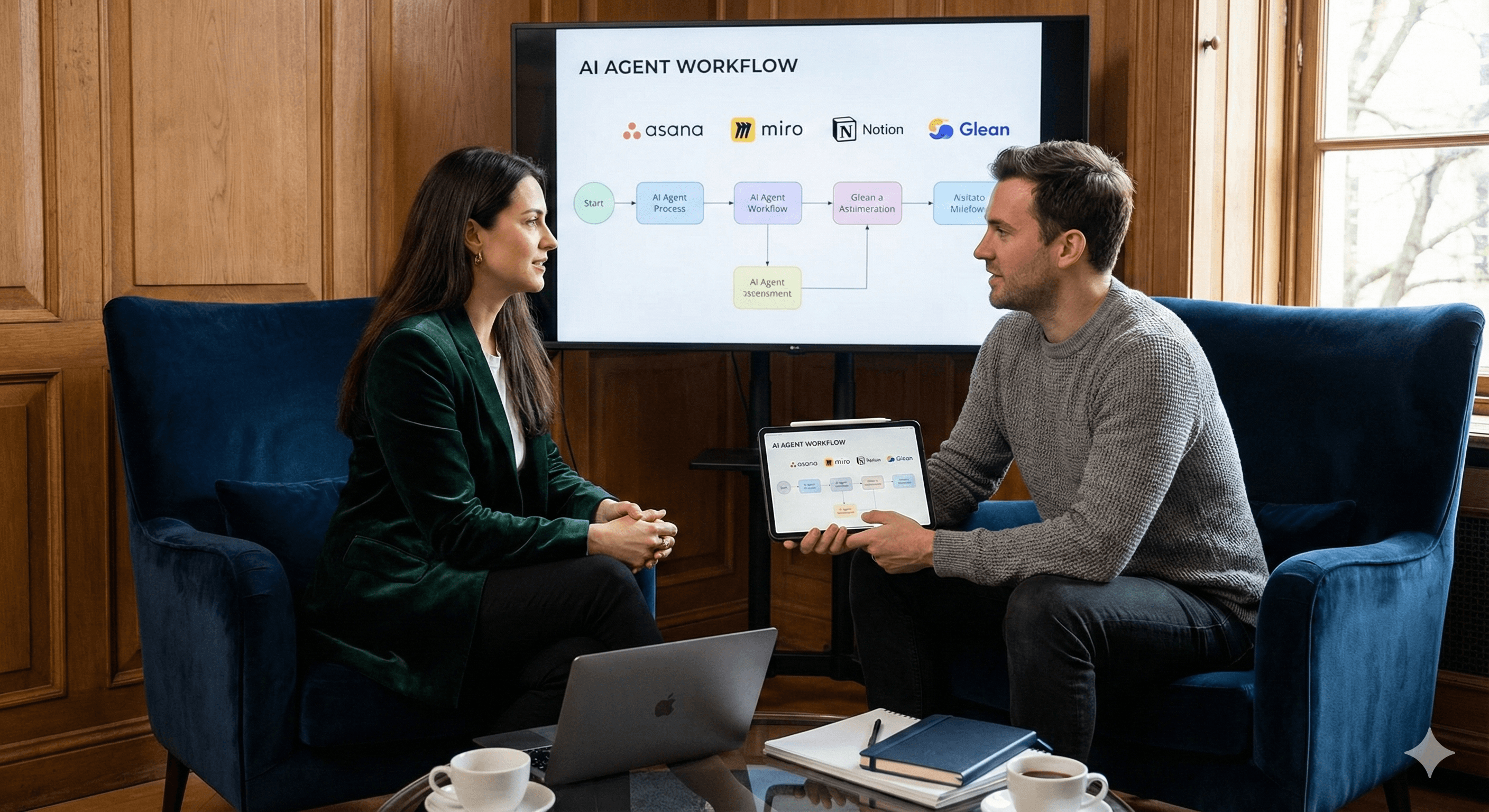
The most valuable agents don’t just chat — they strategically plan, utilize tools, and remember user preferences to streamline the “find → understand → act” cycle. With recent updates, Perplexity assistants can maintain structured preferences across sessions, providing quicker and more tailored responses to you or your team. Integrate agents with your work stack — Asana for orchestration, Miro for system mapping, Notion for operational runbooks, and Glean for enterprise search — to effectively turn insights into actions. Perplexity AI

What’s new (and what actually works)

Perplexity highlights the mainstream adoption of agent technology moving into 2025–2026, supported by the first comprehensive, large-scale analysis of everyday agent use. Common findings: agents that plan steps, provide citations, and integrate with your tools offer the greatest time savings and reliability. Perplexity AI

Practical ways to deploy agents today

  • Inbox triage → project flow: Utilize agents to summarize new emails, draft responses, and open tasks in Asana with assigned due dates and owners, connecting to the corresponding Notion runbook for the workflow.

  • Research → decision memo: Engage an agent to collect resources with citations, plot stakeholders on a Miro board, and draft a concise decision document in Notion. Perplexity’s agent strategy emphasizes real-time retrieval and cited responses, enhancing user confidence.

  • Knowledge retrieval at work: Use Glean to index your internal knowledge so the agent can provide answers with company-specific context, not just from public web pages — particularly useful for policies, pricing, and standard operating procedures. (Design pattern: agentic RAG.)

AI agents automate routine tasks by planning steps, leveraging tools, and retaining preferences. Perplexity’s 2025–2026 findings indicate that the most significant benefits arise from agents that cite sources and integrate with your work stack (Asana, Miro, Notion, Glean), transforming research and administrative tasks into reliable, repeatable workflows that free up time for more valuable work.

Summary

AI agents are prepared for everyday business tasks — particularly when they can plan, cite, and operate within your existing tools. For a pilot project that integrates Perplexity-style agents with Asana, Miro, Notion, and Glean, Generation Digital can design a secure, measurable rollout for 2026.

FAQs

What are AI agents, in simple terms?
They are software capable of understanding a goal, planning steps, using tools (APIs/apps), and taking action — often with memory — to complete tasks on your behalf. Google’s definition emphasizes planning and tool utilization, which distinguishes agents from basic chatbots. Google Cloud

How do agents improve productivity?
They streamline routine cycles (gather → summarize → act), particularly when integrated with your task management system (Asana), knowledge base (Notion), diagrams (Miro), and search capabilities (Glean). Perplexity’s research highlights the time saved when agents retrieve real-time information and provide cited references.

What’s changed recently?
Perplexity launched upgraded memory and personalization features, enabling assistants to remember structured preferences throughout conversations — such as preferred brands, dietary restrictions, or recurring topics — making subsequent answers faster and more pertinent.

Are there risks?
Yes, issues like source reliability and content poisoning are active risks in AI search/agents. It is essential to prioritize tools that provide citations, verify actions, and restrict them to approved systems, while ensuring humans remain involved in sensitive tasks. The Times

References

  • Perplexity: How People Use AI Agents — extensive, real-world usage analysis. Perplexity AI

  • Perplexity: Introducing AI assistants with memory — personalization update. Perplexity AI

  • Google Cloud: What are AI agents? — clear definition and distinctions. Google Cloud

  • Security context: recent reporting on risks of content poisoning in AI search. The Times

AI agents have transitioned from being novelties to becoming essential tools. Perplexity's latest research with academic partners shows how everyday people use agents in their daily routines — from summarizing email inboxes to initiating multi-step workflows — and why personalization and tool usage are now more crucial than just the size of the model. Perplexity AI

Why this matters in 2026

The most valuable agents don’t just chat — they strategically plan, utilize tools, and remember user preferences to streamline the “find → understand → act” cycle. With recent updates, Perplexity assistants can maintain structured preferences across sessions, providing quicker and more tailored responses to you or your team. Integrate agents with your work stack — Asana for orchestration, Miro for system mapping, Notion for operational runbooks, and Glean for enterprise search — to effectively turn insights into actions. Perplexity AI

What’s new (and what actually works)

Perplexity highlights the mainstream adoption of agent technology moving into 2025–2026, supported by the first comprehensive, large-scale analysis of everyday agent use. Common findings: agents that plan steps, provide citations, and integrate with your tools offer the greatest time savings and reliability. Perplexity AI

Practical ways to deploy agents today

  • Inbox triage → project flow: Utilize agents to summarize new emails, draft responses, and open tasks in Asana with assigned due dates and owners, connecting to the corresponding Notion runbook for the workflow.

  • Research → decision memo: Engage an agent to collect resources with citations, plot stakeholders on a Miro board, and draft a concise decision document in Notion. Perplexity’s agent strategy emphasizes real-time retrieval and cited responses, enhancing user confidence.

  • Knowledge retrieval at work: Use Glean to index your internal knowledge so the agent can provide answers with company-specific context, not just from public web pages — particularly useful for policies, pricing, and standard operating procedures. (Design pattern: agentic RAG.)

AI agents automate routine tasks by planning steps, leveraging tools, and retaining preferences. Perplexity’s 2025–2026 findings indicate that the most significant benefits arise from agents that cite sources and integrate with your work stack (Asana, Miro, Notion, Glean), transforming research and administrative tasks into reliable, repeatable workflows that free up time for more valuable work.

Summary

AI agents are prepared for everyday business tasks — particularly when they can plan, cite, and operate within your existing tools. For a pilot project that integrates Perplexity-style agents with Asana, Miro, Notion, and Glean, Generation Digital can design a secure, measurable rollout for 2026.

FAQs

What are AI agents, in simple terms?
They are software capable of understanding a goal, planning steps, using tools (APIs/apps), and taking action — often with memory — to complete tasks on your behalf. Google’s definition emphasizes planning and tool utilization, which distinguishes agents from basic chatbots. Google Cloud

How do agents improve productivity?
They streamline routine cycles (gather → summarize → act), particularly when integrated with your task management system (Asana), knowledge base (Notion), diagrams (Miro), and search capabilities (Glean). Perplexity’s research highlights the time saved when agents retrieve real-time information and provide cited references.

What’s changed recently?
Perplexity launched upgraded memory and personalization features, enabling assistants to remember structured preferences throughout conversations — such as preferred brands, dietary restrictions, or recurring topics — making subsequent answers faster and more pertinent.

Are there risks?
Yes, issues like source reliability and content poisoning are active risks in AI search/agents. It is essential to prioritize tools that provide citations, verify actions, and restrict them to approved systems, while ensuring humans remain involved in sensitive tasks. The Times

References

  • Perplexity: How People Use AI Agents — extensive, real-world usage analysis. Perplexity AI

  • Perplexity: Introducing AI assistants with memory — personalization update. Perplexity AI

  • Google Cloud: What are AI agents? — clear definition and distinctions. Google Cloud

  • Security context: recent reporting on risks of content poisoning in AI search. The Times

Receive practical advice directly in your inbox

By subscribing, you agree to allow Generation Digital to store and process your information according to our privacy policy. You can review the full policy at gend.co/privacy.


Are you ready to get the support your organization needs to successfully leverage AI?

Miro Solutions Partner
Asana Platinum Solutions Partner
Notion Platinum Solutions Partner
Glean Certified Partner

Ready to get the support your organization needs to successfully use AI?

Miro Solutions Partner
Asana Platinum Solutions Partner
Notion Platinum Solutions Partner
Glean Certified Partner

Generation
Digital

Canadian Office
33 Queen St,
Toronto
M5H 2N2
Canada

Canadian Office
1 University Ave,
Toronto,
ON M5J 1T1,
Canada

NAMER Office
77 Sands St,
Brooklyn,
NY 11201,
USA

Head Office
Charlemont St, Saint Kevin's, Dublin,
D02 VN88,
Ireland

Middle East Office
6994 Alsharq 3890,
An Narjis,
Riyadh 13343,
Saudi Arabia

UK Fast Growth Index UBS Logo
Financial Times FT 1000 Logo
Febe Growth 100 Logo (Background Removed)

Business Number: 256 9431 77 | Copyright 2026 | Terms and Conditions | Privacy Policy

Generation
Digital

Canadian Office
33 Queen St,
Toronto
M5H 2N2
Canada

Canadian Office
1 University Ave,
Toronto,
ON M5J 1T1,
Canada

NAMER Office
77 Sands St,
Brooklyn,
NY 11201,
USA

Head Office
Charlemont St, Saint Kevin's, Dublin,
D02 VN88,
Ireland

Middle East Office
6994 Alsharq 3890,
An Narjis,
Riyadh 13343,
Saudi Arabia
UK Fast Growth Index UBS Logo
Financial Times FT 1000 Logo
Febe Growth 100 Logo (Background Removed)


Business No: 256 9431 77
Terms and Conditions
Privacy Policy
© 2026





