Perplexity’s $750m Microsoft Azure deal - what it means

Perplexity’s $750m Microsoft Azure deal - what it means

Confusion
Feb 2, 2026

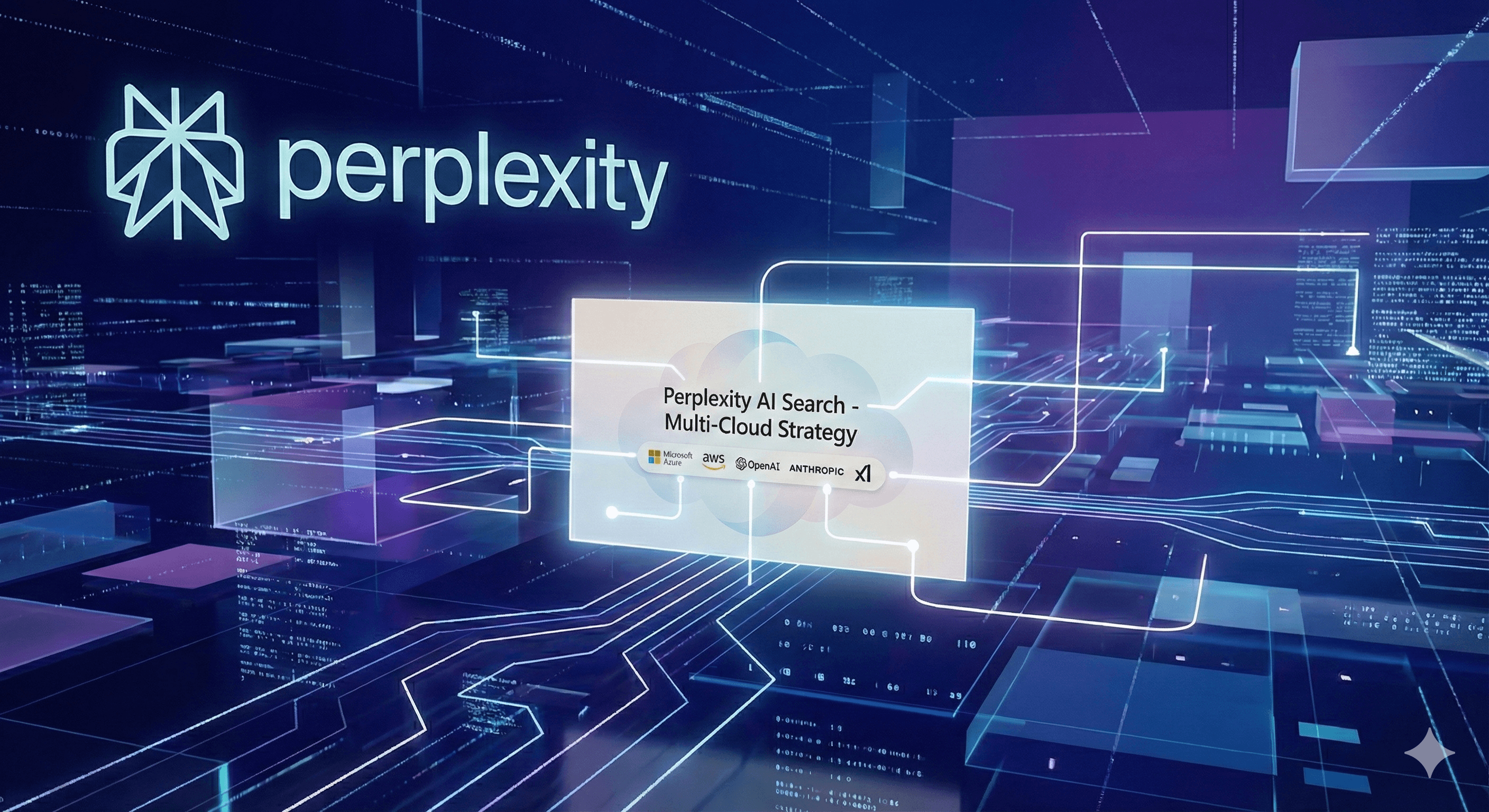
The image features a digital representation of Perplexity AI's multi-cloud strategy, showcasing a futuristic network design with a prominent Perplexity logo, illustrating the company's technological advancements and collaboration with platforms like Microsoft Azure.

Not sure what to do next with AI?
Assess readiness, risk, and priorities in under an hour.

Not sure what to do next with AI?
Assess readiness, risk, and priorities in under an hour.

➔ Schedule a Consultation

Perplexity has reportedly agreed a $750m, three-year cloud deal with Microsoft to run AI workloads on Azure via Microsoft’s Foundry platform. The tie-up lets Perplexity access models from OpenAI, Anthropic and xAI while continuing to use AWS, signalling a multi-cloud strategy for its AI search products.

What happened (and why it matters):
According to reports from Reuters citing Bloomberg News, Perplexity has entered a three-year, $750m agreement with Microsoft to run AI workloads on Azure. The arrangement uses Microsoft’s Foundry programme, giving Perplexity access to frontier models from labs including OpenAI, Anthropic and xAI.

The essentials at a glance

  • Deal size & term: ~$750m over three years.

  • Platform: Microsoft Azure via Foundry for model sourcing and deployment.

  • Model choice: Access to multiple third-party models (OpenAI, Anthropic, xAI).

  • Cloud stance: Perplexity says AWS remains a primary/preferred provider, signalling a multi-cloud approach.

Why Microsoft Foundry matters

Foundry is Microsoft’s programme for helping companies train, deploy and scale AI systems on Azure using a range of partner models. For a fast-growing AI search player, it reduces time-to-market for new features, hardens reliability, and offers capacity options tied to Microsoft’s data centre footprint. It also positions Azure as an attractive home for multi-model strategies.

Perplexity’s multi-cloud play

Stating that AWS remains in the mix helps Perplexity balance cost, performance, and regional availability while avoiding lock-in. Multi-cloud also spreads risk across providers and lets Perplexity select best-in-class models and accelerators (including those powered by Nvidia). For enterprise buyers, this reads as resilience + choice rather than a single-vendor dependency.

What it could mean for AI search users

  • Faster feature rollouts: Foundry access to multiple model families should accelerate experimentation (e.g., retrieval-heavy tasks, summarisation, code, or multimodal).

  • Performance and cost tuning: Running the “right model for the job” can improve latency and economics for high-volume search queries.

  • Reliability: Azure capacity + an AWS backbone aims to improve availability during peak demand.

The competitive context: Azure vs AWS

The deal underscores a competitive year for cloud AI workloads. As Azure lands more AI-native customers, it pressures AWS to demonstrate comparable breadth of model access and MLOps tooling. For Microsoft, attaching a prominent AI search brand reinforces its ecosystem beyond its investment in OpenAI.

What to watch next

  • Product updates from Perplexity: Look for new features that lean on multi-model orchestration and larger inference capacity.

  • Pricing or tier changes: Compute-intensive features may appear in premium tiers first.

  • Further cloud announcements: Expect more “multi-cloud” narratives as AI applications scale globally.

Bottom line for digital leaders

If you’re evaluating AI search for knowledge work, provider diversity and model flexibility are becoming hygiene factors. This deal suggests that AI search vendors will increasingly market multi-cloud and multi-model as enterprise-grade capabilities. Our recommendation: pilot with clear evaluation criteria (latency, grounding quality, cost per query) and structure contracts that keep your options open.

Editor’s note (2 February 2026): This piece summarises reports available at the time of writing. We’ll update if either company publishes formal statements with additional terms.

FAQ

Q1: What exactly is Microsoft Foundry and why is Perplexity using it?
A: Foundry is Microsoft’s programme for deploying and scaling AI models on Azure. Perplexity can use it to run models from OpenAI, Anthropic and xAI, helping it scale features faster without committing to a single model family.

Q2: Does this mean Perplexity is leaving AWS?
A: No. Reports indicate Perplexity continues to use AWS and describes it as a preferred or primary provider. The Microsoft agreement adds capacity and model access rather than replacing AWS.

Q3: How big is the deal and for how long?
A: About $750 million over three years, according to Bloomberg reporting referenced by Reuters.

Perplexity has reportedly agreed a $750m, three-year cloud deal with Microsoft to run AI workloads on Azure via Microsoft’s Foundry platform. The tie-up lets Perplexity access models from OpenAI, Anthropic and xAI while continuing to use AWS, signalling a multi-cloud strategy for its AI search products.

What happened (and why it matters):
According to reports from Reuters citing Bloomberg News, Perplexity has entered a three-year, $750m agreement with Microsoft to run AI workloads on Azure. The arrangement uses Microsoft’s Foundry programme, giving Perplexity access to frontier models from labs including OpenAI, Anthropic and xAI.

The essentials at a glance

  • Deal size & term: ~$750m over three years.

  • Platform: Microsoft Azure via Foundry for model sourcing and deployment.

  • Model choice: Access to multiple third-party models (OpenAI, Anthropic, xAI).

  • Cloud stance: Perplexity says AWS remains a primary/preferred provider, signalling a multi-cloud approach.

Why Microsoft Foundry matters

Foundry is Microsoft’s programme for helping companies train, deploy and scale AI systems on Azure using a range of partner models. For a fast-growing AI search player, it reduces time-to-market for new features, hardens reliability, and offers capacity options tied to Microsoft’s data centre footprint. It also positions Azure as an attractive home for multi-model strategies.

Perplexity’s multi-cloud play

Stating that AWS remains in the mix helps Perplexity balance cost, performance, and regional availability while avoiding lock-in. Multi-cloud also spreads risk across providers and lets Perplexity select best-in-class models and accelerators (including those powered by Nvidia). For enterprise buyers, this reads as resilience + choice rather than a single-vendor dependency.

What it could mean for AI search users

  • Faster feature rollouts: Foundry access to multiple model families should accelerate experimentation (e.g., retrieval-heavy tasks, summarisation, code, or multimodal).

  • Performance and cost tuning: Running the “right model for the job” can improve latency and economics for high-volume search queries.

  • Reliability: Azure capacity + an AWS backbone aims to improve availability during peak demand.

The competitive context: Azure vs AWS

The deal underscores a competitive year for cloud AI workloads. As Azure lands more AI-native customers, it pressures AWS to demonstrate comparable breadth of model access and MLOps tooling. For Microsoft, attaching a prominent AI search brand reinforces its ecosystem beyond its investment in OpenAI.

What to watch next

  • Product updates from Perplexity: Look for new features that lean on multi-model orchestration and larger inference capacity.

  • Pricing or tier changes: Compute-intensive features may appear in premium tiers first.

  • Further cloud announcements: Expect more “multi-cloud” narratives as AI applications scale globally.

Bottom line for digital leaders

If you’re evaluating AI search for knowledge work, provider diversity and model flexibility are becoming hygiene factors. This deal suggests that AI search vendors will increasingly market multi-cloud and multi-model as enterprise-grade capabilities. Our recommendation: pilot with clear evaluation criteria (latency, grounding quality, cost per query) and structure contracts that keep your options open.

Editor’s note (2 February 2026): This piece summarises reports available at the time of writing. We’ll update if either company publishes formal statements with additional terms.

FAQ

Q1: What exactly is Microsoft Foundry and why is Perplexity using it?
A: Foundry is Microsoft’s programme for deploying and scaling AI models on Azure. Perplexity can use it to run models from OpenAI, Anthropic and xAI, helping it scale features faster without committing to a single model family.

Q2: Does this mean Perplexity is leaving AWS?
A: No. Reports indicate Perplexity continues to use AWS and describes it as a preferred or primary provider. The Microsoft agreement adds capacity and model access rather than replacing AWS.

Q3: How big is the deal and for how long?
A: About $750 million over three years, according to Bloomberg reporting referenced by Reuters.

Receive practical advice directly in your inbox

By subscribing, you agree to allow Generation Digital to store and process your information according to our privacy policy. You can review the full policy at gend.co/privacy.


Are you ready to get the support your organization needs to successfully leverage AI?

Miro Solutions Partner
Asana Platinum Solutions Partner
Notion Platinum Solutions Partner
Glean Certified Partner

Ready to get the support your organization needs to successfully use AI?

Miro Solutions Partner
Asana Platinum Solutions Partner
Notion Platinum Solutions Partner
Glean Certified Partner

Generation
Digital

Canadian Office
33 Queen St,
Toronto
M5H 2N2
Canada

Canadian Office
1 University Ave,
Toronto,
ON M5J 1T1,
Canada

NAMER Office
77 Sands St,
Brooklyn,
NY 11201,
USA

Head Office
Charlemont St, Saint Kevin's, Dublin,
D02 VN88,
Ireland

Middle East Office
6994 Alsharq 3890,
An Narjis,
Riyadh 13343,
Saudi Arabia

UK Fast Growth Index UBS Logo
Financial Times FT 1000 Logo
Febe Growth 100 Logo (Background Removed)

Business Number: 256 9431 77 | Copyright 2026 | Terms and Conditions | Privacy Policy

Generation
Digital

Canadian Office
33 Queen St,
Toronto
M5H 2N2
Canada

Canadian Office
1 University Ave,
Toronto,
ON M5J 1T1,
Canada

NAMER Office
77 Sands St,
Brooklyn,
NY 11201,
USA

Head Office
Charlemont St, Saint Kevin's, Dublin,
D02 VN88,
Ireland

Middle East Office
6994 Alsharq 3890,
An Narjis,
Riyadh 13343,
Saudi Arabia
UK Fast Growth Index UBS Logo
Financial Times FT 1000 Logo
Febe Growth 100 Logo (Background Removed)


Business No: 256 9431 77
Terms and Conditions
Privacy Policy
© 2026





