Glean Skills: Standardise Expertise and Upskill in Flow

Glean Skills: Standardise Expertise and Upskill in Flow
Glean

Feb 9, 2026

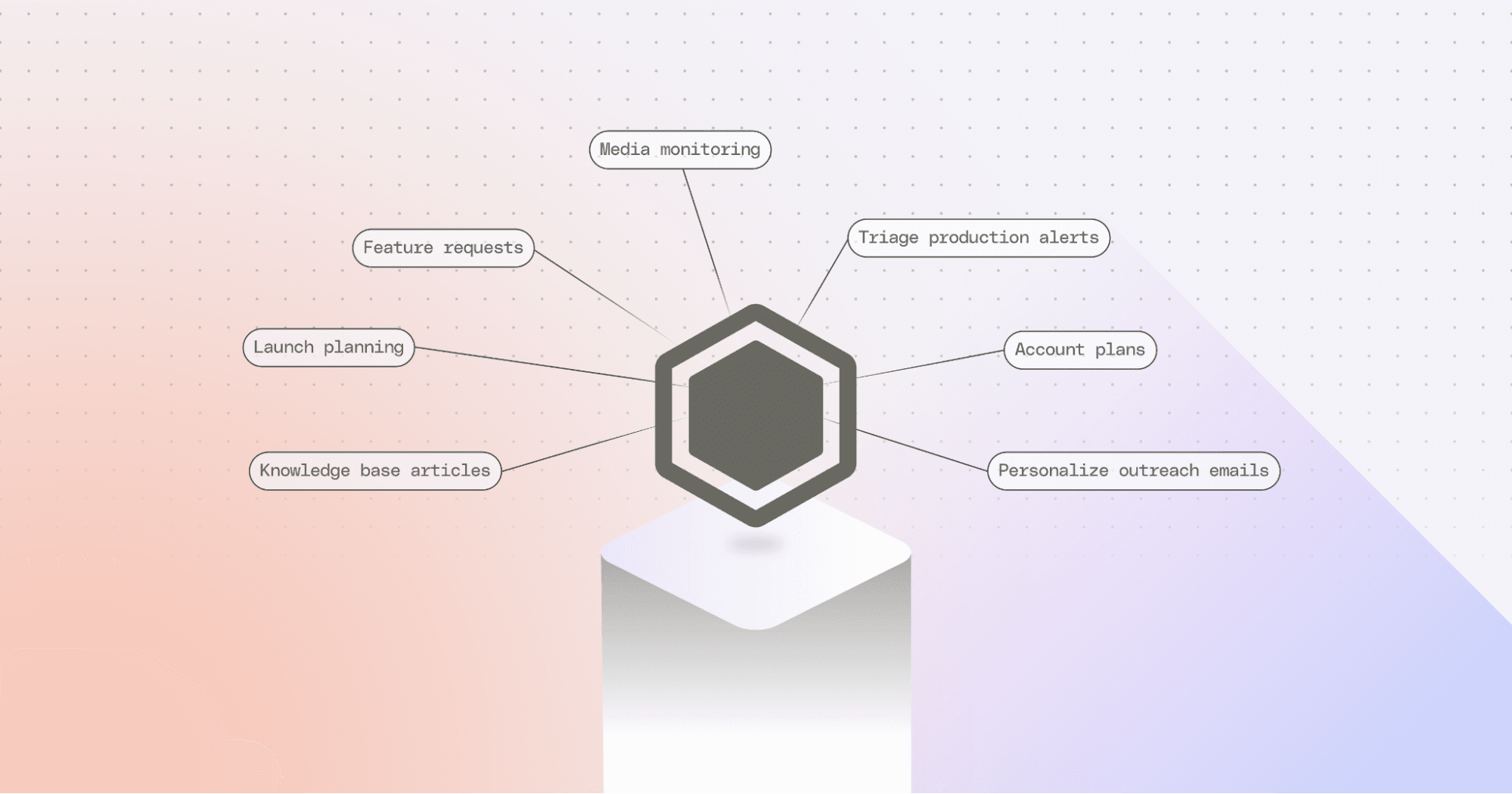
A hexagonal diagram illustrates various professional skills such as media monitoring, feature requests, triage production alerts, launch planning, account plans, knowledge base articles, and personalized outreach emails, all radiating from a central hub, symbolizing a systematic approach to standardizing expertise and upskilling.

Not sure where to start with AI?
Assess readiness, risk, and priorities in under an hour.

Not sure where to start with AI?
Assess readiness, risk, and priorities in under an hour.

➔ Download Our Free AI Readiness Pack

Glean Skills transforms individual expertise into reusable, organisation-wide standards. Teams can package repeatable ways of working—like workflows, checks, and best-practice responses—so anyone can apply expert knowledge consistently. With Glean’s agent-based approach, Skills help reduce rework, speed decisions, and improve collaboration across departments.

Most enterprises aren’t short on knowledge—they’re short on repeatability. Expertise lives in experienced people’s heads, in scattered docs, or in “how we do things” threads that never become standards. That’s where Glean Skills comes in: it’s a practical way to turn know-how into reusable, shareable building blocks that scale across teams.

What makes this especially timely is how workplace AI is shifting from “search and summarise” to do and improve. Udemy’s newly announced integration with Glean (10 Feb 2026) is a signal of that shift: it brings adaptive, context-aware learning into everyday systems through agents—so adoption and capability-building happen right where work gets done.

What are Glean Skills?

Glean Skills are reusable, shareable packages of expertise. Instead of reinventing the wheel—or relying on the same few experts—teams can capture:

  • repeatable ways of working,

  • common decisions and checks,

  • standard responses and best practices,

  • task-specific guidance that can be applied consistently.

The outcome is simple: less variation, less rework, faster execution.

Why Skills matter: standardise expertise, not just information

Most knowledge initiatives focus on storing content. Skills focus on applying it.

When you standardise expertise:

  • new joiners ramp faster,

  • teams spend less time asking the same questions,

  • quality improves because checks and decisions are consistent,

  • cross-functional work becomes smoother because everyone shares the same “definition of done”.

What’s new: Skills + in-flow upskilling (Glean x Udemy)

Enterprises are investing heavily in AI-enabled systems, but adoption often lags because people don’t always know how to use new workflows effectively.

Udemy’s integration with Glean addresses that gap by bringing learning into the flow of work:

  • it delivers adaptive, AI-powered learning through agents, tied to real-time work context;

  • it can surface role-aligned Udemy Business content inside AI agents, workflows, and enterprise search experiences;

  • Glean can add context like internal documentation and related resources alongside Udemy content such as curated skills development, hands-on labs, and practice simulations;

  • organisations can deploy pre-built learning agents (e.g., onboarding and upskilling) or create custom agents combining 30,000+ Udemy Business courses with internal tools and workflows.

The implication for Skills: you can pair standardised execution (Skills) with standardised capability-building (in-flow learning)—which is how AI transformation actually sticks.

How Glean Skills works in practice

A good Skill isn’t a giant playbook. It’s a small, reusable standard that can be applied repeatedly.

Examples of Skills that typically land well:

  • “Write a client-ready meeting summary” (format + tone + must-include sections)

  • “Triage a support request” (classification rules + routing + SLAs)

  • “Run a QBR prep checklist” (inputs, checks, and outputs)

  • “Validate a data request” (privacy checks, approval steps, and documentation)

Over time, organisations build a Skills library that becomes the operating system for consistent work.

Practical rollout steps (90-day path)

1) Start with high-volume work

Choose 3–5 workflows where inconsistency causes measurable pain: rework, delays, or quality issues.

2) Capture the “minimum viable standard”

Turn expert know-how into a Skill that:

  • has a clear purpose,

  • lists required inputs,

  • sets the quality bar,

  • defines outputs and next steps.

3) Embed Skills where people already work

Skills only drive efficiency when they’re used at the moment of need—inside search, agents, and workflows.

4) Pair Skills with upskilling for adoption

If teams are learning new AI workflows, use context-aware learning (like the Udemy + Glean approach) to reduce time-to-competency.

5) Measure outcomes

Track what business leaders care about:

  • time saved per task,

  • reduced handoffs or rework,

  • faster onboarding,

  • improved response quality and consistency.

Why this matters for cross-department collaboration

Skills are designed to be shared. That means marketing can reuse sales-approved messaging standards, operations can apply consistent checks, and every team can onboard faster using the same patterns.

The bigger the organisation, the more valuable this becomes: Skills reduce the “shadow process” problem and make collaboration less dependent on tribal knowledge.

How Generation Digital can help

If you want to implement Glean Skills (and make adoption stick), Generation Digital can support:

  • Skills strategy and prioritisation (what to standardise first)

  • Knowledge-to-workflow design (turning expertise into reusable standards)

  • Governance and rollout (ownership, review cycles, measurement)

  • Enablement that actually lands (training and in-flow adoption patterns)

Summary and next steps

Glean Skills helps enterprises turn individual expertise into reusable standards—so work becomes consistent, collaborative, and efficient. With the growing shift toward agent-driven workflows, pairing Skills with in-flow upskilling (like the newly announced Udemy + Glean integration) can accelerate adoption and time-to-competency.

Next steps:

  1. Pick 3 workflows with high repeat volume.

  2. Build a first Skills library (10–20 Skills).

  3. Embed Skills into search/agents.

  4. Add contextual enablement so people learn while doing.

FAQs

Q1: What are Glean Skills?
Glean Skills are reusable packages of expertise that capture repeatable ways of working—so teams can apply expert knowledge consistently across the company.

Q2: How do Glean Skills improve productivity?
By standardising inputs, checks, and outputs, Skills reduce rework and variability, helping teams execute faster with more consistent quality.

Q3: Can Glean Skills be used across different departments?
Yes. Skills are designed to be shared company-wide, enabling cross-functional collaboration and common standards.

Q4: What’s the Udemy integration with Glean?
Udemy announced a Glean integration that brings adaptive, context-aware learning into the flow of work through agents—surfacing role-aligned Udemy Business learning inside Glean experiences.

Q5: How does in-flow learning help AI adoption?
It reduces time-to-competency by delivering the right guidance at the moment skills gaps appear—so teams can apply learning immediately within real workflows.

Glean Skills transforms individual expertise into reusable, organisation-wide standards. Teams can package repeatable ways of working—like workflows, checks, and best-practice responses—so anyone can apply expert knowledge consistently. With Glean’s agent-based approach, Skills help reduce rework, speed decisions, and improve collaboration across departments.

Most enterprises aren’t short on knowledge—they’re short on repeatability. Expertise lives in experienced people’s heads, in scattered docs, or in “how we do things” threads that never become standards. That’s where Glean Skills comes in: it’s a practical way to turn know-how into reusable, shareable building blocks that scale across teams.

What makes this especially timely is how workplace AI is shifting from “search and summarise” to do and improve. Udemy’s newly announced integration with Glean (10 Feb 2026) is a signal of that shift: it brings adaptive, context-aware learning into everyday systems through agents—so adoption and capability-building happen right where work gets done.

What are Glean Skills?

Glean Skills are reusable, shareable packages of expertise. Instead of reinventing the wheel—or relying on the same few experts—teams can capture:

  • repeatable ways of working,

  • common decisions and checks,

  • standard responses and best practices,

  • task-specific guidance that can be applied consistently.

The outcome is simple: less variation, less rework, faster execution.

Why Skills matter: standardise expertise, not just information

Most knowledge initiatives focus on storing content. Skills focus on applying it.

When you standardise expertise:

  • new joiners ramp faster,

  • teams spend less time asking the same questions,

  • quality improves because checks and decisions are consistent,

  • cross-functional work becomes smoother because everyone shares the same “definition of done”.

What’s new: Skills + in-flow upskilling (Glean x Udemy)

Enterprises are investing heavily in AI-enabled systems, but adoption often lags because people don’t always know how to use new workflows effectively.

Udemy’s integration with Glean addresses that gap by bringing learning into the flow of work:

  • it delivers adaptive, AI-powered learning through agents, tied to real-time work context;

  • it can surface role-aligned Udemy Business content inside AI agents, workflows, and enterprise search experiences;

  • Glean can add context like internal documentation and related resources alongside Udemy content such as curated skills development, hands-on labs, and practice simulations;

  • organisations can deploy pre-built learning agents (e.g., onboarding and upskilling) or create custom agents combining 30,000+ Udemy Business courses with internal tools and workflows.

The implication for Skills: you can pair standardised execution (Skills) with standardised capability-building (in-flow learning)—which is how AI transformation actually sticks.

How Glean Skills works in practice

A good Skill isn’t a giant playbook. It’s a small, reusable standard that can be applied repeatedly.

Examples of Skills that typically land well:

  • “Write a client-ready meeting summary” (format + tone + must-include sections)

  • “Triage a support request” (classification rules + routing + SLAs)

  • “Run a QBR prep checklist” (inputs, checks, and outputs)

  • “Validate a data request” (privacy checks, approval steps, and documentation)

Over time, organisations build a Skills library that becomes the operating system for consistent work.

Practical rollout steps (90-day path)

1) Start with high-volume work

Choose 3–5 workflows where inconsistency causes measurable pain: rework, delays, or quality issues.

2) Capture the “minimum viable standard”

Turn expert know-how into a Skill that:

  • has a clear purpose,

  • lists required inputs,

  • sets the quality bar,

  • defines outputs and next steps.

3) Embed Skills where people already work

Skills only drive efficiency when they’re used at the moment of need—inside search, agents, and workflows.

4) Pair Skills with upskilling for adoption

If teams are learning new AI workflows, use context-aware learning (like the Udemy + Glean approach) to reduce time-to-competency.

5) Measure outcomes

Track what business leaders care about:

  • time saved per task,

  • reduced handoffs or rework,

  • faster onboarding,

  • improved response quality and consistency.

Why this matters for cross-department collaboration

Skills are designed to be shared. That means marketing can reuse sales-approved messaging standards, operations can apply consistent checks, and every team can onboard faster using the same patterns.

The bigger the organisation, the more valuable this becomes: Skills reduce the “shadow process” problem and make collaboration less dependent on tribal knowledge.

How Generation Digital can help

If you want to implement Glean Skills (and make adoption stick), Generation Digital can support:

  • Skills strategy and prioritisation (what to standardise first)

  • Knowledge-to-workflow design (turning expertise into reusable standards)

  • Governance and rollout (ownership, review cycles, measurement)

  • Enablement that actually lands (training and in-flow adoption patterns)

Summary and next steps

Glean Skills helps enterprises turn individual expertise into reusable standards—so work becomes consistent, collaborative, and efficient. With the growing shift toward agent-driven workflows, pairing Skills with in-flow upskilling (like the newly announced Udemy + Glean integration) can accelerate adoption and time-to-competency.

Next steps:

  1. Pick 3 workflows with high repeat volume.

  2. Build a first Skills library (10–20 Skills).

  3. Embed Skills into search/agents.

  4. Add contextual enablement so people learn while doing.

FAQs

Q1: What are Glean Skills?
Glean Skills are reusable packages of expertise that capture repeatable ways of working—so teams can apply expert knowledge consistently across the company.

Q2: How do Glean Skills improve productivity?
By standardising inputs, checks, and outputs, Skills reduce rework and variability, helping teams execute faster with more consistent quality.

Q3: Can Glean Skills be used across different departments?
Yes. Skills are designed to be shared company-wide, enabling cross-functional collaboration and common standards.

Q4: What’s the Udemy integration with Glean?
Udemy announced a Glean integration that brings adaptive, context-aware learning into the flow of work through agents—surfacing role-aligned Udemy Business learning inside Glean experiences.

Q5: How does in-flow learning help AI adoption?
It reduces time-to-competency by delivering the right guidance at the moment skills gaps appear—so teams can apply learning immediately within real workflows.

Get weekly AI news and advice delivered to your inbox

By subscribing you consent to Generation Digital storing and processing your details in line with our privacy policy. You can read the full policy at gend.co/privacy.


Upcoming Workshops and Webinars

A diverse group of professionals collaborating around a table in a bright, modern office setting.

Operational Clarity at Scale - Asana

Virtual Webinar
Weds 25th February 2026
Online

A diverse group of professionals collaborating around a table in a bright, modern office setting.

Work With AI Teammates - Asana

In-Person Workshop
Thurs 26th February 2026
London, UK

A diverse group of professionals collaborating around a table in a bright, modern office setting.

From Idea to Prototype - AI in Miro

Virtual Webinar
Weds 18th February 2026
Online

Generation
Digital

UK Office

Generation Digital Ltd
33 Queen St,
London
EC4R 1AP
United Kingdom

Canada Office

Generation Digital Americas Inc
181 Bay St., Suite 1800
Toronto, ON, M5J 2T9
Canada

USA Office

Generation Digital Americas Inc
77 Sands St,
Brooklyn, NY 11201,
United States

EU Office

Generation Digital Software
Elgee Building
Dundalk
A91 X2R3
Ireland

Middle East Office

6994 Alsharq 3890,
An Narjis,
Riyadh 13343,
Saudi Arabia

UK Fast Growth Index UBS Logo
Financial Times FT 1000 Logo
Febe Growth 100 Logo (Background Removed)

Company No: 256 9431 77 | Copyright 2026 | Terms and Conditions | Privacy Policy

Generation
Digital

UK Office

Generation Digital Ltd
33 Queen St,
London
EC4R 1AP
United Kingdom

Canada Office

Generation Digital Americas Inc
181 Bay St., Suite 1800
Toronto, ON, M5J 2T9
Canada

USA Office

Generation Digital Americas Inc
77 Sands St,
Brooklyn, NY 11201,
United States

EU Office

Generation Digital Software
Elgee Building
Dundalk
A91 X2R3
Ireland

Middle East Office

6994 Alsharq 3890,
An Narjis,
Riyadh 13343,
Saudi Arabia

UK Fast Growth Index UBS Logo
Financial Times FT 1000 Logo
Febe Growth 100 Logo (Background Removed)


Company No: 256 9431 77
Terms and Conditions
Privacy Policy
Copyright 2026





