OpenAI Retires Older GPT Models: What the 2026 Changes Mean
OpenAI
Free AI at Work Playbook for managers using ChatGPT, Claude and Gemini.
➔ Download the Playbook
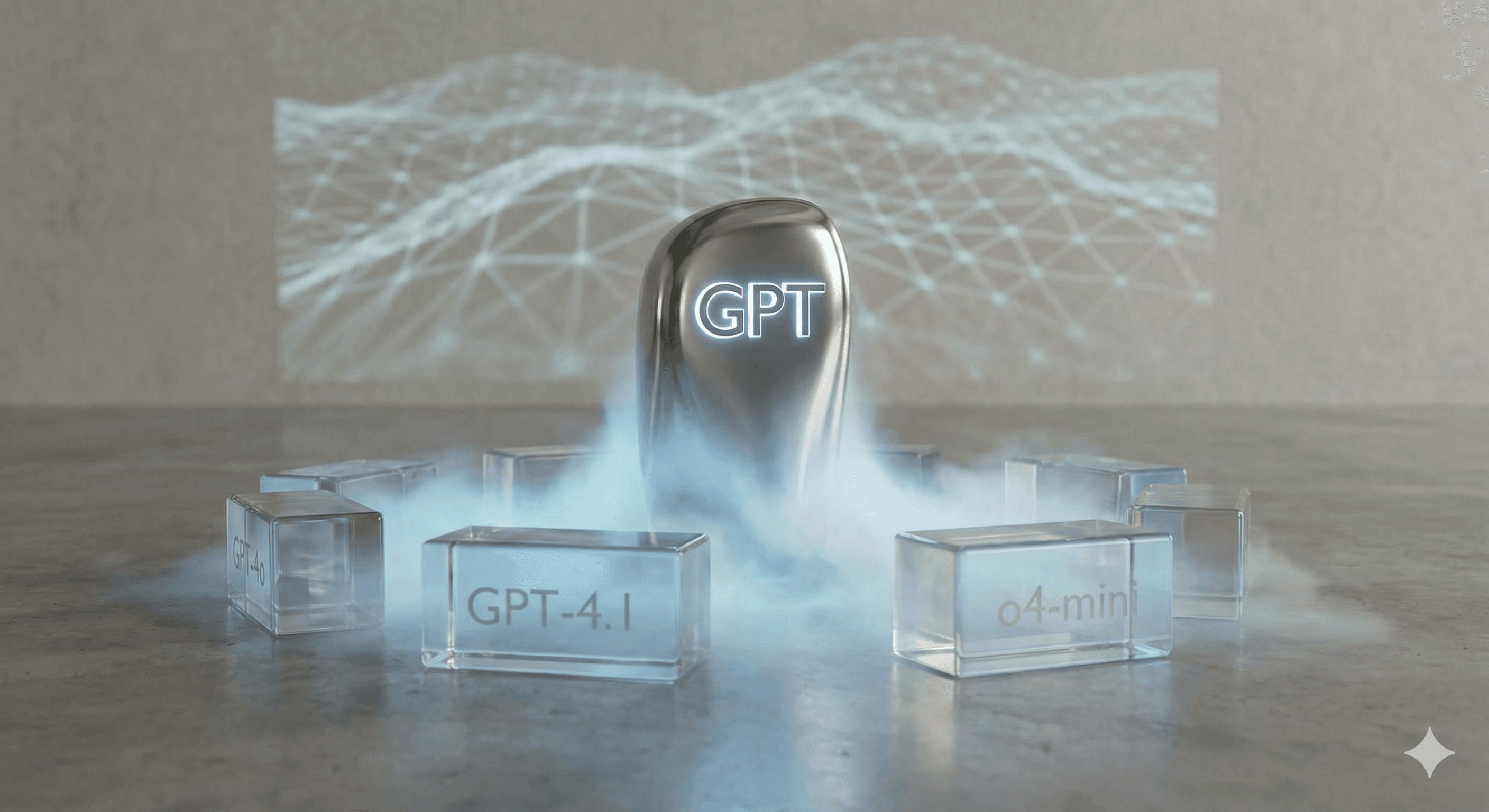
OpenAI will retire GPT‑4o, GPT‑4.1, GPT‑4.1 mini and OpenAI o4‑mini in ChatGPT on 13 February 2026, alongside the previously announced retirement of GPT‑5 (Instant and Thinking). The aim is a faster, more reliable experience while focusing resources on current models. No API changes at this time.
What’s Changing & Why
Which models are leaving? GPT‑4o, GPT‑4.1, GPT‑4.1 mini and OpenAI o4‑mini leave ChatGPT on 13 Feb 2026. GPT‑5 (Instant & Thinking) retirement was announced earlier.
Why retire models? Consolidation improves reliability, performance and support, allowing investment in the latest models and features.
API status: The retirement applies to ChatGPT; no API changes for now. If you depend on legacy model snapshots in the API, monitor the deprecations page and Azure notices.
Practical Guidance (Users & Admins)
Individuals (ChatGPT):
You don’t need to take action. Your conversations will continue to work; newer default models will be used.
If you liked a legacy model’s tone, update Custom Instructions to guide style and behaviour.
Workspace admins:
Communicate the change and suggest updated templates/prompts.
Review any team playbooks referencing specific legacy model names.
For regulated teams, update screenshots/process docs showing the model switcher.
Developers:
For API apps, check the Deprecations page periodically. If using Azure OpenAI, note separate retirement timelines and auto‑upgrade plans.
Example Transitions
From GPT‑4o → GPT‑5.2: Re‑test saved prompts; add tone instructions (e.g., concise, warm, British English).
From GPT‑4.1 mini → current lightweight model: Validate latency/quality; adjust temperature and max tokens if needed.
From o4‑mini → current “o‑class” replacement: Confirm tool‑use behaviours and output formats.
Risks & Good Practice
Expectation drift: Legacy models may have had distinct “feel.” Capture style via instructions/examples.
Evaluation: Re‑run quick acceptance tests on key prompts (accuracy, format, latency).
Change control: Document model settings; pin versions where supported; keep rollback notes for prompts.
FAQs
What models are being retired?
GPT‑4o, GPT‑4.1, GPT‑4.1 mini and OpenAI o4‑mini leave ChatGPT on 13 February 2026. GPT‑5 (Instant/Thinking) retirement was previously announced.
Why is OpenAI retiring these models?
To streamline the experience, improve performance and reliability, and focus resources on newer models.
Will there be changes to the API?
No changes at this time for the API; continue to monitor official deprecation notices for snapshots and Azure timelines.
How will this affect users?
Most users won’t need to act. The default model selection will shift to current versions, with improved performance and stability.
How can I preserve a legacy model’s tone?
Use Custom Instructions and a short style block (examples of tone, phrasing, and do/don’t rules) to approximate previous behaviour.
Get weekly AI news and advice delivered to your inbox
By subscribing you consent to Generation Digital storing and processing your details in line with our privacy policy. You can read the full policy at gend.co/privacy.



Generation
Digital

UK Office
Generation Digital Ltd
33 Queen St,
London
EC4R 1AP
United Kingdom
Canada Office
Generation Digital Americas Inc
181 Bay St., Suite 1800
Toronto, ON, M5J 2T9
Canada
USA Office
Generation Digital Americas Inc
77 Sands St,
Brooklyn, NY 11201,
United States
EU Office
Generation Digital Software
Elgee Building
Dundalk
A91 X2R3
Ireland
Middle East Office
6994 Alsharq 3890,
An Narjis,
Riyadh 13343,
Saudi Arabia







Company No: 256 9431 77 | Copyright 2026 | Terms and Conditions | Privacy Policy