Instituto Work AI: Guía práctica para la transformación con IA
Inteligencia Artificial

¿No sabes por dónde empezar con la IA?Evalúa preparación, riesgos y prioridades en menos de una hora.
➔ Descarga nuestro paquete gratuito de preparación para IA
¿Qué es el Instituto de Trabajo AI?
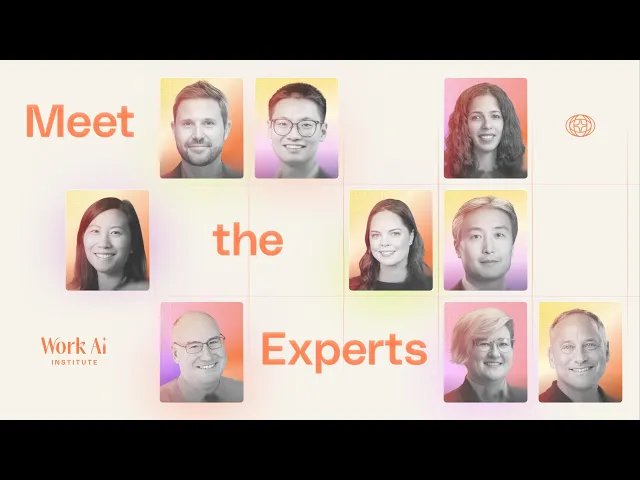
El Instituto de Trabajo AI es un centro de investigación enfocado en cómo la IA permite lograr resultados medibles en el trabajo cotidiano. Reúne a académicos y operadores para estudiar implementaciones reales y publicar guías prácticas que los líderes puedan utilizar de inmediato. Su trabajo inicial resalta patrones que separan el bombo publicitario de los resultados duraderos y documenta cómo las organizaciones diseñan procesos en torno a la IA, no simplemente adaptando la IA a antiguos métodos de trabajo.
Por qué es importante ahora
De pilotos a producción. Muchas empresas están atrapadas en un ciclo interminable de pruebas. La investigación del Instituto codifica las prácticas utilizadas por organizaciones que han avanzado más allá.
El contexto supera la capacidad pura. La IA se vuelve útil cuando se conecta a las personas, procesos, sistemas y conocimiento de la empresa. Esto requiere un modelo operativo para IA deliberado.
Los agentes ya están aquí. Agentes autónomos y semiautónomos pueden realizar trabajos con múltiples pasos bajo control humano. Escalarlos de manera segura requiere nueva gobernanza.
El Modelo Operativo de IA (guía práctica)
Utiliza este modelo para guiar la transformación. Cada elemento incluye acciones y entregables que puedes implementar en semanas, no meses.
1) Estrategia y Valor
Define tres resultados de negocio para los próximos dos trimestres (por ejemplo, reducción del tiempo de ciclo, costo de servicio, tasa de éxito).
Prioriza 5-10 trabajos de IA que se deben realizar que sustenten esos resultados.
Elabora una Hipótesis de Valor de IA de una página para cada trabajo (línea base, objetivo, restricciones, responsable).
2) Diseño de Procesos y Flujo de Trabajo
Mapea los flujos de trabajo actuales vs. los objetivo; destaca dónde asistentes (humanos en el bucle) o agentes (autónomos con salvaguardas) encajan.
Diseña puntos de control: umbrales de aprobación, colas de excepción, registros de auditoría.
Estandariza indicaciones y manuales en una biblioteca compartida; versiónalos como lo harías con el código.
3) Disponibilidad de Datos y Contexto
Inventario de sistemas que proporcionan contexto (bases de conocimiento, tickets, CRM, documentos, código).
Define fuentes confiables y alcances de acceso; elimina contenido obsoleto o duplicado.
Establece patrones RAG/grafo para fundamentar modelos en conocimiento confiable.
4) Gobernanza y Riesgo
Redacta un Estatuto de Uso de IA: usos permitidos, reglas de datos sensibles, rutas de escalamiento.
Crea un Consejo de Revisión de IA (Legal, Seguridad, Datos, Líderes de Dominio) con revisiones quincenales.
Implementa armazones de evaluación: verificaciones de calidad, sesgo, seguridad y desviación.
5) Organización y Habilidades
Nomina propietarios de productos de dominio para cada trabajo de IA a realizar.
Mejora las competencias con clínicas específicas por rol (analista, soporte, ventas, desarrollador) y un catálogo de Patrones de Prompts.
Incentiva la adopción basada en resultados, no en uso.
6) Medición y Realización de Valor
Monitorea Tiempo Ahorrado, Mejora de Calidad, Reducción de Riesgo, e Impacto en Ingresos.
Instrumenta procesos de extremo a extremo; compara cohortes de IA vs. control.
Publica un Tablero de Valor de IA mensual; decide detener o escalar basado en los datos.
Ejemplos prácticos (en diversas industrias)
Soporte al Cliente: Un agente clasifica tickets, redacta respuestas y resuelve problemas conocidos dentro de la política; los humanos manejan excepciones. Métricas: tiempo de primera respuesta, CSAT, tasa de reapertura.
Ventas: Un asistente compone resúmenes de cuenta a partir de CRM + correos electrónicos, sugiere próximos pasos y actualiza oportunidades. Métricas: tiempo de preparación de reuniones, higiene del pipeline, tasa de éxito.
Finanzas & Operaciones: Un agente reconcilia facturas y detecta anomalías con enlaces a documentos fuente. Métricas: tiempo de ciclo, tasa de error, cancelaciones evitadas.
Recursos Humanos & Talento: Un asistente redacta descripciones de trabajo alineadas con marcos de competencia y busca criterios mínimos con evaluación de sesgos. Métricas: tiempo para publicar, tiempo para seleccionar candidatos, señales de diversidad.
Ingeniería: Un asistente propone resúmenes de PR y planes de prueba basados en el contexto del repositorio. Métricas: tiempo de entrega, defectos escapados, encuestas DevEx.
Un Plan de 6 Semanas de Pilotos a Escalas
Semana 1 – Portafolio y salvaguardas. Identifica 5-10 casos de uso candidato; califica por valor/viabilidad/riesgo. Publica el Estatuto de Uso de IA y los controles de acceso.
Semana 2 – Diseña el trabajo. Mapea flujos de trabajo objetivo y puntos de control; define lo que el asistente/agente hace vs. el humano.
Semana 3 – Datos y conectores. Conecta fuentes de conocimiento; define estrategias de recuperación y prueba prompts de muestra con datos reales.
Semana 4 – Construye y evalúa. Implementa el primer asistente/agente. Crea armazones de evaluación y métricas de éxito.
Semana 5 – Producción en sombra. Ejecuta con trabajo real bajo supervisión. Captura excepciones y mejora los prompts/políticas.
Semana 6 – Lanzamiento y aprendizaje. Lanza al primer equipo. Publica el tablero de valor, un manual de operación, y un plan de gestión de cambios. Decide escalar, iterar o detener.
Sugerencias de organizaciones de alto rendimiento
Conéctate al contexto. Vincula la IA a los sistemas donde el trabajo vive; evita "callejones sin salida" conversacionales.
Diseña para excepciones. La mayor parte del valor se oculta en el último 10% de los casos; enrútalos bien.
Haz visible la calidad. Define criterios de aceptación/rechazo y muestrea regularmente.
Recompensa resultados. Mide lo que importa (calidad, riesgo, valor del cliente), no el uso de herramientas.
Mantén a los humanos en control. Comienza con patrones de asistencia; automatiza solo donde la confianza y los controles sean sólidos.
Cómo puede ayudar Generación Digital
Taller de Modelo Operativo de IA. Define resultados, portafolio, salvaguardas y métricas en un solo día.
Sprints de diseño de casos de uso. Mapea flujos de trabajo y puntos de control; prototipa asistentes/agentes.
Integración de datos y contexto. Conecta fuentes de conocimiento y establece patrones de recuperación/grafo.
Kit de herramientas de gobernanza. Plantillas para Estatutos de IA, armazones de evaluación y tableros de valor.
Facilitación de adopción. Capacitación basada en roles y bibliotecas de prompts; manuales de gestión de cambios.
Ponte en contacto para reservar un taller de Transformación de IA con Generación Digital.
Preguntas Frecuentes
¿Qué es el Instituto de Trabajo AI?
Un centro de investigación enfocado en hacer que la IA funcione en organizaciones reales. Estudia implementaciones en vivo y publica guías que los líderes pueden poner en práctica.
¿Cómo ayuda con la transformación?
Destila evidencia de empresas que ya están escalando IA y la convierte en marcos, listas de verificación y estrategias que puedes adoptar rápidamente.
¿Qué es el "AI Transformation 100"?
Una publicación emblemática que recopila 100 estrategias prácticas derivadas de entrevistas y estudios de líderes que han logrado impacto con IA.
¿Dónde deberíamos empezar?
Escoge un conjunto limitado de trabajos de alto valor que deben realizarse, diseña flujos de trabajo humanos en el bucle, establece salvaguardas y mide el valor desde el primer día.
¿En qué se diferencia esto del entrenamiento genérico en IA?
El enfoque está en el cambio de modelo operativo, no en demostraciones únicas—conectando la IA a tus datos, flujos de trabajo, controles y métricas.
Recibe noticias y consejos sobre IA cada semana en tu bandeja de entrada
Al suscribirte, das tu consentimiento para que Generation Digital almacene y procese tus datos de acuerdo con nuestra política de privacidad. Puedes leer la política completa en gend.co/privacy.



Generación
Digital

Oficina en Reino Unido
Generation Digital Ltd
33 Queen St,
Londres
EC4R 1AP
Reino Unido
Oficina en Canadá
Generation Digital Americas Inc
181 Bay St., Suite 1800
Toronto, ON, M5J 2T9
Canadá
Oficina en EE. UU.
Generation Digital Américas Inc
77 Sands St,
Brooklyn, NY 11201,
Estados Unidos
Oficina de la UE
Software Generación Digital
Edificio Elgee
Dundalk
A91 X2R3
Irlanda
Oficina en Medio Oriente
6994 Alsharq 3890,
An Narjis,
Riad 13343,
Arabia Saudita







Número de la empresa: 256 9431 77 | Derechos de autor 2026 | Términos y Condiciones | Política de Privacidad