OpenAI + Microsoft Partnership 2026: What It Means

OpenAI + Microsoft Partnership 2026: What It Means
OpenAI

Feb 27, 2026

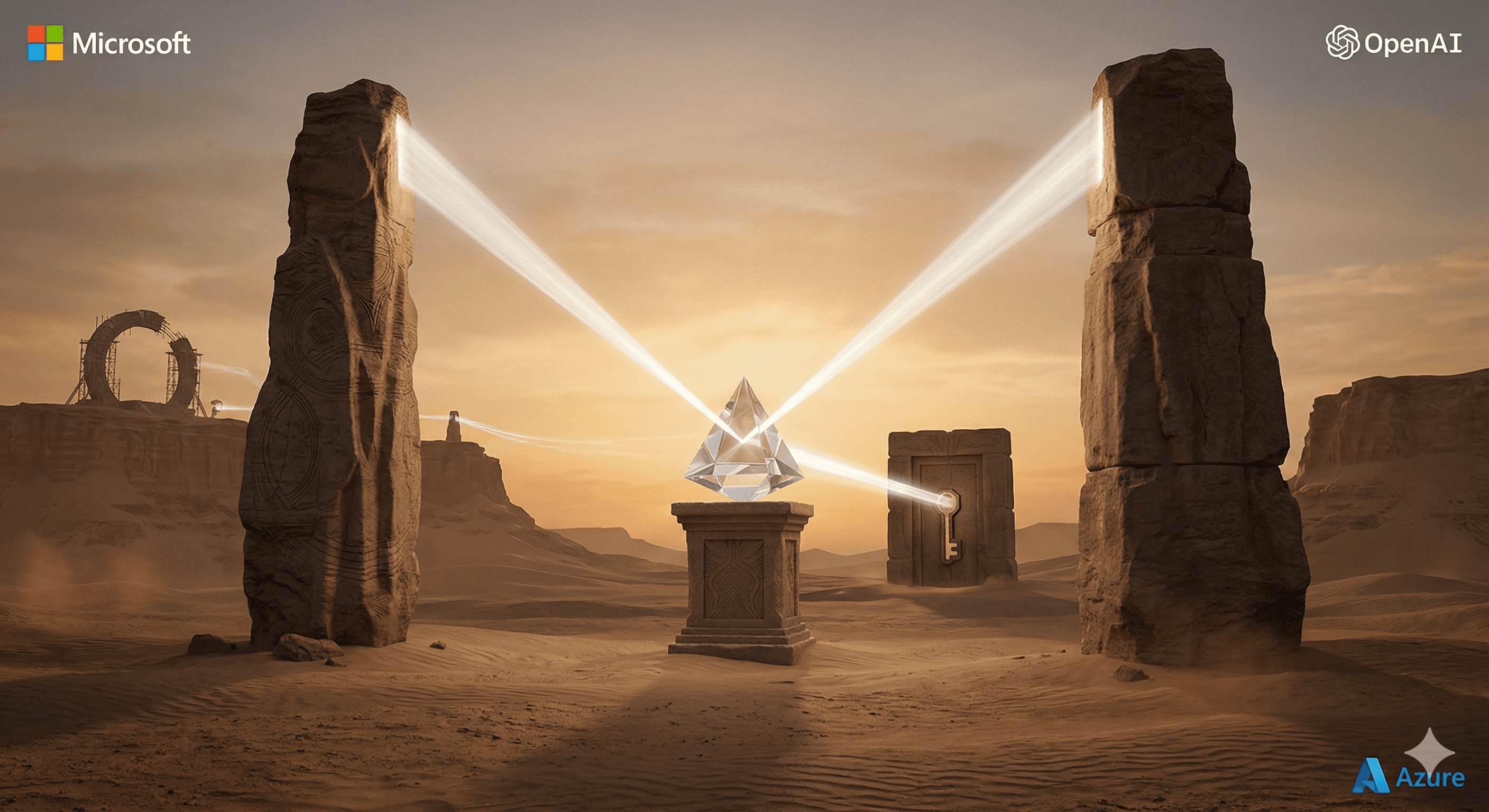
Ancient stone pillars stand under a sunset sky in a desert landscape, with beams of light converging on a central glowing crystal, hinting at the futuristic potential of the OpenAI and Microsoft partnership in 2026.

Not sure where to start with AI?
Assess readiness, risk, and priorities in under an hour.

Not sure where to start with AI?
Assess readiness, risk, and priorities in under an hour.

➔ Download Our Free AI Readiness Pack

OpenAI and Microsoft reaffirmed their partnership on 27 February 2026, stating they will continue working closely across research, engineering and product development. The companies confirmed that Microsoft’s access and licensing to OpenAI intellectual property is unchanged, and that Azure remains the exclusive cloud provider for stateless OpenAI APIs, even when OpenAI partners with other firms.

If you’ve been following the wave of AI investment headlines, you might have wondered whether OpenAI and Microsoft’s long-running partnership was changing direction.

On 27 February 2026, the two companies addressed that directly in a joint statement: their partnership “remains strong and central”, and they will continue to collaborate across research, engineering and product development. The statement also makes clear that OpenAI’s new funding and new partners do not change the terms already published in October 2025.

So what’s actually new here—and what does it mean for organisations building with OpenAI models?
What OpenAI and Microsoft announced (February 2026)

The joint statement focuses less on launching a new product and more on removing uncertainty. It outlines what stays consistent as OpenAI expands its ecosystem.

1) Collaboration continues across research, engineering and product development

OpenAI and Microsoft confirmed they are still working closely across the core areas that turn research into real-world tools.

For customers, this matters because it supports continuity in:

  • model availability and deployment routes

  • enterprise-grade security and scale for production usage

  • product integration across Microsoft’s AI portfolio

2) Microsoft’s IP relationship remains unchanged

The statement confirms Microsoft maintains its exclusive licence and access to intellectual property across OpenAI models and products.

In practical terms, this underpins how Microsoft can integrate OpenAI technology into its own offerings.

3) Azure remains the exclusive cloud provider for stateless OpenAI APIs

This is one of the most specific clarifications.

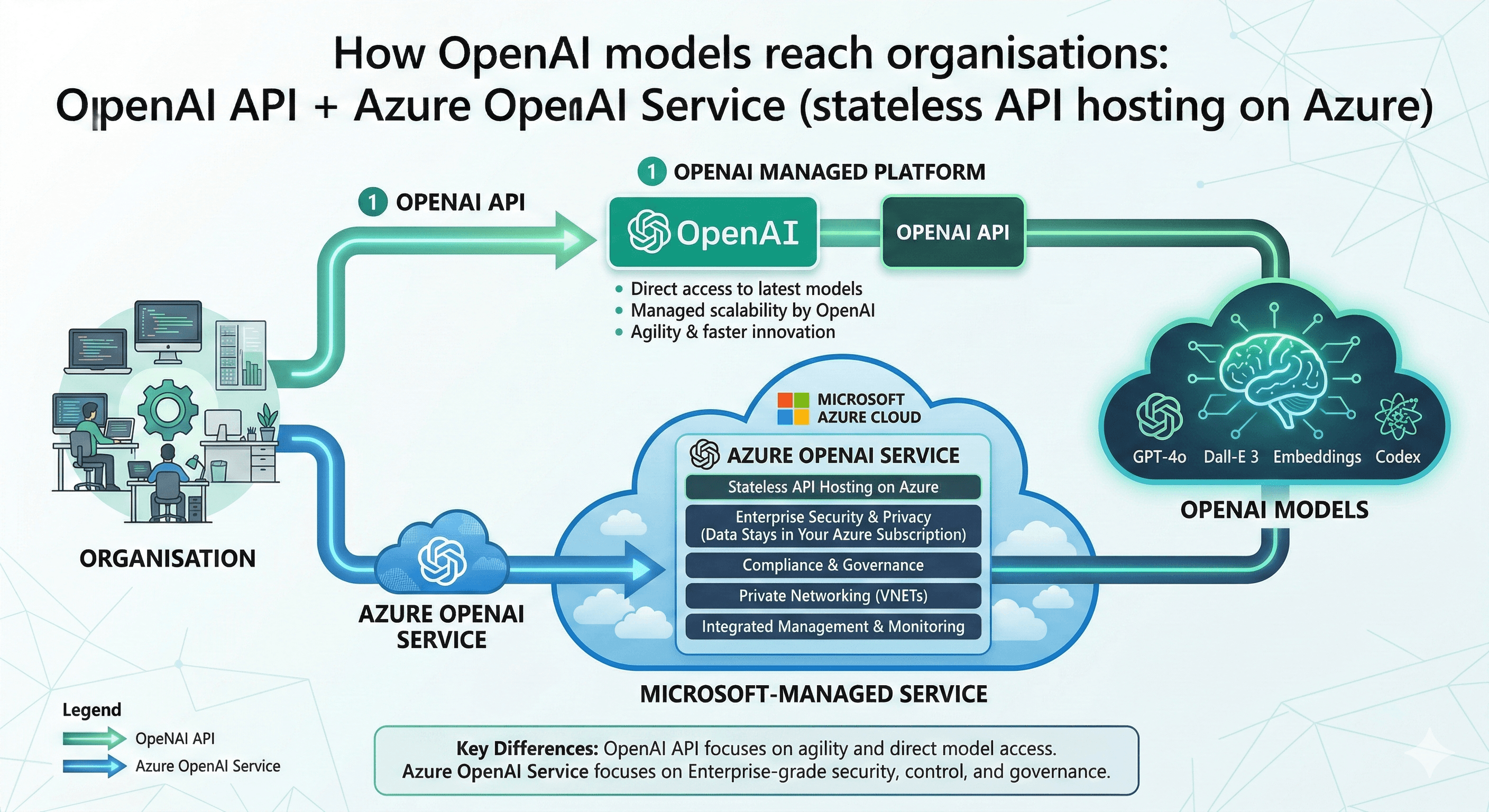
OpenAI and Microsoft state that Microsoft is the exclusive cloud provider for stateless APIs that provide access to OpenAI models and IP. These APIs can be purchased via Microsoft or directly from OpenAI, but the hosting remains on Azure.

They also add an important line for anyone watching OpenAI’s wider partner ecosystem: even if OpenAI collaborates with a third party (the statement cites Amazon as an example), any resulting stateless API calls to OpenAI models would still be hosted on Azure.

4) Commercial and revenue-share terms are unchanged

The statement reiterates that the ongoing commercial and revenue share relationship remains unchanged, including revenue sharing related to partnerships between OpenAI and other cloud providers.

5) AGI definition and processes are unchanged

OpenAI and Microsoft confirm their contractual AGI definition and the process for determining whether it has been achieved remain the same.

6) OpenAI retains flexibility to use additional compute elsewhere

The statement also confirms OpenAI can commit to additional compute beyond Azure as it scales, including through large-scale infrastructure initiatives such as the Stargate project.

What the announcement means for customers

If you’re using OpenAI models today—either through Azure OpenAI Service or via OpenAI directly—the February 2026 statement is best read as a stability signal.

Here’s what it changes for most organisations:

It reduces procurement and architecture uncertainty

Teams can plan around the fact that stateless API access to OpenAI models remains hosted on Azure. That helps when you’re designing:

  • data residency and security controls

  • networking, monitoring and identity patterns

  • enterprise governance and vendor management

It supports long-term product roadmaps

When two major suppliers publicly restate the “rules of the relationship”, it makes it easier to invest in:

  • model-enabled features inside business applications

  • AI governance and guardrails

  • operational readiness (support, incident processes, cost management)

It underlines a multi-partner future, without removing Azure’s role

OpenAI can form additional partnerships while Microsoft maintains Azure’s hosting role for stateless OpenAI APIs.

For many enterprises, that’s the balance they want: ecosystem innovation, but with a stable, enterprise-ready platform underpinning production access.

Practical steps: how to turn the partnership into business value

If you’re making AI a bigger part of your 2026 roadmap, these are sensible next moves.

1) Decide how you will access models: OpenAI vs Azure OpenAI Service

Organisations often choose Azure for enterprise controls and integration with Microsoft security and identity patterns.

Document your decision and align it to:

  • compliance requirements

  • operational monitoring needs

  • expected scale and cost controls

2) Build governance before you scale usage

The fastest route to ROI is not “more prompts”. It’s consistent standards.

Create clear policies for:

  • data handling and sensitive information

  • human review and approval for critical outputs

  • logging, evaluation and model change management

If you use knowledge tools like Glean for retrieval, or systems like Notion for policies and playbooks, make them part of your AI operating model.

3) Design for real workflows, not demos

Tie AI use to measurable workflows such as:

  • customer support triage

  • internal knowledge search and summarisation

  • drafting and reviewing proposals

  • meeting capture and action tracking

Tools like Asana can help turn AI outputs into owned actions, and Miro can provide a shared planning space for workflows and governance artefacts.

How Generation Digital can help

Generation Digital helps teams turn AI capability into usable, governed workflows.

We can support you to:

  • identify high-value use cases and success metrics

  • design a secure operating model (access, governance, evaluation)

  • integrate AI into collaboration and delivery tools (Asana, Notion, Miro, Glean)

  • build adoption programmes that actually stick

Summary

OpenAI and Microsoft reaffirmed their partnership on 27 February 2026, confirming ongoing collaboration across research, engineering and product development. The statement clarifies continuity in key areas—especially Microsoft’s IP relationship and Azure hosting for stateless OpenAI APIs—while OpenAI continues expanding its wider partner ecosystem.

Next steps: If you’re scaling AI across your organisation this year, align model access, governance, and workflow integration now—before usage grows faster than your controls.

FAQs

Q1: What is the main focus of the OpenAI and Microsoft partnership?
The partnership focuses on advancing AI responsibly through close collaboration across research, engineering, and product development.

Q2: How long have OpenAI and Microsoft been collaborating?
The companies state their partnership has been in place since 2019.

Q3: What does “Azure is the exclusive cloud provider for stateless OpenAI APIs” mean?
It means API calls that provide stateless access to OpenAI models and IP are hosted on Azure—even if OpenAI collaborates with a third party.

Q4: Did OpenAI’s new funding or new partners change the Microsoft relationship?
No. The joint statement says these announcements do not change the partnership terms previously shared in October 2025.

Q5: What are the expected outcomes of this partnership?
The stated aim is continued innovation that delivers powerful AI tools, advances responsible development, and broadens access for organisations and individuals.

OpenAI and Microsoft reaffirmed their partnership on 27 February 2026, stating they will continue working closely across research, engineering and product development. The companies confirmed that Microsoft’s access and licensing to OpenAI intellectual property is unchanged, and that Azure remains the exclusive cloud provider for stateless OpenAI APIs, even when OpenAI partners with other firms.

If you’ve been following the wave of AI investment headlines, you might have wondered whether OpenAI and Microsoft’s long-running partnership was changing direction.

On 27 February 2026, the two companies addressed that directly in a joint statement: their partnership “remains strong and central”, and they will continue to collaborate across research, engineering and product development. The statement also makes clear that OpenAI’s new funding and new partners do not change the terms already published in October 2025.

So what’s actually new here—and what does it mean for organisations building with OpenAI models?

What OpenAI and Microsoft announced (February 2026)

The joint statement focuses less on launching a new product and more on removing uncertainty. It outlines what stays consistent as OpenAI expands its ecosystem.

1) Collaboration continues across research, engineering and product development

OpenAI and Microsoft confirmed they are still working closely across the core areas that turn research into real-world tools.

For customers, this matters because it supports continuity in:

  • model availability and deployment routes

  • enterprise-grade security and scale for production usage

  • product integration across Microsoft’s AI portfolio

2) Microsoft’s IP relationship remains unchanged

The statement confirms Microsoft maintains its exclusive licence and access to intellectual property across OpenAI models and products.

In practical terms, this underpins how Microsoft can integrate OpenAI technology into its own offerings.

3) Azure remains the exclusive cloud provider for stateless OpenAI APIs

This is one of the most specific clarifications.

OpenAI and Microsoft state that Microsoft is the exclusive cloud provider for stateless APIs that provide access to OpenAI models and IP. These APIs can be purchased via Microsoft or directly from OpenAI, but the hosting remains on Azure.

They also add an important line for anyone watching OpenAI’s wider partner ecosystem: even if OpenAI collaborates with a third party (the statement cites Amazon as an example), any resulting stateless API calls to OpenAI models would still be hosted on Azure.

4) Commercial and revenue-share terms are unchanged

The statement reiterates that the ongoing commercial and revenue share relationship remains unchanged, including revenue sharing related to partnerships between OpenAI and other cloud providers.

5) AGI definition and processes are unchanged

OpenAI and Microsoft confirm their contractual AGI definition and the process for determining whether it has been achieved remain the same.

6) OpenAI retains flexibility to use additional compute elsewhere

The statement also confirms OpenAI can commit to additional compute beyond Azure as it scales, including through large-scale infrastructure initiatives such as the Stargate project.

What the announcement means for customers

If you’re using OpenAI models today—either through Azure OpenAI Service or via OpenAI directly—the February 2026 statement is best read as a stability signal.

Here’s what it changes for most organisations:

It reduces procurement and architecture uncertainty

Teams can plan around the fact that stateless API access to OpenAI models remains hosted on Azure. That helps when you’re designing:

  • data residency and security controls

  • networking, monitoring and identity patterns

  • enterprise governance and vendor management

It supports long-term product roadmaps

When two major suppliers publicly restate the “rules of the relationship”, it makes it easier to invest in:

  • model-enabled features inside business applications

  • AI governance and guardrails

  • operational readiness (support, incident processes, cost management)

It underlines a multi-partner future, without removing Azure’s role

OpenAI can form additional partnerships while Microsoft maintains Azure’s hosting role for stateless OpenAI APIs.

For many enterprises, that’s the balance they want: ecosystem innovation, but with a stable, enterprise-ready platform underpinning production access.

Practical steps: how to turn the partnership into business value

If you’re making AI a bigger part of your 2026 roadmap, these are sensible next moves.

1) Decide how you will access models: OpenAI vs Azure OpenAI Service

Organisations often choose Azure for enterprise controls and integration with Microsoft security and identity patterns.

Document your decision and align it to:

  • compliance requirements

  • operational monitoring needs

  • expected scale and cost controls

2) Build governance before you scale usage

The fastest route to ROI is not “more prompts”. It’s consistent standards.

Create clear policies for:

  • data handling and sensitive information

  • human review and approval for critical outputs

  • logging, evaluation and model change management

If you use knowledge tools like Glean for retrieval, or systems like Notion for policies and playbooks, make them part of your AI operating model.

3) Design for real workflows, not demos

Tie AI use to measurable workflows such as:

  • customer support triage

  • internal knowledge search and summarisation

  • drafting and reviewing proposals

  • meeting capture and action tracking

Tools like Asana can help turn AI outputs into owned actions, and Miro can provide a shared planning space for workflows and governance artefacts.

How Generation Digital can help

Generation Digital helps teams turn AI capability into usable, governed workflows.

We can support you to:

  • identify high-value use cases and success metrics

  • design a secure operating model (access, governance, evaluation)

  • integrate AI into collaboration and delivery tools (Asana, Notion, Miro, Glean)

  • build adoption programmes that actually stick

Summary

OpenAI and Microsoft reaffirmed their partnership on 27 February 2026, confirming ongoing collaboration across research, engineering and product development. The statement clarifies continuity in key areas—especially Microsoft’s IP relationship and Azure hosting for stateless OpenAI APIs—while OpenAI continues expanding its wider partner ecosystem.

Next steps: If you’re scaling AI across your organisation this year, align model access, governance, and workflow integration now—before usage grows faster than your controls.

FAQs

Q1: What is the main focus of the OpenAI and Microsoft partnership?
The partnership focuses on advancing AI responsibly through close collaboration across research, engineering, and product development.

Q2: How long have OpenAI and Microsoft been collaborating?
The companies state their partnership has been in place since 2019.

Q3: What does “Azure is the exclusive cloud provider for stateless OpenAI APIs” mean?
It means API calls that provide stateless access to OpenAI models and IP are hosted on Azure—even if OpenAI collaborates with a third party.

Q4: Did OpenAI’s new funding or new partners change the Microsoft relationship?
No. The joint statement says these announcements do not change the partnership terms previously shared in October 2025.

Q5: What are the expected outcomes of this partnership?
The stated aim is continued innovation that delivers powerful AI tools, advances responsible development, and broadens access for organisations and individuals.

Get weekly AI news and advice delivered to your inbox

By subscribing you consent to Generation Digital storing and processing your details in line with our privacy policy. You can read the full policy at gend.co/privacy.


Upcoming Workshops and Webinars

A diverse group of professionals collaborating around a table in a bright, modern office setting.

Operational Clarity at Scale - Asana

Virtual Webinar
Weds 25th February 2026
Online

A diverse group of professionals collaborating around a table in a bright, modern office setting.

Work With AI Teammates - Asana

In-Person Workshop
Thurs 26th February 2026
London, UK

A diverse group of professionals collaborating around a table in a bright, modern office setting.

From Idea to Prototype - AI in Miro

Virtual Webinar
Weds 18th February 2026
Online

Generation
Digital

UK Office

Generation Digital Ltd
33 Queen St,
London
EC4R 1AP
United Kingdom

Canada Office

Generation Digital Americas Inc
181 Bay St., Suite 1800
Toronto, ON, M5J 2T9
Canada

USA Office

Generation Digital Americas Inc
77 Sands St,
Brooklyn, NY 11201,
United States

EU Office

Generation Digital Software
Elgee Building
Dundalk
A91 X2R3
Ireland

Middle East Office

6994 Alsharq 3890,
An Narjis,
Riyadh 13343,
Saudi Arabia

UK Fast Growth Index UBS Logo
Financial Times FT 1000 Logo
Febe Growth 100 Logo (Background Removed)

Company No: 256 9431 77 | Copyright 2026 | Terms and Conditions | Privacy Policy

Generation
Digital

UK Office

Generation Digital Ltd
33 Queen St,
London
EC4R 1AP
United Kingdom

Canada Office

Generation Digital Americas Inc
181 Bay St., Suite 1800
Toronto, ON, M5J 2T9
Canada

USA Office

Generation Digital Americas Inc
77 Sands St,
Brooklyn, NY 11201,
United States

EU Office

Generation Digital Software
Elgee Building
Dundalk
A91 X2R3
Ireland

Middle East Office

6994 Alsharq 3890,
An Narjis,
Riyadh 13343,
Saudi Arabia

UK Fast Growth Index UBS Logo
Financial Times FT 1000 Logo
Febe Growth 100 Logo (Background Removed)


Company No: 256 9431 77
Terms and Conditions
Privacy Policy
Copyright 2026




