Align Marketing and AI for ROI: Insights from WIS Toronto 2025
Asana
Uncertain about how to get started with AI?Evaluate your readiness, potential risks, and key priorities in less than an hour.
➔ Download Our Free AI Preparedness Pack
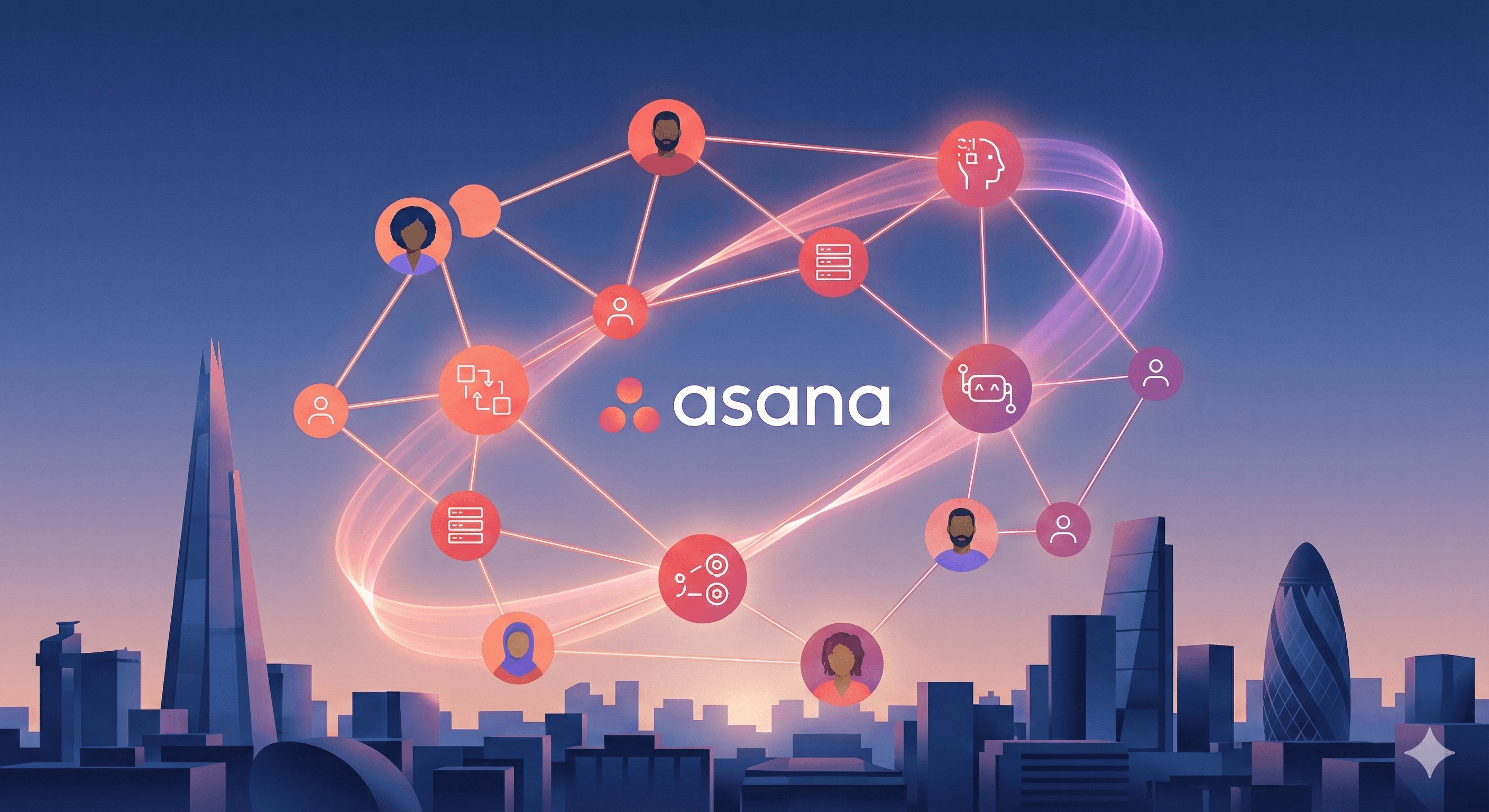
At Asana’s Work Innovation Summit London 2025 (September 25th), marketing leaders from brands including Workday, Awin, and E.ON Next exchanged ideas focused on one straightforward mission: align people, data, and AI so campaigns proceed swiftly and demonstrate their impact. Panels concentrated on prioritization, cross-functional rituals, and AI-ready operating models, rather than just flashy tools.
The takeaway in one line
AI boosts ROI when seamlessly integrated into how marketing functions (goals, briefs, approvals, measurement)—not merely treated as an auxiliary application.
What changed in 2025: from experiments to operating model
WIS London signaled a shift from isolated experiments to repeatable playbooks:
AI for the work, not around it. Sessions highlighted embedding AI into planning, creativity, and performance loops—allowing teams to spend less time on coordination and more on creation.
Marketing × RevOps alignment. Leaders discussed how shared scorecards and intake rules help eliminate spontaneous marketing efforts and make AI outputs measurable.
Agentic workflows emerge. Asana introduced “AI Teammates”—collaborative agents that take on routine tasks and return significant decisions to humans. Case studies reported hours saved and reduced manual work when agents manage checklists and status updates.
How it works when it works: a practical loop
1) Aim – Define a single source of truth brief: audience, offer, channels, KPIs (pipeline, CAC, ROMI).
2) Make – Utilize generative tools for first drafts and variations; direct through brand and legal in one streamlined workflow.
3) Launch – Deploy assets with structured UTMs and experiment tags.
4) Learn – Weekly reviews: AI summarises uplift compared to control, highlights anomalies, suggests next tests.
5) Scale – Automatically promote successful strategies; phase out underperformers.
This “aim–make–launch–learn–scale” cycle underpinned the Align Teams and AI for ROI panel and the “How to measure the ROI of AI” session highlighted by Asana’s EMEA recap.
A 30–60–90 plan to align Marketing and AI
Days 0–30 – Foundations
Map three priority journeys (e.g., product launch, demand generation, lifecycle).
Create approved prompt packs for briefs, ad variations, landing copy, and analyses.
Establish a shared scorecard (pipeline, CAC, velocity, creative throughput).
Days 31–60 – Pilot & guardrails
Test AI within one journey; define review SLAs and escalation procedures.
Equip an AI agent to update status, pursue approvals, and prepare weekly performance reports.
Initiate a decision log: what AI proposed, what humans accepted, and why.
Days 61–90 – Scale & prove
Extend successful prompts/rituals to a second journey.
Issue a ROI memo each month using the Summit’s measurement approach (link outputs to pipeline, not superficial metrics).
Real examples (from the Summit content)
Prioritization & focus. Leaders demonstrated how a clear intake process and quarterly priority list prevented “urgent” tasks from derailing high-ROI campaigns.
Creative throughput. Teams used AI to generate variations then organized approvals in one system, minimizing handoffs.
Agent assistance. During the AI Teammates keynote, Asana showed agents preparing summaries and prompting tasks—freeing humans to focus on strategy; client examples reported reduced manual workload and significant time savings.
Pitfalls to avoid (and what to do instead)
Tool sprawl. Too many disconnected apps hinder ROI—centralize around a work graph so AI understands the entire campaign.
Vanity metrics. Associate AI savings with pipeline and revenue, not merely content volume.
Shadow AI. Without intake rules, teams bypass governance; resolve this with approved prompts, data policies, and a visible strategy roadmap.
FAQs
How does AI improve marketing efficiency?
By automating coordination and analysis and employing agents to manage status, checklists, and recaps—enabling humans to concentrate on strategy and creativity. TeamRelated
What role does data play in AI-driven marketing?
It’s crucial: well-defined briefs, tagged assets, and shared scorecards allow AI to assess impact and suggest the next best test. Asana Forum
Can small teams benefit?
Absolutely. Start with one journey (e.g., email lifecycle), a selection of prompts, and a single scorecard; expand to paid and web channels once success is demonstrated. Asana Forum
Where can I watch the sessions?
Asana has released on-demand WIS 2025 content, including the Align Teams and AI for ROI panel and ROI measurement sessions. Asana Forum+1
Receive weekly AI news and advice straight to your inbox
By subscribing, you agree to allow Generation Digital to store and process your information according to our privacy policy. You can review the full policy at gend.co/privacy.



Generation
Digital

Canadian Office
33 Queen St,
Toronto
M5H 2N2
Canada
Canadian Office
1 University Ave,
Toronto,
ON M5J 1T1,
Canada
NAMER Office
77 Sands St,
Brooklyn,
NY 11201,
USA
Head Office
Charlemont St, Saint Kevin's, Dublin,
D02 VN88,
Ireland
Middle East Office
6994 Alsharq 3890,
An Narjis,
Riyadh 13343,
Saudi Arabia







Business Number: 256 9431 77 | Copyright 2026 | Terms and Conditions | Privacy Policy