How AI Agents Enhance Everyday Tasks (2026 Guide)
Perplexity
Dec 9, 2025


AI agents have shifted from novelty to necessity. Perplexity’s latest research with academic partners shows how real people use agents day-to-day — from summarising inboxes to triggering multi-step workflows — and why personalisation and tool use now matter more than raw model size. Perplexity AI
Why this matters in 2026
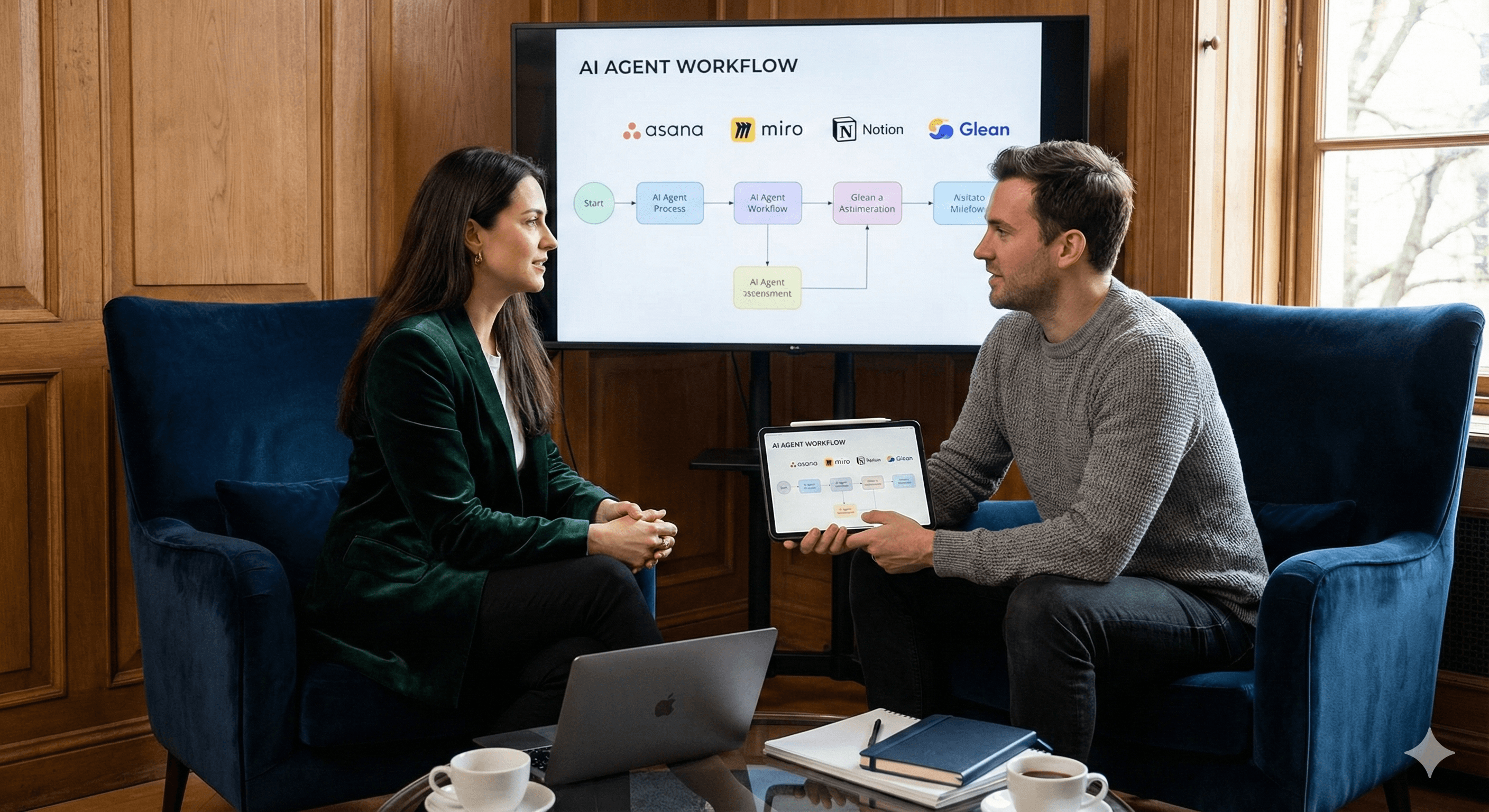
The most valuable agents don’t just chat — they plan, call tools, and remember preferences to reduce the “find → understand → act” cycle. With recent updates, Perplexity assistants can retain structured preferences across sessions, making answers faster and more tailored to you or your team. Pair agents with your work stack — Asana for orchestration, Miro for system maps, Notion for runbooks, and Glean for enterprise search — to turn guidance into action. Perplexity AI
What’s new (and what actually works)
Perplexity highlights a mainstreaming of agent tech in 2025–2026, backed by the first large-scale look at how people use agents in the wild. Common threads: agents that plan steps, cite sources, and integrate with your tools deliver the biggest time savings and trust. Perplexity AI
Practical ways to deploy agents today
Inbox triage → project flow: Have an agent summarise new emails, draft responses, and open tasks in Asana with due dates and owners, linked to the relevant Notion runbook for the workflow.
Research → decision memo: Ask an agent to gather sources with citations, map stakeholders on a Miro board, and produce a short decision doc in Notion. Perplexity’s agent approach emphasises live retrieval and cited answers, which boosts confidence.
Knowledge retrieval at work: Use Glean to index your internal knowledge so the agent can answer with company context, not just public web pages — especially helpful for policy, pricing, and SOPs. (Design pattern: agentic RAG.)
AI agents automate everyday tasks by planning steps, calling tools, and remembering preferences. Perplexity’s 2025–2026 findings show the biggest gains come from agents that cite sources and integrate with your stack (Asana, Miro, Notion, Glean), turning research and admin into reliable, repeatable workflows that free time for higher-value work.
Summary
AI agents are ready for everyday work — especially when they can plan, cite and act inside your existing tools. If you want a pilot that marries Perplexity-style agents with Asana, Miro, Notion and Glean, Generation Digital can design a safe, measurable rollout for 2026.
FAQs
What are AI agents, in simple terms?
Software that can reason about a goal, plan steps, use tools (APIs/apps), and act — often with memory — to complete tasks on your behalf. Google’s definition stresses planning and tool use, which separates agents from simple chatbots. Google Cloud
How do agents improve productivity?
They compress routine cycles (gather → summarise → act), especially when combined with your task system (Asana), knowledge base (Notion), diagrams (Miro), and search layer (Glean). Perplexity’s research points to time saved when agents retrieve live info and provide citations.
What’s changed recently?
Perplexity introduced upgraded memory and personalisation so assistants remember structured preferences across conversations — think preferred brands, dietary needs, or recurring topics — making the next answer faster and more relevant.
Are there risks?
Yes: source reliability and content poisoning are active concerns across AI search/agents. Prioritise tools that cite, verify, and restrict actions to approved systems, and keep humans in the loop for sensitive tasks. The Times
References
Perplexity: How People Use AI Agents — large-scale, real-world usage analysis. Perplexity AI
Perplexity: Introducing AI assistants with memory — personalisation update. Perplexity AI
Google Cloud: What are AI agents? — clear definition and distinctions. Google Cloud
Security context: recent reporting on content-poisoning risks in AI search. The Times
AI agents have shifted from novelty to necessity. Perplexity’s latest research with academic partners shows how real people use agents day-to-day — from summarising inboxes to triggering multi-step workflows — and why personalisation and tool use now matter more than raw model size. Perplexity AI
Why this matters in 2026
The most valuable agents don’t just chat — they plan, call tools, and remember preferences to reduce the “find → understand → act” cycle. With recent updates, Perplexity assistants can retain structured preferences across sessions, making answers faster and more tailored to you or your team. Pair agents with your work stack — Asana for orchestration, Miro for system maps, Notion for runbooks, and Glean for enterprise search — to turn guidance into action. Perplexity AI
What’s new (and what actually works)
Perplexity highlights a mainstreaming of agent tech in 2025–2026, backed by the first large-scale look at how people use agents in the wild. Common threads: agents that plan steps, cite sources, and integrate with your tools deliver the biggest time savings and trust. Perplexity AI
Practical ways to deploy agents today
Inbox triage → project flow: Have an agent summarise new emails, draft responses, and open tasks in Asana with due dates and owners, linked to the relevant Notion runbook for the workflow.
Research → decision memo: Ask an agent to gather sources with citations, map stakeholders on a Miro board, and produce a short decision doc in Notion. Perplexity’s agent approach emphasises live retrieval and cited answers, which boosts confidence.
Knowledge retrieval at work: Use Glean to index your internal knowledge so the agent can answer with company context, not just public web pages — especially helpful for policy, pricing, and SOPs. (Design pattern: agentic RAG.)
AI agents automate everyday tasks by planning steps, calling tools, and remembering preferences. Perplexity’s 2025–2026 findings show the biggest gains come from agents that cite sources and integrate with your stack (Asana, Miro, Notion, Glean), turning research and admin into reliable, repeatable workflows that free time for higher-value work.
Summary
AI agents are ready for everyday work — especially when they can plan, cite and act inside your existing tools. If you want a pilot that marries Perplexity-style agents with Asana, Miro, Notion and Glean, Generation Digital can design a safe, measurable rollout for 2026.
FAQs
What are AI agents, in simple terms?
Software that can reason about a goal, plan steps, use tools (APIs/apps), and act — often with memory — to complete tasks on your behalf. Google’s definition stresses planning and tool use, which separates agents from simple chatbots. Google Cloud
How do agents improve productivity?
They compress routine cycles (gather → summarise → act), especially when combined with your task system (Asana), knowledge base (Notion), diagrams (Miro), and search layer (Glean). Perplexity’s research points to time saved when agents retrieve live info and provide citations.
What’s changed recently?
Perplexity introduced upgraded memory and personalisation so assistants remember structured preferences across conversations — think preferred brands, dietary needs, or recurring topics — making the next answer faster and more relevant.
Are there risks?
Yes: source reliability and content poisoning are active concerns across AI search/agents. Prioritise tools that cite, verify, and restrict actions to approved systems, and keep humans in the loop for sensitive tasks. The Times
References
Perplexity: How People Use AI Agents — large-scale, real-world usage analysis. Perplexity AI
Perplexity: Introducing AI assistants with memory — personalisation update. Perplexity AI
Google Cloud: What are AI agents? — clear definition and distinctions. Google Cloud
Security context: recent reporting on content-poisoning risks in AI search. The Times
Get practical advice delivered to your inbox
By subscribing you consent to Generation Digital storing and processing your details in line with our privacy policy. You can read the full policy at gend.co/privacy.


DBS Bank: AI + Google Cloud boost productivity in 2025

Gemini for Education reaches 1M+ students in Italy

Free ChatGPT for Teachers (U.S. K–12) to June 2027

Scania scales ChatGPT Enterprise across global teams

RAG Models: Boost Enterprise AI Accuracy in 2026

Unlock AI Marketing: 25 Expert Prompts for 2026 Success

OpenAI Certifications: Build Job-Ready AI Skills for 2026

Manage App Integrations in Asana for Seamless, Secure Workflow (2026 Enterprise Guide)

OpenAI & Linux Foundation launch Agentic AI Foundation

OpenAI names Denise Dresser CRO to power 2026 growth

DBS Bank: AI + Google Cloud boost productivity in 2025

Gemini for Education reaches 1M+ students in Italy

Free ChatGPT for Teachers (U.S. K–12) to June 2027

Scania scales ChatGPT Enterprise across global teams

RAG Models: Boost Enterprise AI Accuracy in 2026

Unlock AI Marketing: 25 Expert Prompts for 2026 Success

OpenAI Certifications: Build Job-Ready AI Skills for 2026

Manage App Integrations in Asana for Seamless, Secure Workflow (2026 Enterprise Guide)

OpenAI & Linux Foundation launch Agentic AI Foundation

OpenAI names Denise Dresser CRO to power 2026 growth
Generation
Digital

UK Office
33 Queen St,
London
EC4R 1AP
United Kingdom
Canada Office
1 University Ave,
Toronto,
ON M5J 1T1,
Canada
NAMER Office
77 Sands St,
Brooklyn,
NY 11201,
United States
EMEA Office
Charlemont St, Saint Kevin's, Dublin,
D02 VN88,
Ireland
Middle East Office
6994 Alsharq 3890,
An Narjis,
Riyadh 13343,
Saudi Arabia

Company No: 256 9431 77 | Copyright 2026 | Terms and Conditions | Privacy Policy
Generation
Digital

UK Office
33 Queen St,
London
EC4R 1AP
United Kingdom
Canada Office
1 University Ave,
Toronto,
ON M5J 1T1,
Canada
NAMER Office
77 Sands St,
Brooklyn,
NY 11201,
United States
EMEA Office
Charlemont St, Saint Kevin's, Dublin,
D02 VN88,
Ireland
Middle East Office
6994 Alsharq 3890,
An Narjis,
Riyadh 13343,
Saudi Arabia








