AI Infrastructure: Crusoe’s Energy-First Data Centre Model
AI
Free AI at Work Playbook for managers using ChatGPT, Claude and Gemini.
➔ Download the Playbook
Crusoe Energy powers AI data centres with an energy-first strategy—turning stranded energy and renewables into low-latency, modular capacity that scales quickly while improving emissions versus flaring.
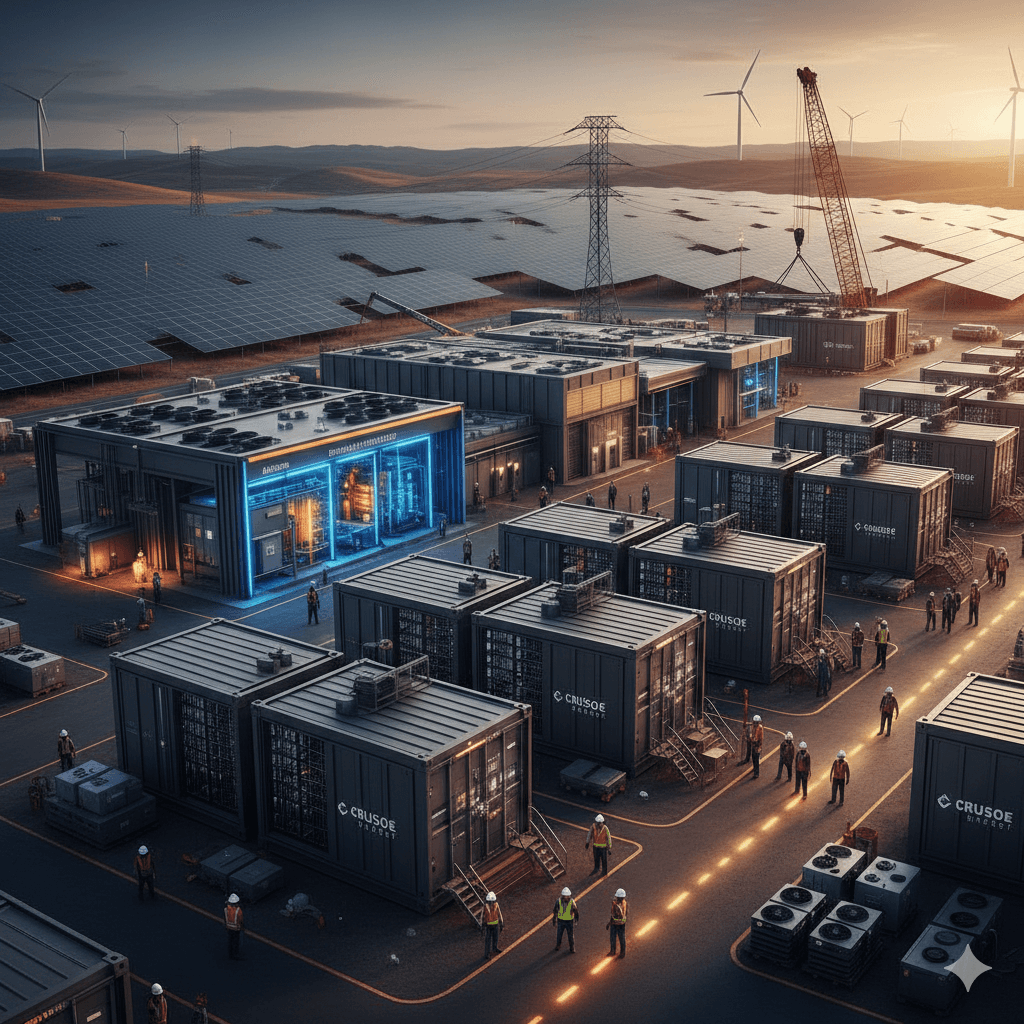
Crusoe Energy is building AI infrastructure around power first—co-locating modular data centres with stranded energy (flare gas, curtailed renewables) and long-term clean supply. By upgrading flare combustion efficiency and deploying large campuses like Abilene (200MW initial phase, on a 1.2GW site), Crusoe aims to lower carbon intensity and scale GPU capacity faster.
Key points
Stranded energy to compute: Crusoe’s Digital Flare Mitigation (DFM) captures gas that would be flared and converts it to electricity; measured 99.9% combustion efficiency can cut CO₂-equivalent emissions vs flaring.
Modular, rapid build: Vertical integration (via Easter-Owens acquisition) enables pre-fabricated power & data centre modules for faster time-to-capacity.
Scale for AI: Abilene’s campus launched at 200+MW with plans tied to a 1.2GW clean-power site; additional GPU capacity in the pipeline.
What’s new or how it works
Crusoe’s energy-first model meets AI demand where power is abundant or wasted. DFM improves the climate profile vs open flares by burning methane more completely, while modular data halls and power blocks shorten construction. New capacity (e.g., Abilene) is sited on clean-energy campuses designed to scale with grid upgrades and renewables.
Practical examples
Site like an energy company: Prioritise locations with firmed MWs (behind-the-meter or clean-campus interconnects) and the ability to bridge with DFM or other interim sources.
Design for density & cooling: Plan for 50–300kW AI racks and liquid-cooling options from day one; Crusoe deploys prefabricated components to speed high-density buildouts.
Modular scaling: Use pre-fabricated electrical/mechanical skids (Crusoe-manufactured post Easter-Owens) to phase capacity with GPU deliveries and workloads.
FAQs
Q1: What is “stranded energy”?
Energy that is under-utilised or wasted due to grid, location, or economic constraints—e.g., flare gas or curtailed wind/solar. Crusoe converts these into power for compute. Crusoe AI
Q2: How does Crusoe’s approach help the environment?
DFM raises combustion efficiency (reported ~99.9%) versus open flares, cutting methane slip and reducing CO₂e relative to continued flaring. Long-term siting on clean-power campuses aims to further lower carbon intensity. Crusoe AI
Q3: What makes the modular design innovative?
Vertical integration after acquiring Easter-Owens lets Crusoe build power and data modules in-house—accelerating deployment and aligning phases with GPU supply and demand. Business Wire
Q4: How fast is Crusoe scaling AI capacity?
Abilene’s first two buildings (~200+MW) energise before ramping toward a 1.2GW campus; Crusoe is also adding GPU supply (e.g., AMD MI355X cluster) to diversify availability. lancium
Summary
Crusoe’s energy-first playbook—DFM for immediate emissions gains, modular builds for speed, clean-campus siting for scale—shows how AI data centres can grow capacity while improving power availability and climate performance. It’s a pragmatic template for future AI builds where power is the constraint and speed-to-compute wins.
Get weekly AI news and advice delivered to your inbox
By subscribing you consent to Generation Digital storing and processing your details in line with our privacy policy. You can read the full policy at gend.co/privacy.



Generation
Digital

UK Office
Generation Digital Ltd
33 Queen St,
London
EC4R 1AP
United Kingdom
Canada Office
Generation Digital Americas Inc
181 Bay St., Suite 1800
Toronto, ON, M5J 2T9
Canada
USA Office
Generation Digital Americas Inc
77 Sands St,
Brooklyn, NY 11201,
United States
EU Office
Generation Digital Software
Elgee Building
Dundalk
A91 X2R3
Ireland
Middle East Office
6994 Alsharq 3890,
An Narjis,
Riyadh 13343,
Saudi Arabia







Company No: 256 9431 77 | Copyright 2026 | Terms and Conditions | Privacy Policy